Tool · Logistics ops · Descartes · Oct 2026
Descartes AI review (Oct 2026): AI routing, transportation automation, and trade compliance assists
Descartes sells a large family of logistics software — transportation management, real-time visibility (MacroPoint), routing for delivery fleets, customs and forwarder systems, and trade compliance (Visual Compliance) — all connected to its Global Logistics Network. Its AI is spread across those products: AI Assist for denied party screening, OpsForce agents for freight tracking, AI routing, AI document capture for customs, and, from October 2026, an Agent Control Plane to coordinate agents within approval points you define. This page covers each and who should sign off. Each section has a Try this.
What this Descartes AI page covers
This page is for a trade compliance lead, transportation manager, routing manager, or customs broker using Descartes products or comparing them. It answers: which Descartes products have AI, what each one does on its own, where Descartes says a person stays in control, and what Descartes publishes about price.
Descartes’ AI & Automation page (read 17 October 2026) says “You decide where automation fits and when AI reinforces your rules” and that its visibility agents “step in when your team needs support. You stay in control.” Its 6 October 2026 release introduced the Agent Control Plane, and its trade compliance unit, Visual Compliance, describes AI Assist as “a supplementary tool rather than the sole basis for decision-making”.
Ground rules: the compliance lead confirms or clears every denied party match by hand and owns AI Assist’s sensitivity settings; a licensed customs broker checks every AI-prepared entry; the transportation manager owns which agents may act and where approval points sit; the routing manager checks machine-learned service times before plans change. Customer names, screening lists, and commercial invoices stay out of outside chat tools, and Descartes’ figures are its claims, not our measurement. Nothing on this page is legal or customs advice.
Major features (with how someone uses them)
Examples at a glance: each feature has a concrete example from a real job plus a short Try this you can run this week.
1. AI Assist on denied party screening hits (primary)
What it is: Descartes Visual Compliance’s AI Assist sits inside the Compliance Manager Workflow and uses machine learning and natural language processing to identify likely false positives among denied, sanctioned, and restricted party screening results, so analysts spend time on the real risks. Sensitivity can be set by region or department, results below a threshold can still be reviewed, and every cleared hit keeps a status history for audit. Visual Compliance says the tool’s reviews are statistical and that “trade compliance teams retain full control in decision making”. Descartes’ 9 February 2026 release says AI-driven screening, “in collaboration with human oversight,” cuts false positives “to just fractions of a percent”.
A cleared hit that was a real match is a compliance failure, not a time saving. Check what AI Assist would clear on a batch of real hits before relying on it.
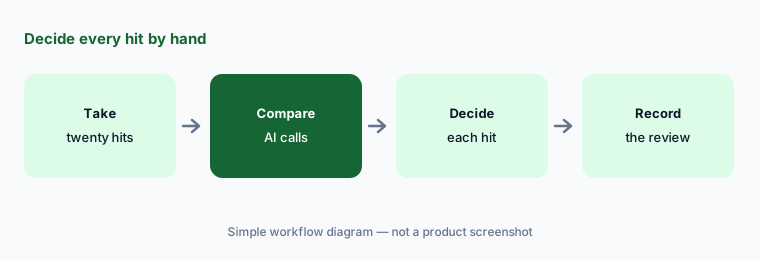
Primary workflow:
Run twenty denied-party screening hits through Descartes' AI assist. Have the compliance lead confirm or clear each one by hand before any shipment is released.
2. Agent Control Plane (October 2026)
What it is: Descartes introduced the Agent Control Plane at its Innovation Forum in Chicago on 6 October 2026. It is built on the Global Logistics Network to coordinate AI agents across applications and trading partners for multi-step workflows “within defined guardrails, policies and human oversight”. Descartes says it applies customer-defined permissions and approval points, keeps a traceable record of agent actions, and makes Descartes agents available inside AI platforms customers already use. The release gives no availability date, price, or list of included agents.
Approval points only help if someone writes them down. Decide which steps need a person before any agent works across your systems.
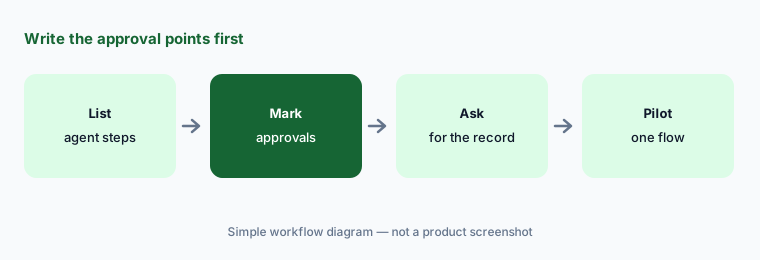
Approvals first:
Before any Descartes agent works across systems, write down which steps need a person's approval. Ask Descartes to show where those approval points and the action record live in your account.
3. TMS automation and MacroPoint OpsForce agents
What it is: Descartes’ AI & Automation page lists exception management, an AI-powered knowledge base, automated carrier connections, compliance automation for proofs of delivery and certificates of insurance, auto tenders, and scheduled reports. Its 4 March 2026 release introduced MacroPoint OpsForce, AI agents that guide drivers through tracking app onboarding, restore tracking when it stops, confirm arrival and departure when geofence data is uncertain, and collect missing proofs of delivery. Descartes says OpsForce eliminated “up to 100%” of manual check calls for some customers and works “with no action required from their people”.
An agent-confirmed arrival can still be wrong. Review what it recorded before a customer or the billing team relies on it.
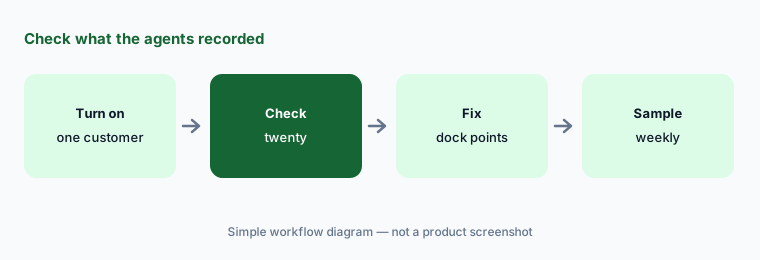
Check the confirmations:
Turn on OpsForce driver outreach for one customer's loads. Have the logistics coordinator review twenty of the arrival confirmations and PODs it collected before they reach the customer or billing.
4. AI routing for delivery fleets
What it is: Descartes’ AI routing page describes machine-learned service times (how long each stop really takes), machine-learned geocodes (where drivers actually drop off), predictive ETAs, and AI agents that let planners and dispatchers ask questions about execution data in plain language. It sets out three principles — “No AI for AI’s sake”, “You’ll always know” where AI is used, and “You decide” when to bring it in — and says agentic AI can act on routes “with human oversight”. Descartes cites up to 30% higher route density, 97%+ on-time compliance, and up to 15% lower cost per delivery.
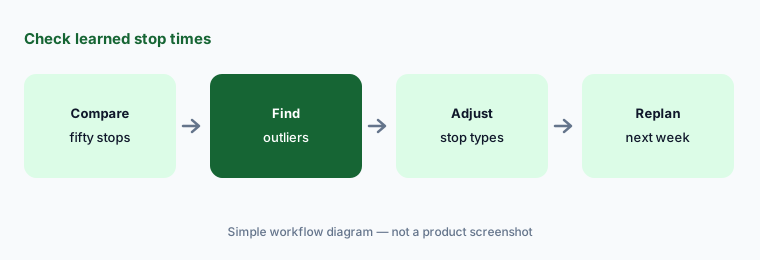
Learned service times shorten routes by trimming buffer. Check them against real stops before drivers get tighter days.
Check the learned times:
Compare machine-learned service times with what drivers actually took on fifty stops. Have the routing manager adjust any stop type that is off before the next plan.
5. AI document capture for customs entries and shipments
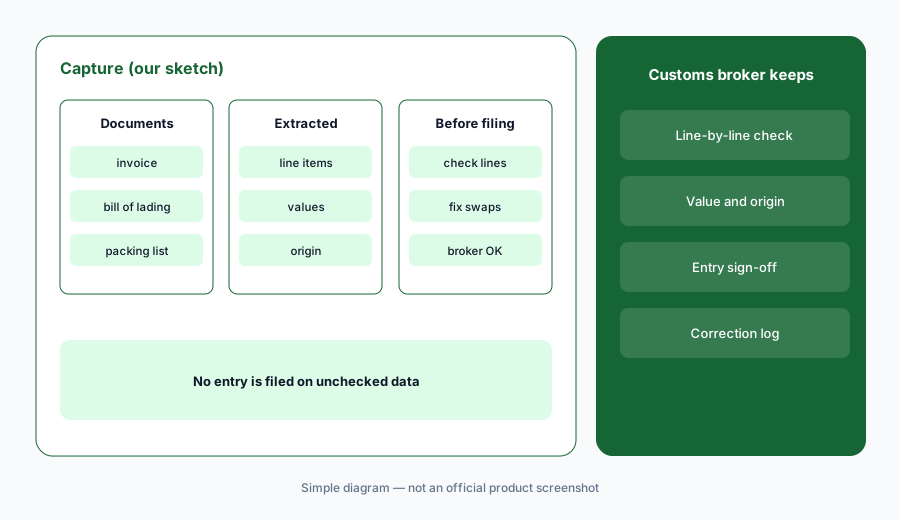
What it is: Descartes’ 18 August 2026 release introduced AI-powered Image Document Management for customs brokers, freight forwarders, and logistics providers. AI agents embedded in Descartes’ customs and transportation applications read commercial invoices, bills of lading, packing lists, and related documents together, then extract, validate, and prepare the data to start a customs entry or create a shipment without rekeying.
Prepared data is not a filed entry. A licensed customs broker still checks values, quantities, and origin before anything goes to customs.
Check before filing:
Run ten commercial invoices through Descartes' AI document capture. Have a licensed customs broker check every line item, value, and country of origin before the entry is filed.
6. Datamyne AI Agent for trade data questions
What it is: Descartes’ 24 September 2026 release announced the Datamyne AI Agent, a conversational tool inside the Datamyne trade intelligence product. Users ask questions in plain language about suppliers, buyers, product flows, and markets, and get answers with visualizations and drill-down to the underlying shipment records. Descartes says Datamyne covers 230 markets and that the agent can cut research time “by up to 90%” depending on the user and question.
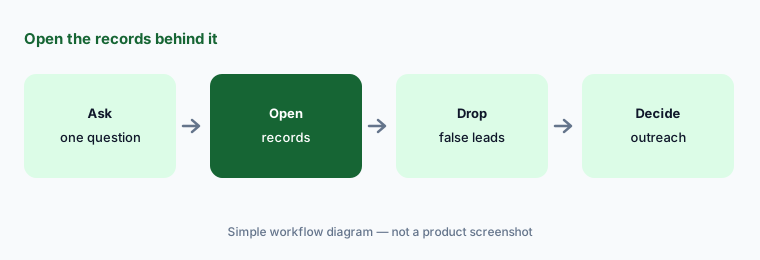
A trade-data answer is a lead, not a fact about a supplier. Open the shipment records behind it before it shapes a sourcing decision.
Open the records:
Ask the Datamyne AI Agent which suppliers of one product gained shipments this year. Open the underlying shipment records for three answers before using them in a sourcing decision.
Pricing context (October 2026)
Descartes does not publish prices for its transportation, visibility, or routing products; descartes.com/pricing returns a 404 page and the product pages offer demos. Those are quote-only as of 17 Oct 2026.
Visual Compliance does publish guidance on its denied party screening pricing page (checked 17 Oct 2026): screening “starts at a few thousand dollars a year for a basic implementation with small screening volumes and one user”, and “a typical customer screening 50,000 entities should budget around $20,000 a year”. Plans are Standard, Mid-Market, and Enterprise, each priced on request; AI-enabled screening to reduce false positives is listed in Mid-Market, not Standard. Ask whether AI Assist is included at your volume, and whether the Agent Control Plane, OpsForce, and document capture are separate line items.
Uncertainty: The Agent Control Plane was announced on 6 October 2026 with no stated availability date, price, or list of agents. The OpsForce release says it works “with no action required from their people”, while the AI & Automation page says “You stay in control” and AI Assist leaves decisions with the compliance team; we follow the human-control wording. AI Assist and its pricing sit on Visual Compliance’s own site (visualcompliance.com). We could not confirm which Descartes products include which AI features at which tier. Figures such as up to 100% fewer check calls, 30% more no-touch tracking, 1.5x productivity, 15% faster settlement, up to 30% route density, 97%+ on-time, up to 15% lower cost per delivery, “fractions of a percent” false positives, and up to 90% faster trade research are Descartes’ claims, not our measurement.
When it’s useful (honest take)
Useful when you already run Descartes for transportation, visibility, routing, customs, or screening and want the AI features inside those tools, and named owners — the compliance lead, a licensed broker, the transportation and routing managers — will check what the AI prepares.
Less useful when you want one shipper TMS with built-in AI workers (Shipwell AI), a forwarder that also files your customs (Flexport AI), or last-mile routing as a single platform (Locus AI).
Paying for Descartes AI and a few other AI tools? The $9 AI toolkit spreadsheet lists every AI subscription you have, what each one costs, and how fast it pays for itself, so you can see which ones are worth the money.
Want someone to do it for you? AI toolkit audit — $19
Related options (educational)
| Need | Better home | Why |
|---|---|---|
| Screening assist, visibility agents, routing, customs capture | Descartes AI (this page) | TMS/routing quote only; screening from a few thousand dollars a year |
| Forwarder with AI customs classification | Flexport AI | Quote only (freight and customs quoted) |
| Visibility analyst and agents across carriers | project44 AI | Quote only |
| Last-mile route planning and dispatch | Locus AI | Quote only |
| Shipper TMS with AI workers | Shipwell AI | Quote only |
| Drafting a sanitized screening procedure | Claude | General chat; not a screening tool |
FAQ
What is Descartes AI Assist?
AI Assist is a Descartes Visual Compliance feature that uses machine learning to identify likely false positives in denied party screening so analysts focus on real matches. Descartes calls it a supplementary tool; the compliance team makes the decision.
What is the Descartes Agent Control Plane?
Announced 6 October 2026, it coordinates AI agents across Descartes applications and trading partners within customer-defined permissions and approval points, and keeps a record of agent actions. No availability date or price was published.
How much does Descartes cost in October 2026?
Transportation, visibility, and routing products are quote-only. Visual Compliance says screening starts at a few thousand dollars a year for a basic setup and about $20,000 a year for a typical customer screening 50,000 entities (checked 17 Oct 2026).
What is MacroPoint OpsForce?
A set of AI agents, announced 4 March 2026, that help drivers onboard to tracking, restore lost tracking, confirm arrivals and departures, and collect missing proofs of delivery.
Who should approve what Descartes’ AI does?
The compliance lead confirms every screening result, a licensed customs broker checks AI-prepared entries, the transportation manager sets agent approval points, and the routing manager checks learned service times.
Optional next step (if seats overlap)
If you pay for a TMS, a visibility network, a routing tool, a screening service, and chat seats your team uses to summarize trade data, that overlap is worth mapping. Map the overlap with the $19 AI toolkit audit or the $9 AI toolkit spreadsheet. Email Audit $19 or Toolkit spreadsheet $9.
Checkout is live via Stripe. After you pay, we email delivery (spreadsheet) or intake next steps (audit).