Tool · Logistics ops · o9 Solutions · Oct 2026
o9 Solutions AI review (Oct 2026): o9 AI agents and the Digital Brain for integrated planning
o9 Solutions sells an enterprise planning platform it calls the Digital Brain: demand, supply, commercial, merchandise, and financial plans on one Enterprise Knowledge Graph. On top of it o9 now offers specialized AI agents that answer what happened and why, what is likely next, and what to do, plus post-game analysis that explains plan misses. This page is about using those answers to find problems faster while a named planner still checks the reasons and decides what changes in the plan. Each section has a Try this.
What this o9 Solutions AI page covers
This page is for a demand planner, supply planner, S&OP lead, or merchandise planner whose company runs o9 or is comparing planning platforms. It answers: what o9’s AI agents and analysis tools actually do, what o9 says is generally available versus still being built, and who signs off before an AI explanation or recommendation changes the plan.
o9’s AI innovation page (read 17 October 2026) describes the Digital Brain as the Enterprise Knowledge Graph — a digital twin of your data, relationships, and constraints — combined with AI models and large language models, an approach o9 calls neuro-symbolic AI. It names three kinds of AI (predictive, prescriptive, and generative) and agentic AI: “specialized AI agents that continuously sense, analyze, and recommend actions”. o9 announced those agents as generally available on 3 June 2025; the AI page does not list them by name.
Ground rules: a named demand or supply planner checks every reason an agent gives before it goes into an S&OP deck, the planning lead approves every AI-suggested plan change, and the autonomy list (what may run touchless) is written down and signed. No customer names, supplier contract prices, or full bills of materials go into an outside chat tool, and o9’s productivity and accuracy figures are its claims, not our measurement.
Major features (with how someone uses them)
Examples at a glance: each feature has a concrete example from a real job plus a short Try this you can run this week.
1. Ask why a forecast missed (primary)
What it is: o9’s AI page says its generative AI lets people “interact with enterprise knowledge using natural language”, and that agents help answer four questions: what happened and why, what’s happening now, what’s likely next, and what should we do. Because the answers come from the knowledge graph, o9 says they are grounded in your own data and rules and can give “causal root-cause analysis — not just outcomes”. In practice a demand planner can ask why accuracy dropped for a product family and get a list of drivers: a promotion that ran late, a new item cannibalising an old one, a customer that changed its order pattern.
A fluent explanation is not the same as a correct one. Each reason should point to data the planner can open, and anything that cannot be checked stays out of the deck.
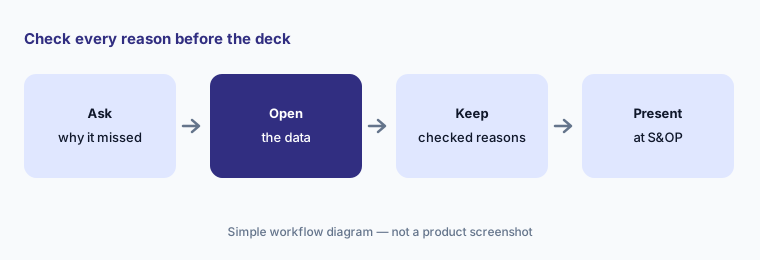
Primary workflow:
Ask o9's AI assistant why forecast accuracy dropped for one product family last month. Have the demand planner check each reason it gives against the data before it goes into the S&OP deck.
2. Specialized AI agents on the Enterprise Knowledge Graph
What it is: In its 3 June 2025 release o9 said the Digital Brain “now features specialized AI agents” for management, planners, and front-line operations, built by combining generative and agentic AI with the Enterprise Knowledge Graph, and that they were generally available. o9 says they analyze large volumes of data to find risks and opportunities and answer what it then called the “3Ws”. The AI page adds that the agents are “domain-aware and purpose-built for planning, execution, and learning — not generic copilots”, and its March 2026 release says o9 moved multiple AI pilots into production in 2025.
Because the agents are not named on o9’s site, ask your o9 team for the list of agents switched on in your account, what each one can read, and whether any of them can change a plan or only recommend.
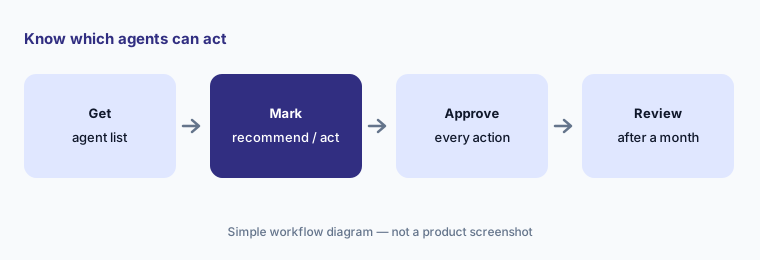
Know your agents:
Ask your o9 team for a written list of the AI agents active in your account. Mark which only recommend and which can change a plan, and keep every acting agent on planner approval for a month.
3. Post-Game Analysis: why the plan and the outcome differed
What it is: o9’s Post-Game Analysis (PGA) looks back at what was planned versus what happened. The page lists a system of record for plans and decisions, AI-powered root cause analysis, “storytelling”, and capture of tribal knowledge. To start you need an item master, historical actuals, and plan snapshots; several historical plan versions allow deeper root-cause work. The June 2025 release describes automated identification of value leakage and performance gaps, root-cause algorithms, and AI-powered storytelling, and the APEX page says PGA findings are used to refine policies and planning logic.
Post-game analysis is only as fair as the plan snapshots it compares. Make sure the snapshot it uses is the plan people actually worked to, not a later revision.
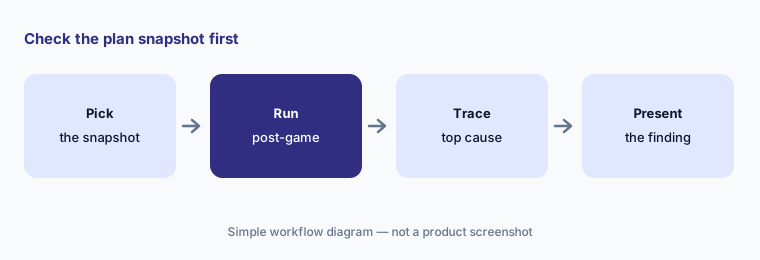
Check the snapshot:
Run one o9 post-game analysis on last quarter's plan for a single region. Have the planner confirm which plan snapshot it used and trace the top root cause by hand before it is presented.
4. Touchless forecasting and Forecast Value Add
What it is: o9’s AI/ML demand forecasting evaluates statistical, machine learning, and AI models by product, channel, and horizon, combines them in ensembles, uses demand drivers to explain changes, and tracks Forecast Value Add (FVA) — whether each manual adjustment improved the forecast. o9 promotes “touchless” forecasting and planning, where the system produces plans with minimal human intervention, and its supply chain planning page describes a Touchless Automation Engine that “corrects data deviations automatically”. o9’s own article on touchless planning recommends starting with low-risk decisions.
Touchless should be earned, line by line. Use FVA to show where planners’ edits help and where they hurt, then widen touchless only where the numbers support it.
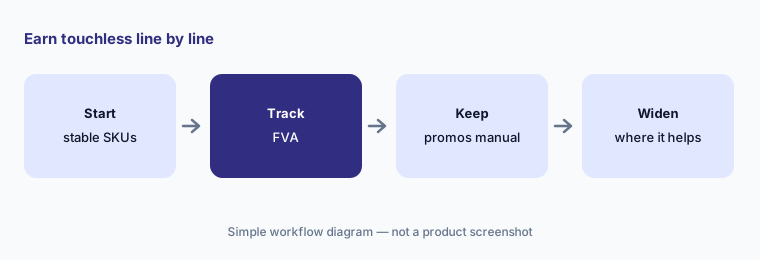
Earn touchless:
Turn on touchless forecasting in o9 for one group of stable SKUs only. Have the demand planning manager review Forecast Value Add after two cycles before adding more SKUs.
5. APEX and governed autonomy: deciding what runs without a person
What it is: In a 26 March 2026 release o9 introduced APEX (Agile, Adaptive, Autonomous Planning & Execution), an operating model built on the next-generation Digital Brain. o9 says it is meant to sense risks and opportunities, analyze forecasts and scenarios, learn from execution-versus-plan gaps, and “progressively automate well-governed decisions and workflows”. The APEX page describes agent-assisted planning that “automates execution-horizon decisions within defined governance guardrails” and says “humans remain in control of strategy, intent, and judgment”. The AI page lists role-based access, auditability, and policy controls, and “flexible autonomy” from human-in-the-loop to touchless execution.
Flexible autonomy means someone on your side chooses the setting. Write down which decisions may run touchless and which always wait for a named planner, before the first automated workflow goes live.
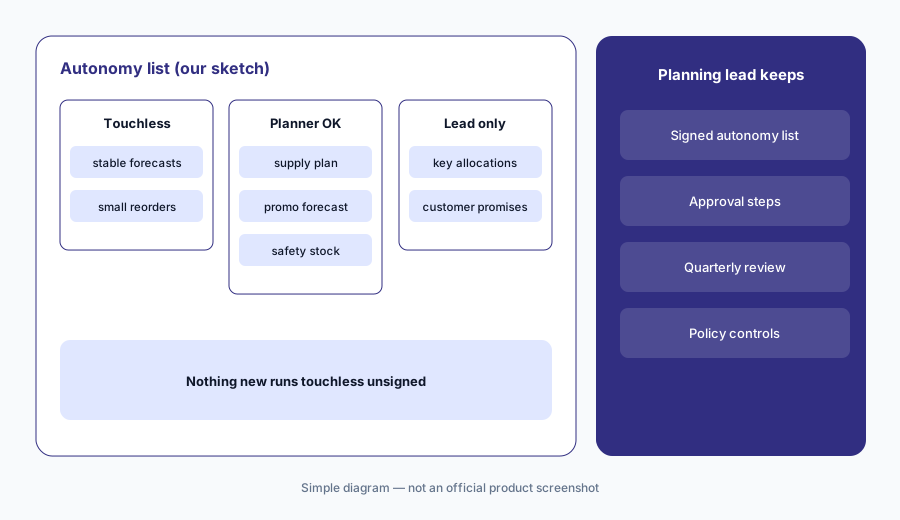
Write the autonomy list:
List ten recurring planning decisions. Mark which may run touchless in o9 and which always wait for a named planner, and have the planning lead sign the list.
6. Faster optimization and data connections
What it is: In a 23 July 2026 release o9 reported a benchmark with NVIDIA cuOpt on a supply chain planning model of about 30 million variables: 57.4 seconds on an NVIDIA B200 GPU versus 661.7 seconds with a CPU solver, with the result within 0.008% of the CPU solver’s answer. o9 says this applies to linear programming workloads such as inventory optimization and production planning today; GPU support for mixed-integer problems such as production scheduling is “under active development”. Separately, o9 announced a Connected Application for Snowflake on 5 May 2026 so planning models can read governed Snowflake data and write results back.
Faster solves mean more scenarios, not better choices. Name the trade-off you are testing before you run ten more plans.
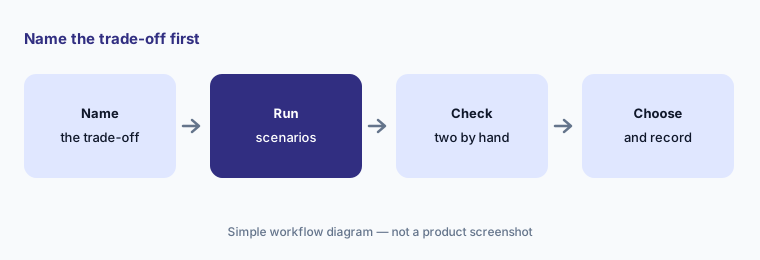
Name the trade-off first:
Before running extra o9 optimization scenarios, write down the one trade-off you are testing. Have the planner check the two closest results by hand before choosing.
Pricing context (October 2026)
o9 does not publish prices; o9solutions.com/pricing returns “page not found” and the site offers demo requests and a platform tour only. Pricing is quote-only as of 17 Oct 2026.
Ask whether the AI agents, Post-Game Analysis, and the Self-Service Fast Innovation Platform (o9’s no-code and low-code tools) are included in your Digital Brain subscription, how large language model usage is billed (o9 says it supports multiple models), and what the Snowflake Connected Application or GPU-accelerated optimization add to the cost.
Uncertainty: o9’s site does not name its AI agents, so we describe them only in o9’s general terms and suggest asking for your account’s list. o9 frames the agents’ questions three ways: the “3Ws” in its June 2025 release, four questions on its AI page, and a “4W” engine that lists five questions in a gated guide. The AI page offers autonomy up to touchless execution while the APEX page says humans stay in control of strategy and judgment — where the line sits in your account is a setting you choose. The Snowflake release uses future wording (“will allow”), and GPU support for mixed-integer problems is still in development. The 20–50% productivity, ~50% less manual work, 5–10% forecast accuracy, and 10x solve-time figures are o9’s own, not our measurement.
When it’s useful (honest take)
Useful when you plan demand, supply, commercial, or merchandise decisions in o9 (or are choosing a planning platform), forecast misses keep surprising your S&OP meetings, and a named planner will check every AI explanation before it is presented.
Less useful when your hardest problems are warehouse and transportation execution (Manhattan Active AI), you mainly need fast what-if scenarios on a concurrent planning engine (Kinaxis AI), or your gap is knowing where freight is today (project44 vs FourKites).
Paying for o9 Solutions AI and a few other AI tools? The $9 AI toolkit spreadsheet lists every AI subscription you have, what each one costs, and how fast it pays for itself, so you can see which ones are worth the money.
Want someone to do it for you? AI toolkit audit — $19
Related options (educational)
| Need | Better home | Why |
|---|---|---|
| Integrated planning on a knowledge graph with AI agents and post-game analysis | o9 Solutions AI (this page) | Quote only |
| Concurrent planning with scenarios and an agent builder | Kinaxis AI | Quote only |
| Planning and execution suite with domain agents | Blue Yonder AI | Quote only |
| Shipper analytics assistant for freight spend and lanes | Uber Freight AI | Quote only |
| Inventory and reordering for smaller brands | Cin7 AI | See its review |
| One-off analysis of a sanitized forecast export | Claude (sanitized export) | General chat; no plan changes |
FAQ
What are o9 AI agents?
Specialized agents in the o9 Digital Brain, announced as generally available on 3 June 2025, that combine generative and agentic AI with o9’s Enterprise Knowledge Graph to find risks and opportunities and answer what happened, why, what is likely next, and what to do. o9’s site does not list them by name.
What is the o9 Digital Brain?
o9’s planning platform: an Enterprise Knowledge Graph that models your data, relationships, and constraints, combined with AI models and large language models for forecasting, optimization, scenarios, and natural-language questions across demand, supply, commercial, and financial plans.
How much does o9 cost in October 2026?
o9 does not publish prices; its pricing URL returns page not found. Treat it as quote-only and ask whether agents, post-game analysis, the self-service tools, and model usage are included.
What is o9 APEX?
An operating model o9 introduced in a 26 March 2026 release — Agile, Adaptive, Autonomous Planning and Execution — that uses the next-generation Digital Brain to sense issues, learn from plan-versus-actual gaps, and progressively automate well-governed decisions.
Who should approve o9 AI recommendations?
A named demand or supply planner checks every reason or recommendation against the data, the planning lead approves every plan change, and the planning lead signs a written list of which decisions may run touchless.
Optional next step (if seats overlap)
If you pay for a planning platform with AI agents, a BI tool your analysts use to explain forecast misses, and chat seats that all answer “why did we miss the plan”, that overlap is worth mapping. Map the overlap with the $19 AI toolkit audit or the $9 AI toolkit spreadsheet. Email Audit $19 or Toolkit spreadsheet $9.
Checkout is live via Stripe. After you pay, we email delivery (spreadsheet) or intake next steps (audit).