Tool · Logistics ops · project44 · Oct 2026
project44 AI review (Oct 2026): Mo analyst, AI agents, Agentic Workflow Manager, and Theft Prevention for shippers
project44 tracks freight for shippers across truckload, less-than-truckload, ocean, air, rail, and parcel, and now sells itself as a “Decision Intelligence Platform” called Movement. Its AI comes in three layers: Mo, an analyst you can ask about your own shipment data; a catalogue of AI agents that call carriers, chase missing data, retrieve documents, and book freight within limits you set; and the Agentic Workflow Manager, where you decide when those agents start. This page is about using them for the repetitive chasing while a transportation manager still owns every rule that moves money or freight. Each section has a Try this.
What this project44 page covers
This page is for a transportation manager, logistics analyst, or supply chain lead at a shipper that uses project44 for visibility or is weighing its newer AI features. The question it answers: what Mo and the agents actually do, where a person stays in the loop, what project44 says is in beta, and who must approve before an agent books freight or changes a routing decision.
project44’s AI agent orchestration page (read 17 October 2026) lists agents for exception management, network operations, freight procurement, execution recovery, documents, disruptions, appointments, and carrier onboarding, and says the platform is “powered by 57 agents and counting”. Mo was announced on 23 July 2026; project44’s 12 August 2026 results release says Mo “is available in beta for all project44 customers”.
Ground rules: a named transportation manager approves every booking rule, rate guardrail, and routing-guide change; the logistics coordinator reads agent transcripts before trusting a workflow; nobody pastes driver phone numbers, contract rates, or customer details into an outside chat tool; and project44’s savings figures are its claims, not our measurement.
Major features (with how someone uses them)
Examples at a glance: each feature has a concrete example from a real job plus a short Try this you can run this week.
1. Mo: ask your own shipment data in plain language (primary)
What it is: Mo is an AI supply chain analyst inside project44. You ask a question in plain language — late rates by lane, dwell at a port, which carriers miss pickup — and it answers from your own shipment history and business rules, without SQL or exports. project44 says Mo leads with the finding, shows its work (which shipments, which time window, which definition of on-time it used), flags low confidence instead of guessing, and runs a data quality check before each analysis. You can teach it your lead times, thresholds, and windows once. At launch it covers truckload, less-than-truckload, and ocean data, with more promised through 2026.
The definition of “on time” decides the answer. Make sure Mo’s definition matches the one in your carrier contracts before anyone acts on a ranking.
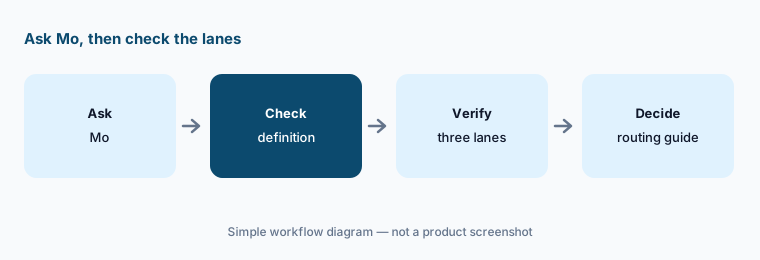
Primary workflow:
Ask Mo which ten lanes had the worst on-time rate last month. Have the transportation manager check three of them against the carrier's own tracking before anything changes in the routing guide.
2. Exception and network agents: chasing reason codes, milestones, and PODs
What it is: project44’s agents page describes digital workers for the dull follow-up work. The Exception Management Agent retrieves late-delivery reason codes and confirms ocean bookings at risk of being rolled. The Network Operations Agent chases missing pickup and delivery milestones, unknown or missing equipment IDs, and broken telematics connections. The Document Management agent finds delivered shipments without a proof of delivery, contacts the carrier, and attaches the POD. project44 says agents use “hard” APIs and “soft” channels such as voice and messaging.
An agent that closes a gap is only as good as what the carrier told it. Spot-check what it wrote back into the shipment before billing or a customer depends on it.
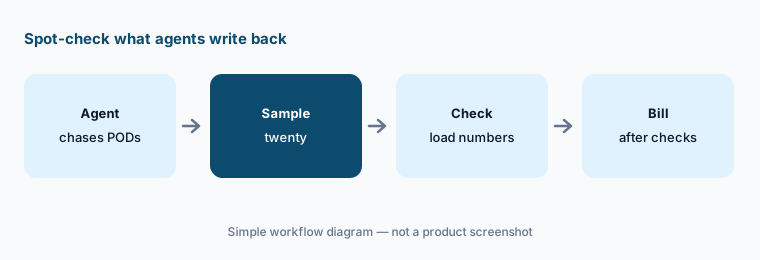
Spot-check the results:
Let project44's document agent chase missing PODs for two weeks. Have the logistics coordinator check twenty attached PODs against the load number before invoices go out.
3. Agentic Workflow Manager: you set the triggers, agents do the chasing
What it is: The Agentic Workflow Manager is project44’s no-code tool for putting its agents to work. Each workflow has three parts: a signal from project44’s shipment data, a trigger that decides when an agent starts (you can filter by carrier, lane, origin, destination, reference key, or reason code), and an action, where an agent calls carriers, collects missing data, reconciles documents, or resolves the exception. project44 says workflows start from pre-built templates, that you “see the workflow, configure the steps” and publish when ready, and that audit trails and human checkpoints are built in. The 12 August 2026 release announced it as newly launched.
A broad trigger means agents talk to carriers on your behalf about shipments nobody on your team has looked at. Start narrow, read the transcripts, and widen one filter at a time.
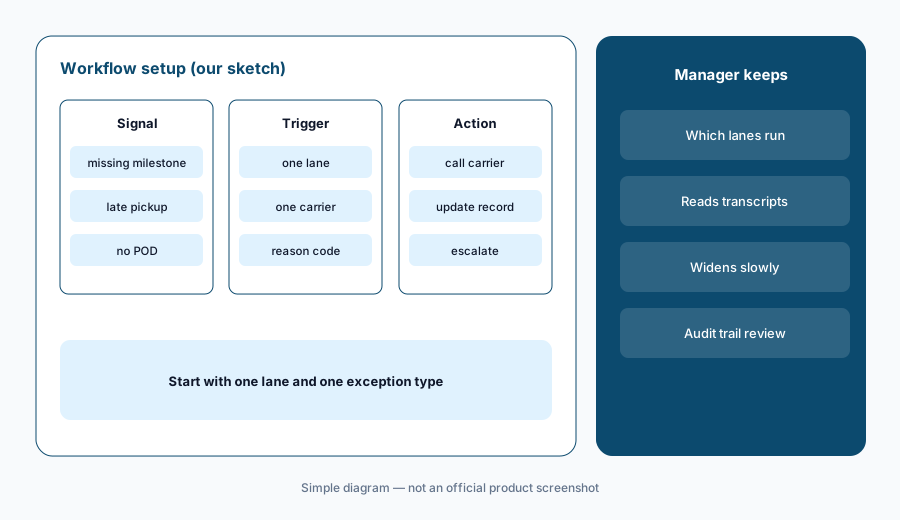
Start narrow:
Set one Agentic Workflow Manager trigger for a single lane and one exception type. Read every carrier conversation the agent has for two weeks before adding a second lane.
4. Freight procurement and execution recovery agents: booking within your limits
What it is: Two agents touch money. The AI Freight Procurement Agent, per project44, negotiates rates across many carriers at once, evaluates bids, and books freight “within the guardrails your team defines”. The Execution Recovery Agent spots carrier cancellations, ranks alternatives from your routing guide, calls carriers for quotes, and rebooks before the pickup window closes. Both are part of project44’s Intelligent TMS, which its newsroom describes as generally available.
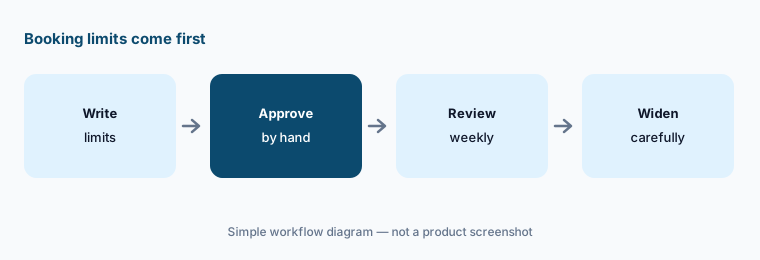
Guardrails are the whole control here. Write the maximum rate over benchmark, the carriers that are off limits, and the lanes that always need a person, and approve every booking by hand until you trust them.
Guardrails first:
Write three booking limits (largest rate over contract, carriers never to use, loads that always need a person). Enter them before turning on any project44 booking agent and approve every booking by hand for two weeks.
5. Disruption mapping and dock appointments
What it is: The Disruption Management Agent evaluates news events every day across more than 120 risk categories, per project44, and maps each one to your in-transit inventory, so you see which shipments a port closure or storm actually touches. A separate appointment agent books inbound dock appointments, adjusts windows when a shipment runs late, and reschedules truckload deliveries at the yard.
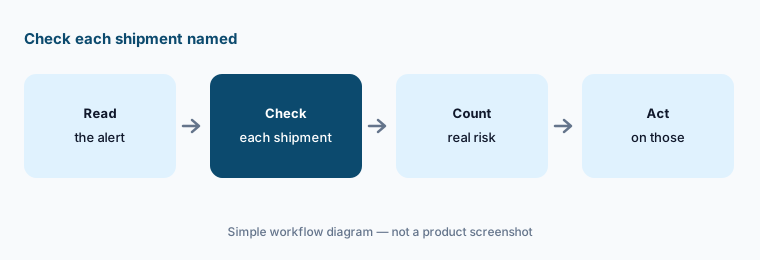
A disruption alert is a prediction about your freight. Check the shipments it names before you expedite, reroute, or warn a customer.
Check before you act:
When the next project44 disruption alert arrives, check every shipment it names against the carrier's tracking. Have the analyst note how many were really at risk before anyone expedites.
6. Theft Prevention: route deviation, idle detection, and carrier outreach
What it is: project44 Theft Prevention watches truckload shipments for signs of cargo theft. You define safe and risky zones (theft hotspots, border crossings, secure parking); a route deviation model compares actual truck movement with a baseline route; idle detection combines speed, engine status, and optional door sensors to spot unscheduled stops. When something looks wrong, an AI agent contacts the carrier to verify status and escalates if it can’t reach anyone, and your team sees a verified exception.
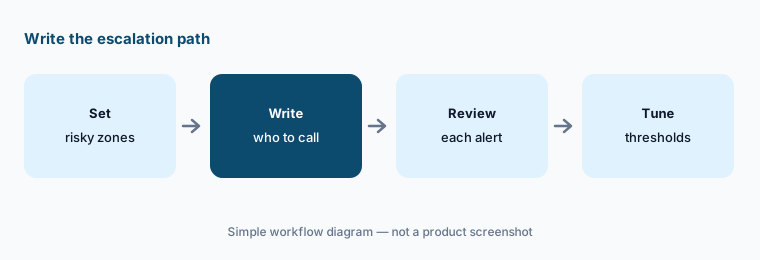
A false alarm at 2 AM still needs a person to decide whether to call the police or the carrier’s dispatcher. Write that escalation path before the first alert.
Write the escalation path:
Set up three risky zones in project44 Theft Prevention. Write down who the night shift calls when an alert is escalated before the first live alert arrives.
Pricing context (October 2026)
project44 does not publish prices. Its site offers demos and a contact-sales form only, so pricing is quote-only as of 17 Oct 2026; we have no plan names or amounts to give. Ask whether Mo, the agents, the Agentic Workflow Manager, and Theft Prevention are included in your visibility or Intelligent TMS contract or priced separately.
Mo is described as being in beta for all project44 customers (12 August 2026 release). Logistics service providers (3PLs, forwarders, brokers) are served by LSP44, a separate project44 business announced in July 2026, so their packaging may differ.
Uncertainty: project44’s agent count differs between pages: the AI page says 57 agents, the 12 August 2026 release says more than 54. Its outcome figures (up to 4% lower freight spend, 70% less manual coordination, up to 90% faster resolution, up to 75% faster sourcing, up to 40% lower disruption costs) and its internal test comparing Mo with a Claude Opus model are project44’s own claims, not our measurement. We could not confirm when Mo leaves beta, which agents are included in which contract, or how much autonomy each agent has by default.
When it’s useful (honest take)
Useful when you already track most of your freight in project44, spend hours chasing carriers for milestones, PODs, and reason codes, and have a transportation manager who will write booking limits and read agent transcripts before widening anything.
Less useful when your main gap is your own trucks and drivers (Samsara AI, Motive AI), freight forwarding and customs (Flexport AI), or you want a second visibility option to compare (FourKites AI). If you move a handful of loads a week, the agents may have little to do.
Paying for project44 AI and a few other AI tools? The $9 AI toolkit spreadsheet lists every AI subscription you have, what each one costs, and how fast it pays for itself, so you can see which ones are worth the money.
Want someone to do it for you? AI toolkit audit — $19
Related options (educational)
| Need | Better home | Why |
|---|---|---|
| Visibility platform with an AI analyst and carrier-facing agents | project44 AI (this page) | Quote only |
| Visibility with a named Digital Workforce and a workflow builder | FourKites AI | Quote only |
| Forwarder platform with MCP and booking agents | Flexport AI | Freight and customs quoted |
| Own-fleet telematics and safety | Samsara AI | See its review |
| One-off analysis of a sanitized lane export | Claude (sanitized export) | General chat; no carrier actions |
FAQ
What is project44 Mo?
A conversational AI analyst inside project44, announced 23 July 2026. It answers questions from your own shipment data and business rules, shows which shipments and definitions it used, and flags low confidence. At launch it covers truckload, less-than-truckload, and ocean data.
Is Mo generally available?
project44’s 12 August 2026 release says Mo is available in beta for all project44 customers. We did not find a general-availability date.
How much does project44 cost in October 2026?
project44 does not publish prices. Its site offers demos and a contact form only, so treat it as quote-only and ask which AI features your contract includes.
Can project44’s agents book freight on their own?
project44 says its freight procurement agent books “within the guardrails your team defines” and its recovery agent rebooks cancelled loads from your routing guide. Set those limits yourself and approve bookings by hand until you trust them.
Who should approve project44 agent actions?
A named transportation manager for booking limits and routing-guide changes, the logistics coordinator for agent transcripts and documents, and the security lead for theft escalations.
Optional next step (if seats overlap)
If you pay for a visibility platform with an AI analyst, a TMS with its own assistant, and a chat seat that all answer “where is my freight”, that overlap is worth mapping. Map the overlap with the $19 AI toolkit audit or the $9 AI toolkit spreadsheet. Email Audit $19 or Toolkit spreadsheet $9.
Checkout is live via Stripe. After you pay, we email delivery (spreadsheet) or intake next steps (audit).