Tool · Logistics ops · Manhattan Associates · Oct 2026
Manhattan Active AI review (Oct 2026): Manhattan Active Agents and Agent Foundry for warehouse, transportation, and order ops
Manhattan Associates sells warehouse, transportation, order management, and store software on one cloud platform, Manhattan Active. Since January 2026 it has sold Manhattan Active Agents (the page now brands them ActiveAgents): ready-made AI agents that live inside those systems and can research a short pick, read a supplier’s PDF, reschedule a dock appointment, or draft a refund. Agent Foundry lets your own team build more. This page is about letting those agents do the research and paperwork while a named warehouse, transportation, or order manager still owns every action that changes an order, wave, or load. Each section has a Try this.
What this Manhattan Active AI page covers
This page is for a warehouse manager, transportation manager, or order operations lead whose company runs Manhattan Active Warehouse, Transportation, or Order Management, or is choosing between execution suites. It answers four questions: what the agents actually do, which of them act on their own, what Agent Foundry lets you build, and who must approve before an agent changes real work.
Manhattan’s AI agents page (read 17 October 2026) says the agents “work autonomously” inside Manhattan Active and can work with outside agents through the A2A and MCP standards. Its ready-to-use agents page lists 26 named agents across warehouse, transportation, order, store, and platform work. Manhattan announced commercial availability on 8 January 2026, saying the agents are embedded in all Manhattan Active solutions and come with Agent Foundry.
Ground rules: a named warehouse manager approves anything that changes a wave or moves people, a transportation manager approves anything that changes a load, appointment, or rate, and a customer service lead approves refunds and order edits. Nobody pastes customer details, driver phone numbers, or contract rates into an outside chat tool, and Manhattan’s productivity figures are its claims, not our measurement.

Major features (with how someone uses them)
Examples at a glance: each feature has a concrete example from a real job plus a short Try this you can run this week.
1. Wave Coordinator and Labor agents: short picks and staffing (primary)
What it is: The Wave Coordinator Agent researches waves that come up short. Manhattan says it explains, SKU by SKU, why items were deselected from a wave, finds inventory elsewhere in the building, and recommends alternatives. The Warehouse Labor Agent tracks work against the plan, says which zones are ahead or behind, suggests who to move, and, per Manhattan, can “initiate labor moves by communicating directly with associate devices”. In its January release Manhattan names Eaton as an early customer using both.
A recommendation that looks right on screen can still send pickers to a location that is blocked or already counted out. Have the person who knows the floor mark each one before the agent is allowed to act.
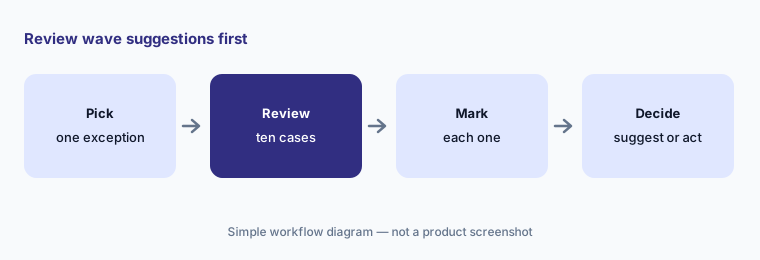
Primary workflow:
Pick one recurring warehouse exception (for example short picks). Have Manhattan's AI agent suggest a fix for ten real cases and have the warehouse manager mark each suggestion before any agent is allowed to act.
2. Document agents: ASNs, freight invoices, routing requests, and PODs
What it is: Several agents turn paperwork into records. Manhattan calls the Create ASN Agent “fully autonomous”: it reads PDF shipping documents and generates ready-to-receive advance ship notices. The Verify ASN Agent finds ASNs received in full and closes them. The Freight Payment Agent reads carrier invoices from email and PDF and creates freight invoices, including blind invoices with no matching shipment. The Routing Request Agent builds vendor routing requests from emails and flags missing details, and the Proof of Delivery Agent reads PODs from carrier email.
Reading a document is not the same as checking it. A wrong quantity on an ASN or a wrong charge on a freight invoice flows straight into inventory and payables.
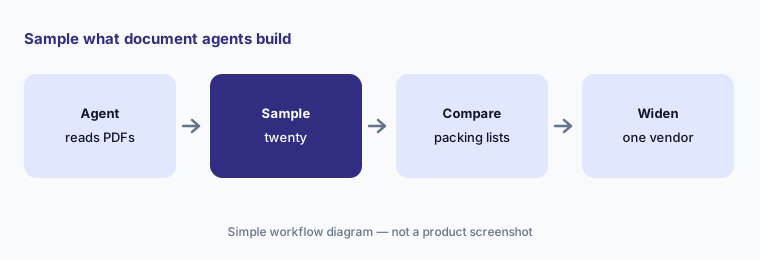
Sample before you trust:
Have the receiving lead compare twenty ASNs the Create ASN agent built with the supplier's packing lists before any of them are received against.
3. Shipment Tracking, Transportation Planner, and Appointment agents
What it is: On the transportation side, the Shipment Tracking Agent watches shipments across modes and carriers, uses traffic and weather data to predict delays, and per Manhattan “can auto-cancel/rebook appts, trigger trip replanning, or escalate to a planner” with options. The Transportation Planner Agent reviews planned shipments for risks, data gaps, and missed consolidations and learns from past planner decisions. The Appointment Management Agent schedules pickup and delivery appointments at your facilities and reschedules them when an ETA changes. A Rate Management Agent reads carrier agreement text to set up accessorial charges.
An appointment the agent moves on its own is a promise to a carrier and a dock crew. Decide which changes it may make alone and which go to a planner first.
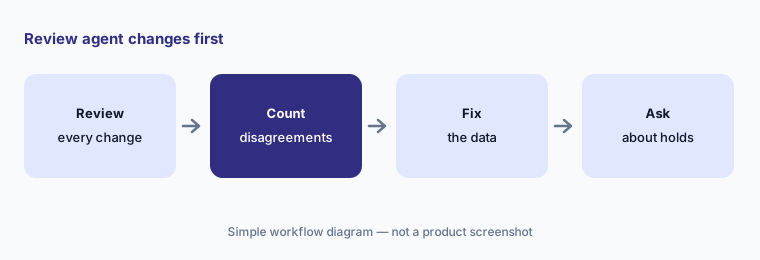
Review before you widen:
For one month, have a planner review every appointment the Shipment Tracking agent cancels, rebooks, or escalates. Ask your Manhattan team which of those changes can wait for approval until the transportation manager signs off.
4. Order, store, and refund agents, plus Maven for customer service
What it is: For order and store teams, the Contact Center Agent gives customer service reps order insights and answers, and the Store Associate Agent shows store managers sales against goals and fulfillment progress. The Order Creation Agent reads B2B order files (PDF, TXT, CSV) and produces “a structured, reviewable order for final confirmation before creation”. The Late Delivery Refund Agent finds expedited orders that missed their promise date and supports approve-all or selective refund decisions. Separately, Manhattan Active Maven handles customer chat and email on Manhattan Active Order Management, from “Where’s my order?” to replacements and price adjustments.
Refunds and order edits move money and reach customers. Keep a person on the approve button until you have read enough of the agent’s choices to trust its rules.
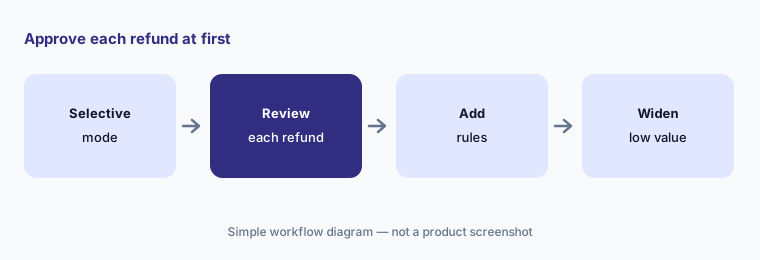
Approve each refund:
Run Manhattan's Late Delivery Refund agent in selective mode for two weeks. Have the customer service lead approve or reject each refund and write down every rule she had to add.
5. Agent Foundry: build your own agents from a conversation, a template, or scratch
What it is: Agent Foundry is Manhattan’s no-code tool for making your own agents. Manhattan describes three ways in: From AI (describe what you need in a conversation and it drafts the agent), From Template (start from an existing agent and describe the changes in plain English), and From Scratch (full control over prompts, multi-step workflows, and which APIs the agent may call). Manhattan says builders can only reach pre-defined services, that procedural guardrails can “require human approvals where necessary”, that agents are versioned and retired in one place, and that finished agents can be published to the Agent Marketplace in Google’s Gemini Enterprise. The Foundry page says it is available with all Manhattan Active solutions.
The approval step is something you add, not something you get by default. Decide which actions need a person before the first custom agent goes live, and write that into the workflow.
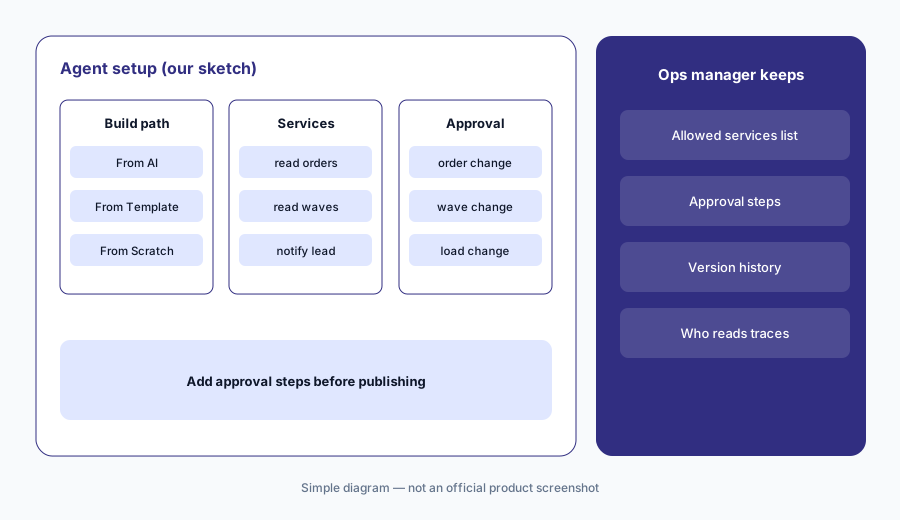
Write the limits first:
Before publishing a Foundry agent, list the services it may call and add a human approval step for any action that changes an order, wave, or load. Have the operations manager sign the list.
6. Guardrails, tracing, A2A and MCP, and Manhattan Marketplace
What it is: Manhattan says its agents run on a reasoning engine that grounds answers in your Manhattan Active data (retrieval-augmented generation), with instructional, procedural, and data/API guardrails plus content sanitization. Agent work can be followed through execution tracing and structured logging. Agents can talk to other agents through the A2A and MCP standards and are available in Google Agentspace, per the agents page. On 25 June 2026 Manhattan announced Manhattan Marketplace, where partners publish agents and extensions; it said customers will get access “in upcoming quarters”.
Grounding makes answers more likely to match your data, not certain to. The trace is only useful if someone reads it.
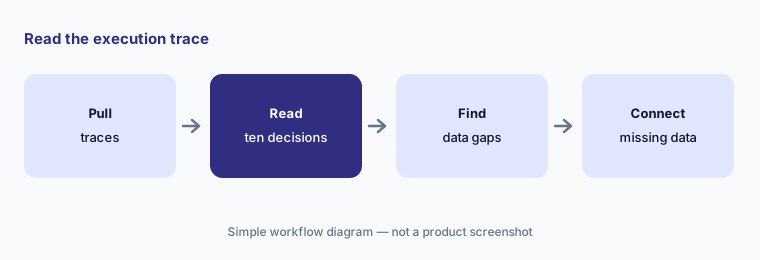
Read the trace:
Pull one week of execution traces for one Manhattan agent. Have the warehouse manager read ten decisions end to end and note any data the agent did not have.
Pricing context (October 2026)
Manhattan does not publish prices. Its Editions page offers three starting scopes — Essentials, Enterprise, and Enterprise Premier — for ActiveStore, ActiveOrder, ActiveWarehouse, and ActiveTransportation, with no amounts, and manh.com/pricing sends you to the home page. Pricing is quote-only as of 17 Oct 2026.
Manhattan says the agents are embedded in all Manhattan Active solutions and that Agent Foundry is included (8 January 2026 release; Foundry page). Ask which of the 26 listed agents your edition includes, whether any usage of large language models is metered, and when Manhattan Marketplace opens to customers.
Uncertainty: Manhattan’s naming varies: the agents page brands them ActiveAgents while the January 2026 release and the site footer say Manhattan Active Agents, and the agents page says Google Agentspace while the Foundry page says Gemini Enterprise. Its “productivity gains up to 60 percent” and Maven’s “over 40% of customer service queries” (from an October 2025 webinar page) are Manhattan’s claims, not our measurement. We could not confirm which agents come with which edition, which act on their own by default, or when Manhattan Marketplace opens to customers.
When it’s useful (honest take)
Useful when you already run Manhattan Active Warehouse, Transportation, or Order Management, your teams lose hours to short-pick research, paperwork, and appointment juggling, and a named manager will review the agents’ choices before they act alone.
Less useful when you are not on Manhattan Active (the agents live inside it), your main gap is shipment visibility across carriers (project44 AI, FourKites AI), or your hardest problem is planning rather than execution (Kinaxis AI, Blue Yonder AI).
Paying for Manhattan Active AI and a few other AI tools? The $9 AI toolkit spreadsheet lists every AI subscription you have, what each one costs, and how fast it pays for itself, so you can see which ones are worth the money.
Want someone to do it for you? AI toolkit audit — $19
Related options (educational)
| Need | Better home | Why |
|---|---|---|
| Execution suite with built-in agents and an agent builder | Manhattan Active AI (this page) | Quote only |
| Planning and execution suite with domain agents | Blue Yonder AI | Quote only |
| Planning platform with agents and scenarios | Kinaxis AI | Quote only |
| Shipment visibility with carrier-facing agents | project44 AI | Quote only |
| Inventory and ordering for smaller brands | Cin7 AI | See its review |
| One-off analysis of a sanitized exception export | Claude (sanitized export) | General chat; no system actions |
FAQ
What are Manhattan Active Agents?
Ready-made AI agents built into Manhattan Active warehouse, transportation, order, and store software. Manhattan lists 26, such as the Wave Coordinator, Warehouse Labor, Create ASN, Shipment Tracking, Appointment Management, and Late Delivery Refund agents. Some assist people; others work in the background.
When did Manhattan’s AI agents become available?
Manhattan announced commercial availability on 8 January 2026 and said the agents are embedded in all Manhattan Active solutions, together with Agent Foundry.
How much does Manhattan Active cost in October 2026?
Manhattan does not publish prices. It sells Essentials, Enterprise, and Enterprise Premier editions with no listed amounts, so treat it as quote-only and ask which agents your edition includes.
Can Manhattan’s agents act without a person?
Yes, some can. Manhattan says the Create ASN agent is fully autonomous and the Shipment Tracking agent can cancel or rebook appointments. Decide which actions need approval and add that step yourself, especially in Agent Foundry.
Who should approve Manhattan agent actions?
A named warehouse manager for waves and labor moves, a transportation manager for loads, appointments, and rates, a receiving lead for ASNs, and a customer service lead for refunds and order edits.
Optional next step (if seats overlap)
If you pay for an execution suite with its own agents, a visibility platform with an AI analyst, and chat seats that all answer “why is this order late”, that overlap is worth mapping. Map the overlap with the $19 AI toolkit audit or the $9 AI toolkit spreadsheet. Email Audit $19 or Toolkit spreadsheet $9.
Checkout is live via Stripe. After you pay, we email delivery (spreadsheet) or intake next steps (audit).