Tool · Ecommerce ops · Akeneo · Oct 2026
Akeneo AI review (Oct 2026): Ask Ziggy, Agentic Ziggy, and AI enrichment for product data
Akeneo is a product information management (PIM) platform — the Akeneo Product Cloud — where brands, manufacturers, distributors, and retailers keep product data and send it to sales channels. In July 2026 it added Agentic Ziggy, which plans and coordinates AI agents that work on the catalog, alongside the read-only Ask Ziggy helper and AI that fills missing specifications from public websites with the sources attached. This page is about using that AI to close gaps faster while the product data lead still accepts every value. Each section has a Try this.
What this Akeneo page covers
This page is for a product data lead, catalog manager, or ecommerce manager at a brand, manufacturer, distributor, or retailer with thousands of SKUs and gaps in supplier data, who uses Akeneo or is choosing a PIM. The question it answers: what Ziggy and Akeneo’s embedded AI do, what is new in 2026, which package each feature needs, what Akeneo says about price, and who accepts the values the AI proposes.
Akeneo’s AI and automation page, the Summer Release announcement (8 July 2026) and release page, the July 2026 product updates, the web-based enrichment guide, and the package comparison page were read on 16 October 2026.
Ground rules: the product data lead accepts every AI-proposed value and opens its source first; safety, compliance, and regulated attributes are never filled automatically; AI image edits are checked against the real product; the team decides which outside AI tools may read the catalog; and Akeneo’s readiness and matching indicators are prompts to look, not proof a value is right.
Major features (with how someone uses them)
Examples at a glance: each feature has a concrete example from a real job plus a short Try this you can run this week.
1. Web-based attribute enrichment with cited sources (primary)
What it is: Web-based attribute enrichment, added in the July 2026 updates for the Growth, Advanced, and Premium packages, searches the public web for missing product details and proposes values inside the PIM. Akeneo’s guide says every proposed value includes at least one source website, that no value is proposed without one, that it honours publishers who opt out of AI use, that admins can block websites, and that workflows need a review step before automated enrichment can be switched on. Sources are kept in the product history.
A citation shows where a value came from, not that it is right. Open each source, prefer the manufacturer’s own page, and block retailer or forum sites that often get specs wrong.
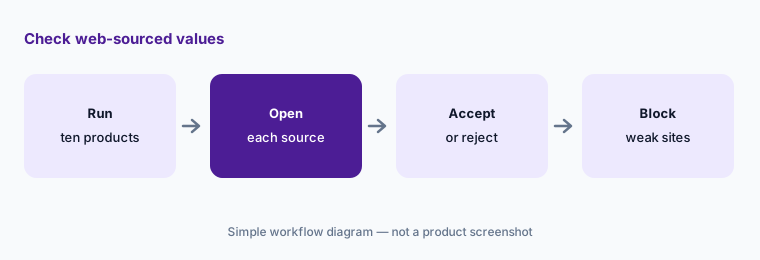
Primary workflow:
Run Akeneo's web-based attribute enrichment on ten products with missing specs. Have the product data lead open each cited source before accepting a value.
2. Ask Ziggy and Agentic Ziggy
What it is: Akeneo’s AI page splits its assistant in two. Ask Ziggy is a read-only helper that explains features, explores product data, and troubleshoots inside the PIM. Agentic Ziggy, introduced in the Summer Release on 8 July 2026, turns catalog signals, channel feedback, and requests typed in plain language into execution plans carried out by specialised agents such as the Data Architect Agent. Akeneo describes role-based permissions, approval steps, full visibility of agent actions, and a propose-and-approve model.
An execution plan touching thousands of SKUs deserves the same review as a bulk import. Read the plan, run it on a small set, and check who is allowed to approve each kind of change.
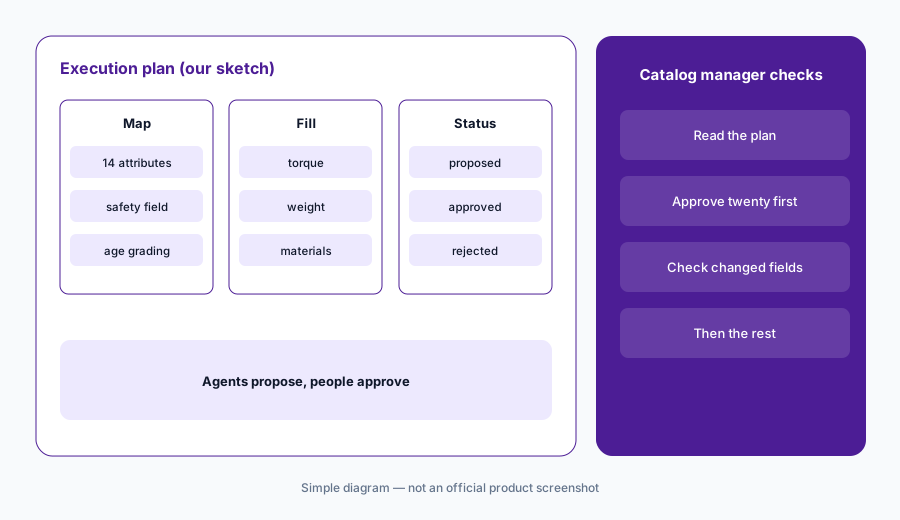
Before approving a plan:
Ask Agentic Ziggy for one execution plan. Approve it for twenty products only, and have the catalog manager check every changed field before approving the rest.
3. Descriptions, translations, and extraction from images and PDFs
What it is: Akeneo’s AI page lists AI product descriptions and translations from prompts, with your tone of voice, glossaries, and brand guidelines applied automatically, a central place to manage prompts with previews, and extraction of details such as colours or technical specifications from product images and PDF spec sheets into attributes.
Brand voice is easy to check; facts are not. Check generated descriptions against the attributes they came from, and have a native speaker read each language before the first launch.
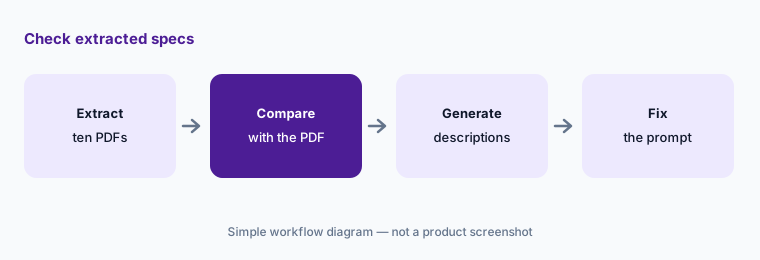
Check the drafts:
Extract specs from ten supplier PDFs and generate descriptions in Akeneo. Have the product data lead compare every extracted value with the PDF before the descriptions are approved.
4. AI image edits and tagging in the DAM
What it is: Akeneo DAM uses AI to tag assets and to format images for each channel. The July 2026 updates added prompt-based transformations on the Advanced and Premium packages: change a product’s colour for a missing variant, place it in a new scene, or change the background with a text prompt. Akeneo says each transformation uses 5 credits per asset and applies to the whole asset family, and suggests testing on a family of one or two images first.
An AI colour variant must match the product you ship. Compare each generated image with a real sample, and keep generated images clearly marked in the DAM.
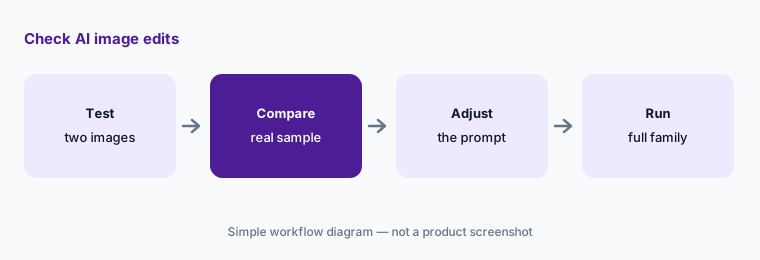
Check the images:
Test one prompt-based image transformation on an asset family of two images. Have the creative lead compare the result with a real product sample before applying it to the full family.
5. Channel readiness, mapping, and export diagnostics
What it is: Before you connect a new sales channel, Akeneo’s Channel Readiness Guide compares the channel’s requirements with your attributes and flags missing fields and blockers. Automated mapping matches your data to channel requirements and shows why it chose each match, so you can see which items need a person. The Summer Release added Intelligent Error Management, which turns retailer errors into plain-language guidance, and the AI page describes AI Export Diagnostics with shortcuts to the attribute at fault.
Automated mapping is a draft. Review every low-certainty match and every mapping that touches safety, age, or legal fields before the first export.
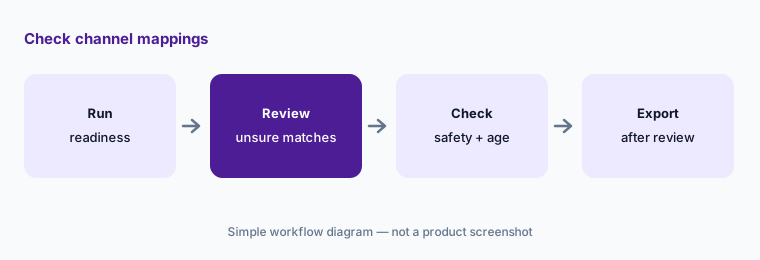
Check the mappings:
Run Akeneo’s channel readiness check for one channel. Have the marketplace manager review every mapping the AI is unsure about, plus all safety and age fields, before the first export.
6. AI discovery: how ChatGPT, Gemini, and Claude see your products
What it is: Akeneo’s AI page describes tools that show how AI shopping assistants interpret and recommend your products, audit your website’s structured data for conversational search, and turn review sentiment into catalog fixes. The July 2026 updates extended AI Discovery in PX Insights (Premium package) beyond ChatGPT to Gemini and Claude. Akeneo also says you can connect your own AI models and let outside AI tools such as Claude or ChatGPT query catalog data through open standards.
How an assistant describes your product changes from week to week. Use these reports to find catalog gaps, then fix the source data — not to chase one answer.
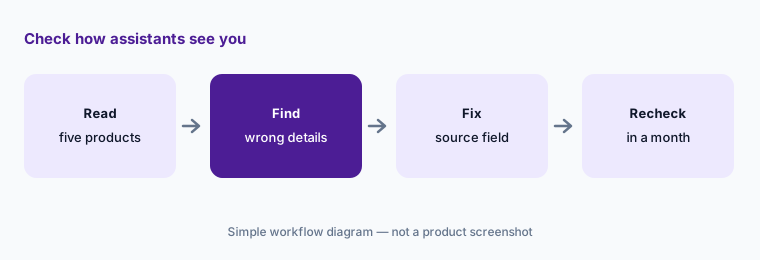
Check how assistants see you:
Pick five products and read how Akeneo’s AI Discovery says ChatGPT, Gemini, and Claude describe them. Have the product data lead fix the catalog field behind any wrong detail.
Pricing context (October 2026)
Akeneo publishes no real price for its paid packages (checked 16 October 2026). Its package comparison page shows Growth as “Starting at” a figure of $0 “Annually” — which we don’t treat as a price — and Advanced and Premium as “Call for quote”, with free-trial and demo buttons. The open-source Community Edition is free to download.
Package matters for AI: web-based enrichment is listed for Growth, Advanced, and Premium; prompt-based image transformations for Advanced and Premium, at 5 credits per asset; and AI Discovery across several assistants for Premium. Ask how many AI credits each package includes, what extra credits cost, and whether bringing your own AI model changes the price. Third-party price estimates exist, but we do not repeat figures Akeneo hasn’t published.
Uncertainty: No published paid prices on 16 Oct 2026; the Growth package shows a $0 figure we don’t treat as a price, so cost depends on your quote. Akeneo calls the Summer Release the first phase of a multi-year investment, so which agents and actions are switched on varies — ask what Agentic Ziggy may change on your account without approval. Its mapping and readiness tools show indicators of certainty; treat them as prompts to check. Customer and time-saving figures are Akeneo’s claims, not our measurement.
When it’s useful (honest take)
Useful when supplier data arrives with gaps, you sell through many channels with different requirements, and a product data lead will open sources and approve plans rather than letting enrichment run unattended.
Less useful when your catalog is small enough to manage in your store platform (BigCommerce AI, Wix AI), your main job is syndicating brand content to retailers with AI workflow steps (Salsify AI), or the gap is on-site search and recommendations rather than data (Algolia AI).
Paying for Akeneo AI and a few other AI tools? The $9 AI toolkit spreadsheet lists every AI subscription you have, what each one costs, and how fast it pays for itself, so you can see which ones are worth the money.
Want someone to do it for you? AI toolkit audit — $19
Related options (educational)
| Need | Better home | Why |
|---|---|---|
| PIM with web-sourced enrichment and agent plans | Akeneo AI (this page) | Paid packages by quote; Community Edition free |
| Brand-to-retailer content with AI workflow steps | Salsify AI | Quote only |
| Store-platform AI copy and catalog enrichment | BigCommerce AI | Core $39 → Scale $399/mo (monthly billing) |
| Site search and merchandising on your store | Algolia AI | Free tier; usage pricing |
| Recommendations and cart offers | Rebuy AI | From $25/mo per package |
FAQ
How much does Akeneo cost?
Akeneo publishes no real price for its paid packages (checked 16 Oct 2026): Growth shows a $0 “starting at” figure we don’t treat as a price, and Advanced and Premium are “Call for quote”. The open-source Community Edition is free.
What is the difference between Ask Ziggy and Agentic Ziggy?
Ask Ziggy is a read-only helper for questions, data exploration, and troubleshooting. Agentic Ziggy, introduced on 8 July 2026, turns requests and catalog signals into execution plans carried out by specialised agents, with approval steps before changes.
How does web-based enrichment avoid made-up values?
Akeneo says every proposed value cites at least one public website, no value is proposed without a source, publisher opt-outs and blocked sites are respected, and a review step is required before automated enrichment. You still need to open the source and check it.
Which Akeneo package includes the AI features?
Per Akeneo’s July 2026 updates, web-based enrichment is on Growth, Advanced, and Premium; prompt-based DAM image edits on Advanced and Premium; and AI Discovery across ChatGPT, Gemini, and Claude on Premium.
Who should approve Akeneo’s AI output?
A named product data lead accepts every AI-proposed value and approves Agentic Ziggy plans; the marketplace manager reviews channel mappings; the creative lead approves AI image edits; and compliance owns safety and regulated attributes.
Optional next step (if seats overlap)
If you pay for a PIM with AI enrichment, a separate content tool, and chat seats your team uses to research missing specs, that overlap is worth mapping. Map the overlap with the $19 AI toolkit audit or the $9 AI toolkit spreadsheet. Email Audit $19 or Toolkit spreadsheet $9.
Checkout is live via Stripe. After you pay, we email delivery (spreadsheet) or intake next steps (audit).