Tool · Ecommerce ops · Triple Whale · Oct 2026
Triple Whale AI review (Oct 2026): Moby analytics, Moby Automations and Actions, landing pages, and AI visibility for ecommerce brands
Triple Whale is an analytics and attribution platform for ecommerce brands: it pulls store, ad, email, SMS, and subscription data into one view and adds its own tracking pixel. Its AI is called Moby — a chat assistant that answers questions from your live Triple Whale data and, on higher packages, runs scheduled Automations, proposes or takes Actions in ad accounts, builds landing pages, and edits creative. This page is about using Moby for the repetitive analysis and reporting while a paid media lead still decides where the money goes. Each section has a Try this.
What this Triple Whale page covers
This page is for an ecommerce founder, growth lead, or paid media manager who uses Triple Whale or is comparing attribution tools. The question it answers: what Moby can do on each package, where it only answers and where it acts, what Triple Whale publishes about price, and who must sign off before Moby changes a budget, a campaign, or a page.
Triple Whale’s Moby page and pricing page (read 16 October 2026) describe four packages: Free (try Moby, first- and last-click attribution, AI visibility in ChatGPT), Foundation (multi-touch attribution, dashboards, SQL, Moby for daily analysis), Automate (Moby Automations, Actions, Landing Pages, Creative Studio, the full model library), and Enterprise (adds Compass, which combines attribution, media mix modeling, and incrementality testing).
Ground rules: a named paid media lead approves every budget change, pause, and launch; the finance lead agrees which attribution model the team quotes; the merchandiser checks every claim on a Moby-built page; no customer lists or card data go into prompts; and figures in Triple Whale customer stories are their claims, not our measurement.
Major features (with how someone uses them)
Examples at a glance: each feature has a concrete example from a real job plus a short Try this you can run this week.
1. Moby chat and AI analytics: ask your own numbers (primary)
What it is: Moby is a chat assistant on top of your Triple Whale data. You ask in plain English — which campaigns drove revenue last week, what changed in conversion rate, which products sold with which ads — and it answers from live data, your performance history, and the goals you have set. If it needs a date range or metric, it asks. It works inside Triple Whale and in Slack, can build dashboards and briefs as “artifacts”, and the Free plan lets you try it. Triple Whale says Moby runs on frontier models from several providers and adds your business context on top.
A fluent answer still depends on which attribution model and date window it used. Check the first answers against the ad platform and the dashboard you already trust before anyone moves money.
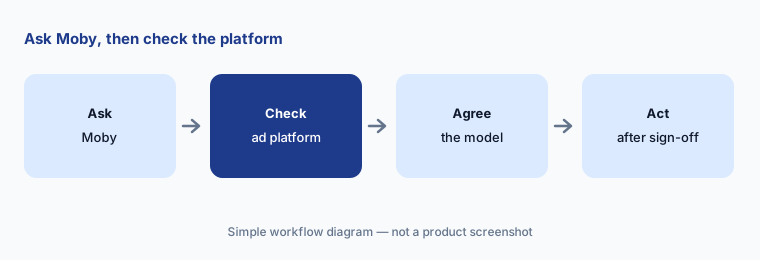
Primary workflow:
Ask Moby which three campaigns spent the most last week for the least revenue. Have the paid media lead check each one in the ad platform before anything is paused.
2. Moby Automations: scheduled reports, checks, and alerts
What it is: An Automation is a job you set up once and ask Moby to run on a schedule or a trigger. You choose the goal, the metrics, the timing, the guardrails, and an action mode: Ask every time, where Moby waits for approval before an Action runs, or Let Moby decide, where it follows the rules you set and asks when approval is needed. Triple Whale’s pricing FAQ gives examples such as Meta spend monitoring, Klaviyo flow triggers, weekly leadership reports, inventory purchase orders, and anomaly alerts. Automations are part of Automate and Enterprise.
A weekly report that nobody checks becomes the truth by repetition. Compare the first few runs with the source systems, and keep anything that moves money or stock on Ask every time.
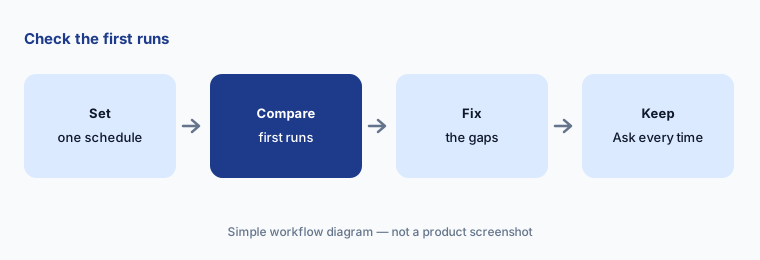
Check the first runs:
Set up one weekly Moby Automation that reports spend and revenue by channel. Keep it on Ask every time and have the paid media lead check the first three reports against the ad platforms.
3. Moby Actions on paid media: budgets, pauses, and launches
What it is: On the Automate and Enterprise packages, Moby can act in connected ad accounts: Triple Whale’s Moby page says it can scale budgets, pause underperformers, and launch campaigns from the same data behind your reports. You first teach it how your team buys media — goals, budgets, channel strategy, targets — then set the schedules, thresholds, and guardrails for what it should watch, recommend, and act on. Each suggested Action comes with the evidence behind it, and you approve, reject, or adjust it.
Guardrails are only as good as the numbers you write into them. Put hard limits in writing first, and approve every Action by hand until you have seen how Moby behaves on a bad day.
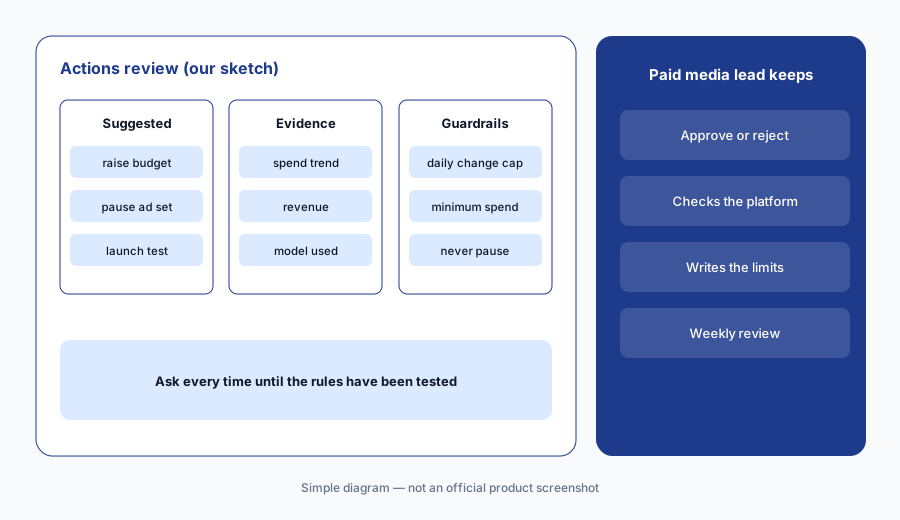
Guardrails first:
Write three budget rules (largest daily change, minimum spend, campaigns never to pause). Enter them as guardrails and approve every Moby Action by hand for the first two weeks.
4. Moby Landing Pages and Creative Studio
What it is: On Automate and Enterprise, Moby Landing Pages generates on-brand landing pages from product and store context; the pricing page says they are fully connected to your Shopify store. Creative Studio is a workspace for editing images, text, and backgrounds and making ad variations with your brand assets, without leaving Triple Whale. Moby can also generate image and video creative.
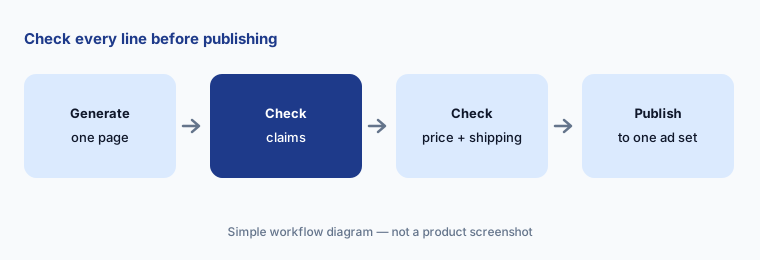
A generated page states prices, shipping terms, and product claims in your name. Read every line before it goes live, and keep the regulated claims (health, safety, results) with a person.
Check every line:
Have Moby build one landing page for a single product. Have the merchandiser check every claim, price, and shipping line before it goes live.
5. The numbers under Moby: Triple Pixel, attribution models, and Compass
What it is: Moby’s answers sit on Triple Whale’s measurement. The Triple Pixel tracks visits and orders across devices; paid plans add multi-touch attribution with several models (Linear All, Linear Paid, First Click, Last Click, Triple Attribution, Total Impact, and Clicks & Deterministic Views) and lookback windows from 1 day to lifetime. Compass, on Enterprise, combines multi-touch attribution, media mix modeling, and incrementality testing that calibrate against each other; the comparison table lists those pieces as add-ons on some other packages.
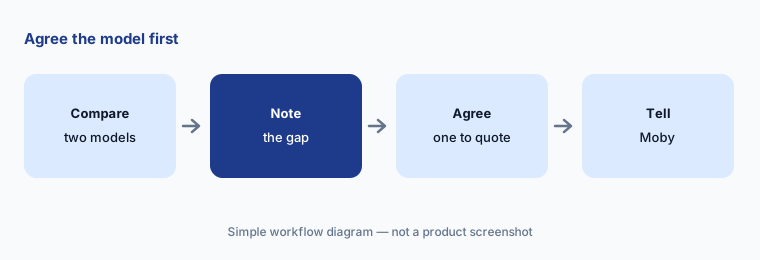
Different models give different answers to “what drove this order”. Pick the model your team quotes on purpose, write it down, and make sure Moby’s answers use the same one.
Agree the model:
Compare two attribution models in Triple Whale for last month's top channel. Have the finance lead note the gap and agree which model the team quotes before Moby's answers drive budget.
6. AI Visibility, Triple Whale MCP, and Slack
What it is: AI Visibility tracks how often your brand appears in AI-generated answers (mentions), which pages those answers cite, and the sentiment around them. The Free plan tracks ChatGPT; paid plans cover all the AI assistants Triple Whale supports. Triple Whale MCP connects your Triple Whale data to AI tools you already use, such as Claude and ChatGPT, and Moby itself can work in Slack for questions and scheduled reports.
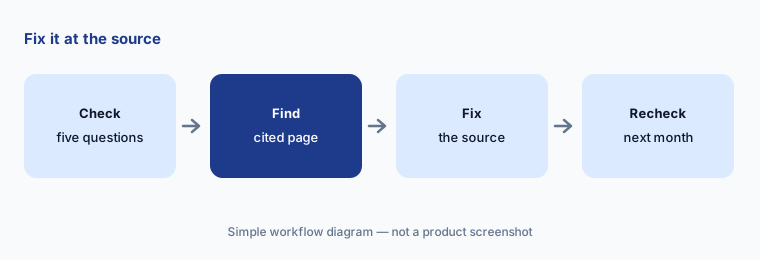
An AI answer that gets your product wrong is usually fixed at the source page it cites, not inside the AI tool. Treat visibility data as a list of pages to fix.
Fix it at the source:
Check how your brand shows up in AI answers for five product questions in Triple Whale's AI Visibility. Have the brand lead correct any wrong fact at its source page.
Pricing context (October 2026)
Triple Whale’s pricing page (read 16 Oct 2026) has a Free plan at no cost (no credit card; try Moby, first- and last-click attribution, AI visibility for ChatGPT, 10 users, 12 months of data). Foundation, Automate, and Enterprise are priced by a combination of your brand’s annual GMV and the package, set with a slider; the dollar amounts were not in the page text we read, so check the slider for your sales tier or ask sales. Every paid plan includes unlimited users and a monthly Moby usage allotment sized to your business.
Paid packages are 12-month subscriptions billed monthly, or annually with two months free (annual prepay also locks your tier for the year). Sonar Send and Sonar Optimize are included with new paid packages. Data warehouse sync, Moby Concierge, Context Engineering support, and some measurement pieces are listed as add-ons. Dedicated customer success managers are listed for brands with $10M+ GMV.
Uncertainty: Paid plan amounts were not shown in the page text on 16 Oct 2026, and Moby usage allotments are not given in numbers. The enterprise security line says SSO and audit logs are “coming soon” while the FAQ lists them for Enterprise, so confirm before you buy. Triple Whale’s pages give two different brand counts; we do not repeat either. Customer-story figures (revenue growth, hours saved, ROAS changes) are those customers’ claims, not our measurement.
When it’s useful (honest take)
Useful when you spend meaningfully on paid social and search, already argue about which channel drove orders, and want quick answers plus scheduled reports — and you have a paid media lead who writes guardrails and approves Actions, and a finance lead who owns the attribution model.
Less useful when your main gap is SMS and email retention (Attentive AI), store-wide product content (BigCommerce AI), or on-site behaviour and UX research (Contentsquare AI). If your ad spend is small, the Free plan may be all you need.
Paying for Triple Whale AI and a few other AI tools? The $9 AI toolkit spreadsheet lists every AI subscription you have, what each one costs, and how fast it pays for itself, so you can see which ones are worth the money.
Want someone to do it for you? AI toolkit audit — $19
Related options (educational)
| Need | Better home | Why |
|---|---|---|
| Attribution + AI analyst that can act in ad accounts | Triple Whale AI (this page) | Free plan → tiers by annual sales |
| On-site behaviour and experience analytics | Contentsquare AI | See its review |
| SMS and email retention | Attentive AI | Usage-based — quote |
| Store platform assistant for sales questions | BigCommerce AI | Companion included with the store |
| One-off analysis of an exported sheet | Claude (sanitized export) | General chat; no ad actions |
FAQ
Is Triple Whale free?
There is a Free plan with no credit card that lets you try Moby, see first- and last-click attribution, and track AI visibility in ChatGPT. Foundation, Automate, and Enterprise are paid and priced by annual sales and package.
How much does Triple Whale cost in October 2026?
Paid prices depend on your annual GMV and package and are shown through a slider; the amounts were not in the page text we read on 16 October 2026. Paid packages are 12-month subscriptions, billed monthly or annually with two months free.
Can Moby change my ad campaigns?
On Automate and Enterprise, Moby Actions can adjust budgets, pause ads, and launch campaigns within your approval settings and guardrails. In Ask every time mode, Moby waits for approval before an Action runs.
What is the difference between Foundation and Automate?
Foundation gives you measurement plus Moby for questions and analysis. Automate adds Automations, Actions on paid media, Moby Landing Pages, Creative Studio, and the full AI model library.
Who should approve Moby’s work?
A named paid media lead for every budget change, pause, and launch; the finance lead for which attribution model the team quotes; and the merchandiser for every claim and price on a Moby-built page.
Optional next step (if seats overlap)
If you pay for an attribution tool with an AI analyst, a separate BI seat, and a chat assistant that all answer the same “what drove sales” question, that is worth mapping. Map the overlap with the $19 AI toolkit audit or the $9 AI toolkit spreadsheet. Email Audit $19 or Toolkit spreadsheet $9.
Checkout is live via Stripe. After you pay, we email delivery (spreadsheet) or intake next steps (audit).