Tool · Insurance ops · hyperexponential · Oct 2026
hyperexponential AI review (Oct 2026): hx Renew pricing models, AI-assisted model building, and governed price changes for commercial P&C pricing teams
hyperexponential (hx) is a pricing and underwriting software company for commercial and specialty P&C insurers. Its pricing platform was long sold as hx Renew; its site now calls the whole thing “the agentic platform”. The core is still the same: actuaries build pricing models in Python, now with an Actuarial Agent that helps write and explain the code, and every model change goes through a versioned, governed release. This page covers that, plus portfolio scenarios, triage, workflows, and the new hyperoperator agent. Each section has a Try this.
What this hyperexponential page covers
This page is for pricing actuaries, heads of pricing, underwriting leaders, and IT teams at commercial and specialty carriers, MGAs, and reinsurers. The question it answers: how hx’s AI helps build and change pricing models, how those changes are governed, what the underwriting-side tools add, and which actuary or underwriter signs off.
Sources are hx’s own pages, read on 18 October 2026: its calculation engines page, page for actuaries, the Actuarial Agent prompts post (12 November 2025), the Portfolio Intelligence page, the Triage release (17 September 2025), the Workflow Builder page, and the hyperoperator release (8 July 2026). On naming: hx’s own newsroom used “hx Renew” for its pricing platform (for example its Markel announcement in June 2025); its current pages don’t use that name, so ask which product name your contract will carry.
Ground rules: a pricing actuary approves every model change and a second actuary checks it against the old version; the head of pricing approves every price change that reaches underwriters; underwriters approve every quote; nobody pastes policyholder or broker data into an outside chat tool; and hx’s results figures are its customers’ and its own claims, not our measurement. This page explains features. It is not pricing, underwriting, or legal advice.

Major features (with how someone uses them)
Examples at a glance: each feature has a concrete example from a real job plus a short Try this you can run this week.
1. Python pricing models and the Actuarial Agent (primary)
What it is: hx’s calculation engines hold pricing, appetite, and risk logic written in Python, built “through Python, low-code configuration, or built-in AI agents”. The Actuarial Agent, built into the platform, takes plain-English requests such as “Build a rater based on this spreadsheet” (turning a legacy Excel model into Python), “Spot potential inconsistencies in this model”, “Explain this error and propose fixes”, “Explain this model to a non-actuary”, and “Add comments to my model code”. hx says the agent has context on your calculation logic, data schemas, and system setup.
An Excel-to-Python rebuild can look right and still drift by a rounding rule, a missing minimum premium, or a changed loading. The only proof is a line-by-line comparison of premiums on real cases.
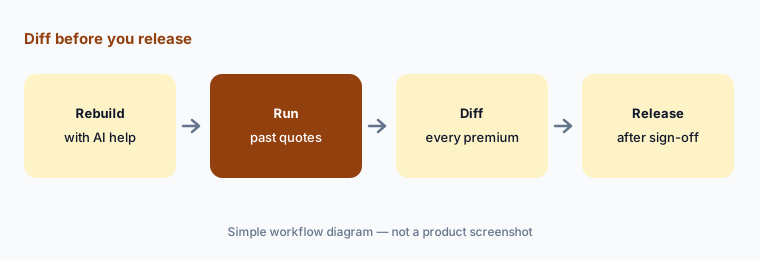
Primary workflow:
Ask the pricing actuary to rebuild one existing small model in hx Renew with any AI help it offers. Have a second actuary diff every premium calculation against the old model before it is used for a single quote.
2. Versioned, governed model releases
What it is: hx says calculation logic is versioned so that “underwriters, systems, and agents always call the current approved release”, with auditability across model changes, releases, and production use, and a shared control layer for actuarial, underwriting, and IT teams. Its actuaries page says every decision, rule change, and model update is captured end to end, and lists SOC 2 Type 2 and ISO 27001:2022 certification.
Fast releases are the selling point, so the release step is where a mistake gets through. Name who may approve a release and keep a written test for each model.
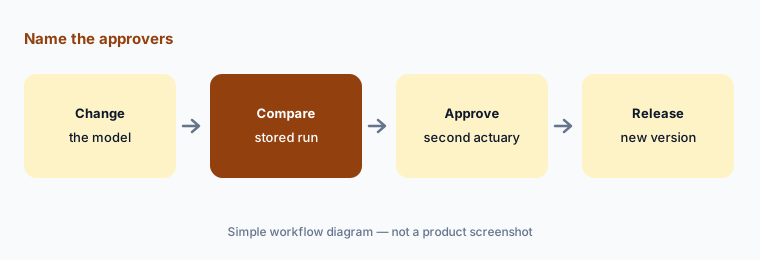
Name the approvers:
Write down who may approve a model release in hx and what comparison run they need. Have the head of pricing check the version history each month for any release without one.
3. Portfolio Intelligence: what-if scenarios and drift
What it is: hx’s Portfolio Intelligence builds portfolios from the underlying risks and tracks exposure, concentration, performance, rate change, loss-ratio movement, and what hx calls adequacy drift on live dashboards. Its what-if scenarios model a pricing, appetite, or strategy change against live book data “before any change reaches the underwriting workflow”, and portfolio signals can appear inside pricing, referral, and renewal steps. hx said in September 2025 that Portfolio Intelligence launched earlier that year.
A what-if result is only as good as the book data underneath it. Before a scenario justifies a price change, someone should check that the policies in it are the ones actually in force.
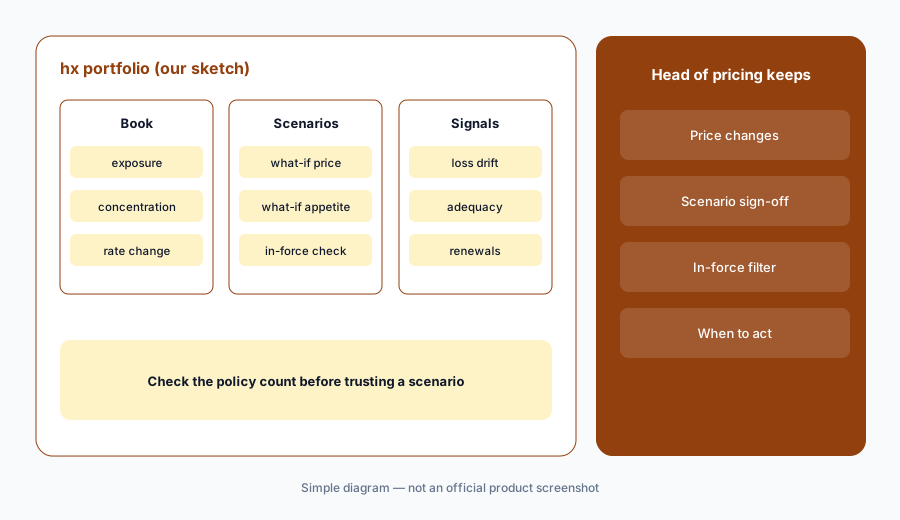
Check the book first:
Before using one Portfolio Intelligence what-if scenario for a pricing decision, have the pricing actuary confirm the policy count in it matches your in-force book. Have the head of pricing approve the change.
4. Triage: AI intake and an appetite-based queue
What it is: hx launched Triage on 17 September 2025. It uses AI to read complex submissions and rank them by each carrier’s appetite, not by arrival order, and because it is tied to hx’s pricing tools, underwriters can give indicative pricing within minutes without re-keying data for the final quote. hx’s home page lists overnight queues, bordereaux ingestion, and ACORD extraction under triage.
An indicative price sent fast still sets a broker’s expectation. If triage misreads an exposure, that number travels before anyone checks it.
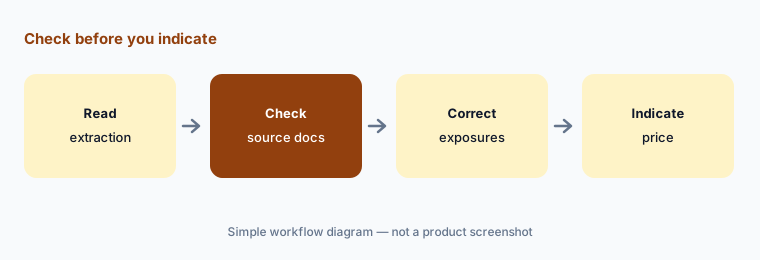
Check before you indicate:
Have an underwriter check the extracted exposures on twenty hx-triaged submissions against the source documents before any indicative price goes to a broker.
5. Workflow Builder: governed paths with review points
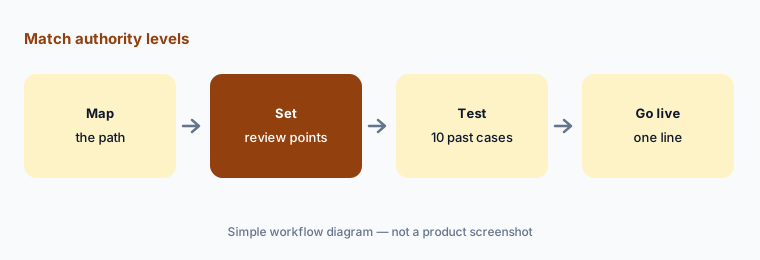
What it is: Workflow Builder, announced at hx Live New York on 17 September 2026 (recap), lets carriers model underwriting workflows as they really run, including endorsements and mid-term changes, forked and parallel paths, authority rules, referrals, and approvals. hx says routine steps can move forward automatically “where rules allow” and stop for human review “at the exact points you define”.
Every automatic step in a workflow is a decision someone made once and then stopped seeing. Review points should match your written authority levels.
Match your authority levels:
Map one workflow in hx Workflow Builder and run ten past cases through it. Have the operations manager check every case stopped where your written authority levels say it should.
6. hyperoperator: one agent across the underwriting journey
What it is: hyperoperator (announced 8 July 2026) is an agent that takes a broker submission from intake to a decision-ready file inside the carrier’s pricing, appetite, and authority controls, working through hx’s specialist agents and reachable in the hx app, email, Microsoft Teams, Slack, and mobile. Carriers choose among four modes: straight-through where rules and confidence allow, human-in-the-loop review, ad hoc questions, and always-on monitoring of the book. hx said it “will enter controlled customer rollout later this year”, and its product page asks you to register interest, so it is not generally available as of 18 Oct 2026.
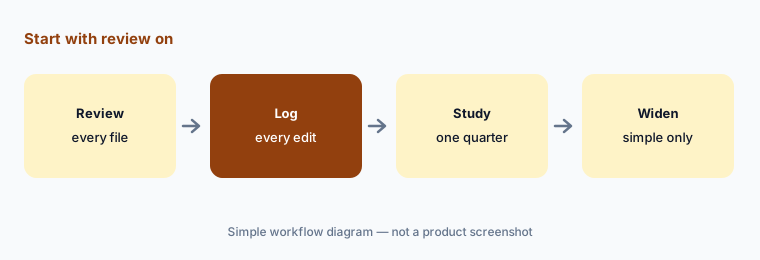
Straight-through mode means some submissions reach a priced file with no person in between. Until you have watched it on your own business, every file should stop for an underwriter.
Start with review on:
If you join the hyperoperator rollout, set every file to human-in-the-loop review. Have underwriters log each change for one quarter before the chief underwriting officer allows any straight-through mode.
Pricing context (October 2026)
hx does not publish prices; its /pricing address returns “not found”. Pricing is quote-only as of 18 Oct 2026. Ask how it is priced (by line of business, model, user, or premium), whether the Actuarial Agent, Portfolio Intelligence, Triage, and Workflow Builder are separate, and whether hyperoperator is included once its rollout opens.
hx cites more than $75 billion of annual commercial P&C premium on its platform, 2–3% loss ratio improvement, 10 times faster model builds, and 50% faster quote to bind. These are vendor figures, not our measurement.
Uncertainty: We read hx’s own pages only. Its current site no longer uses the name hx Renew, which appears in its earlier announcements; ask which product name your contract carries. hyperoperator was announced for a controlled customer rollout later in 2026 and is not generally available. We found no separate availability date for the Actuarial Agent beyond hx’s November 2025 post saying it is in use. Results figures are vendor claims. We could not confirm prices, and we did not test hx ourselves.
When it’s useful (honest take)
Useful when you are a commercial, specialty, or reinsurance pricing team with models trapped in spreadsheets, actuaries comfortable reading Python, a written release process, and underwriters who will check indicative prices before they go out.
Less useful when you need intake-to-bind underwriting first (see Kalepa AI or Federato AI), recommendations on each submission (see Sixfold AI), pricing inside a full core suite (see Duck Creek AI or Guidewire AI), or you are an agency (see Applied vs Vertafore).
Paying for hyperexponential AI and a few other AI tools? The $9 AI toolkit spreadsheet lists every AI subscription you have, what each one costs, and how fast it pays for itself, so you can see which ones are worth the money.
Want someone to do it for you? AI toolkit audit — $19
Related options (educational)
| Need | Better home | Why |
|---|---|---|
| Python pricing models, AI-assisted builds, governed releases | hyperexponential AI (this page) | Quote only |
| Intake, clearance, research, and quote-to-bind support | Kalepa AI | Quote only |
| Triage, portfolio guardrails, or a full AI-native core | Federato AI | Quote only |
| Recommendations with rationale per submission | Sixfold AI | Quote only |
| Pricing and product tools inside a carrier core suite | Guidewire AI or Duck Creek AI | Quote only; several items early or restricted access |
FAQ
What is hyperexponential?
A pricing and underwriting software company (hx) for commercial and specialty P&C insurers. Actuaries build pricing models in Python on its platform, with versioned releases, portfolio tools, triage, workflows, and AI agents. Its pricing platform was earlier sold as hx Renew.
Does hx have AI for building pricing models?
Yes. Its Actuarial Agent, built into the platform, can turn a spreadsheet model into Python, spot inconsistencies, explain errors and models, and add comments to code. A second actuary should compare every premium against the old model before release.
What is hyperoperator?
An hx agent announced 8 July 2026 that takes a submission from intake to a decision-ready file within the carrier’s controls, with straight-through, review, ad hoc, and monitoring modes. hx said it enters controlled customer rollout later in 2026.
How much does hyperexponential cost in October 2026?
hx does not publish prices. Treat it as quote-only and ask which modules and agents are included.
Who should approve hx output?
A pricing actuary for every model change, a second actuary for the comparison run, the head of pricing for every price change, and an underwriter for every quote and indicative price.
Optional next step (if seats overlap)
If your pricing team pays for a pricing platform, spreadsheet add-ins, a BI tool, and chat seats used to explain models, that overlap is worth mapping. Map the overlap with the $19 AI toolkit audit or the $9 AI toolkit spreadsheet. Email Audit $19 or Toolkit spreadsheet $9.
Checkout is live via Stripe. After you pay, we email delivery (spreadsheet) or intake next steps (audit).