Tool · Insurance ops · Guidewire · Oct 2026
Guidewire AI review (Oct 2026): ProNavigator, the Qusar Agentic Framework, Agentic FNOL, and claim summaries for P&C insurers
Guidewire makes core systems for property and casualty (P&C) insurers: PolicyCenter, ClaimCenter, and BillingCenter (InsuranceSuite), InsuranceNow for smaller carriers, and analytics such as Cyence for cyber risk. In 2026 it added ProNavigator, an AI assistant inside those systems (April), and an Agentic Framework with Guidewire-built agents for claim summaries, policy changes, and first notice of loss (August, in the Qusar release). Many of these carry Early Access or Restricted Availability labels. This page is about what each does, who it is for, and who must check its work. Each section has a Try this.
What this Guidewire page covers
This page is for claims leaders, underwriting managers, customer service leads, and IT or product owners at a P&C carrier that runs Guidewire, or is choosing a core system. Agencies and brokers don’t buy Guidewire; they see it from the outside through carrier portals. The question this page answers: what Guidewire’s AI does in claims, underwriting, and development, how available each piece is, and who approves its output.
Guidewire launched ProNavigator in its Palisades release (16 April 2026) and the Agentic Framework plus Guidewire-built agents in Qusar (3 August 2026; release blog). Its Qusar release notes (read 18 October 2026) list which items are Early Access (EA) or Restricted Availability (RA). Guidewire says the next release, Revelstoke, comes “this winter”.
Ground rules: a named claims supervisor checks any AI claim summary before it supports a reserve, coverage, or payment decision; an underwriter approves every policy change; the claims intake lead reviews FNOL records before assignment; agents start draft-only; and Guidewire’s productivity figures are its own internal benchmarks, not our measurement. This page explains features. It is not coverage or claims advice.
Major features (with how someone uses them)
Examples at a glance: each feature has a concrete example from a real job plus a short Try this you can run this week.
1. Claim Summarization for ProNavigator (primary)
What it is: Claim Summarization gives adjusters a summary of the claim file and its change history, so they don’t have to read through long notes and event logs. Guidewire’s Qusar blog calls the summaries “clear, auditable”. Availability is limited: the release notes list it as Restricted Availability in ClaimCenter and Early Access in InsuranceNow.
A summary leaves things out by design. The facts that change a reserve (a new attorney letter, a late medical bill, a recorded statement) are exactly the ones to confirm in the file.
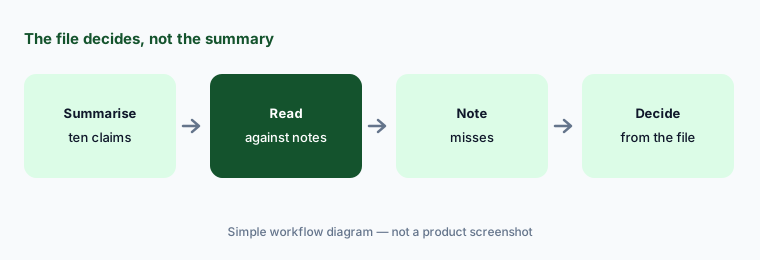
Primary workflow:
Pick ten open claims and have ProNavigator write a claim summary for each. Have the claims supervisor read each summary against the claim notes before any adjuster relies on one for a reserve or coverage decision.
2. ProNavigator: role-specific answers with citations
What it is: ProNavigator is an AI assistant embedded in InsuranceSuite and InsuranceNow, introduced in Palisades (16 April 2026). Guidewire says it gives underwriters, adjusters, billing specialists, and customer service representatives answers grounded in the insurer’s own source material with citations, enforces role-based access controls so people see only documents they are allowed to, and keeps audit trails with a human in the loop.
Citations are only useful if someone clicks them. An answer quoting last year’s underwriting guideline is still cited.
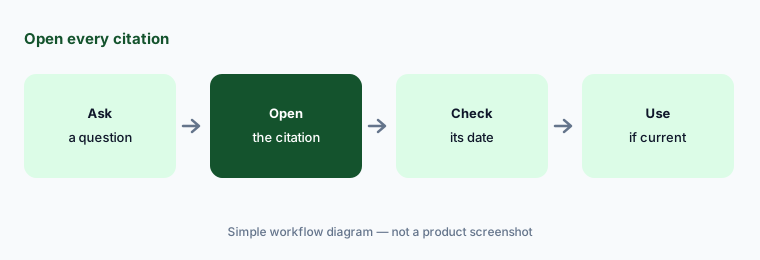
Click every citation:
Ask ProNavigator the five questions new underwriters ask most. Have the underwriting manager open every citation and confirm it is the current guideline before new hires rely on the answers.
3. Agentic Framework: building and governing your own agents on Guidewire Cloud
What it is: The centrepiece of the Qusar release (3 Aug 2026) is the Agentic Framework. Guidewire describes it as a model-agnostic harness to design, run, and govern AI agents on Guidewire Cloud, with built-in observability and data protection. Insurers can choose the AI model for each task, agents get real-time access to policy, claims, and billing data and workflows, and the releases page says it connects to outside tools and data through MCP (Model Context Protocol). You can build custom agents or use Guidewire’s pre-built ones.
A framework makes it easy to build agents that act on live policy and claims data. The governance questions (which agent can change what, who reviews its log) belong to the business owners before IT builds anything.
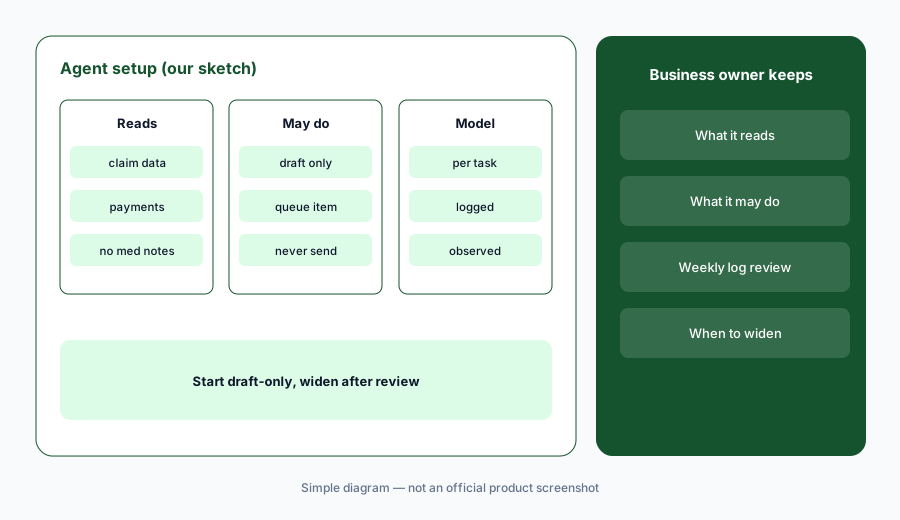
Governance first:
Before building any agent on the Agentic Framework, have the business owner write what data it may read, what it may do, and who reads its log each week. Start with a draft-only agent.
4. Agentic FNOL: voice intake into ClaimCenter
What it is: Agentic First Notice of Loss guides claimants through reporting a loss with conversational AI voice and turns what they say into structured records in ClaimCenter (Qusar blog). It is listed as Restricted Availability in the release notes and the press release.
Callers are often upset and unclear at first notice. A misheard date of loss or location changes coverage questions later, so intake records need a person’s read before assignment.
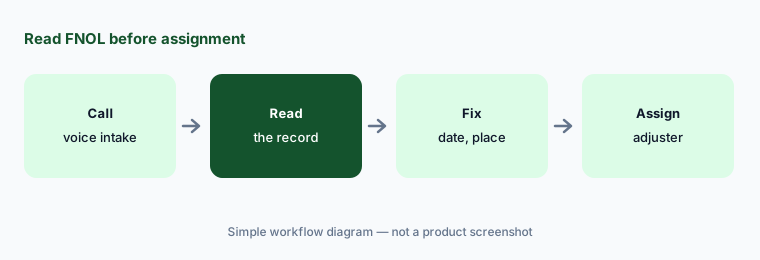
Read before assignment:
Have the claims intake lead read the first twenty FNOL records the voice agent creates. Check date of loss, location, and policy before each claim is assigned to an adjuster.
5. Policy Change for ProNavigator and other underwriting tools
What it is: Policy Change for ProNavigator (Early Access) is an embedded assistant that helps customer service representatives, policyholders, and underwriters collect the details for a policy change and apply carrier guidelines in fewer steps (Qusar blog). Qusar also adds non-AI underwriting tools: Rebind Transaction for bound-but-not-issued policies, an asynchronous Quoting Service, and a Renewal Insights Dashboard.
Faster changes are good until a change that should have gone to an underwriter goes straight through. Decide which change types always need an underwriter’s eyes.
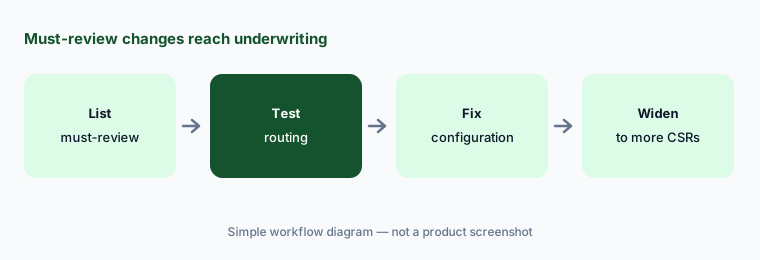
List must-review changes:
List the policy change types that must always reach an underwriter. Have the underwriting manager test that Policy Change for ProNavigator routes each one to underwriting before more CSRs use it.
6. Developer and data assistants, plus pricing tools
What it is: For IT teams, Qusar adds Developer and Builder Assistants that know Guidewire’s code base, languages (Gosu), design patterns, and configurations, and a Data Curation Assistant that turns plain language into SQL in Data Studio (Early Access). Guidewire says Developer Assistants help teams deliver “more than 40% faster” than generic coding assistants, based on its own internal benchmarks. For pricing teams, PricingCenter adds Price Optimization and Impact Analysis (Restricted Availability) to see effects on loss ratio, growth, and retention before a rate change goes live.
Generated code and generated SQL still go through code review and testing. A pricing change still goes through actuarial sign-off and any regulatory filing.
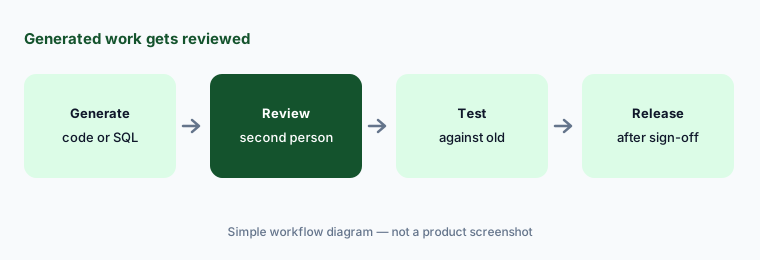
Review generated work:
Have the Data Curation Assistant write one query your team already runs by hand. Have a data analyst compare its results with the existing query before any generated SQL feeds a report.
Pricing context (October 2026)
We found no published prices for Guidewire’s cloud products, ProNavigator, or the Agentic Framework on guidewire.com or in its 2026 releases. Pricing is quote-only as of 18 Oct 2026. Ask which AI features are included in your Guidewire Cloud subscription, which need separate licensing, and how model usage is charged if you bring your own model.
Availability matters as much as price: in Qusar, Claim Summarization (ClaimCenter) and Agentic FNOL are Restricted Availability, Policy Change and the Data Curation Assistant are Early Access, and Guidewire notes that “certain release features may not be available in all regions” (3 Aug 2026 release).
Uncertainty: Availability labels differ between Guidewire sources: Claim Summarization is Restricted Availability in ClaimCenter but Early Access in InsuranceNow, and the press release’s “Policy Change for ProNavigator” appears in the release notes as a “Policy servicing agent (Early Access)”. The “more than 40% faster” figure is Guidewire’s internal benchmark, not our measurement. guidewire.com blocked our direct page fetches, so we read its pages through a reader tool; we could not confirm prices, which features are generally available in which regions, or when Restricted Availability items open up. We did not test Guidewire ourselves.
When it’s useful (honest take)
Useful when you are a P&C carrier already on Guidewire Cloud, claims files are long enough that adjusters spend real time reading notes, your IT team wants to build agents with access to policy and claims data under governance, and business owners will set limits before anything acts on live data.
Less useful when you are an agency or broker (see Applied Epic AI or Vertafore AI), you run Guidewire on-premises rather than on Guidewire Cloud, or the features you need are still Restricted Availability and your carrier is not in that group.
Paying for Guidewire AI and a few other AI tools? The $9 AI toolkit spreadsheet lists every AI subscription you have, what each one costs, and how fast it pays for itself, so you can see which ones are worth the money.
Want someone to do it for you? AI toolkit audit — $19
Related options (educational)
| Need | Better home | Why |
|---|---|---|
| Carrier core system with an assistant and agent framework | Guidewire AI (this page) | Quote only |
| AI inside an agency management system (Applied Epic) | Applied Epic AI | Quote only; for agencies |
| AI agents inside AMS360 and Sagitta | Vertafore AI | Quote only; for agencies |
| Reviewing policy wording or contracts in a general tool | Claude for legal ops | See its guide; sanitized text only |
| Signing applications and agreements | DocuSign AI | See its review |
FAQ
What is Guidewire ProNavigator?
An AI assistant embedded in Guidewire InsuranceSuite and InsuranceNow, launched in the Palisades release (16 April 2026). It answers role-specific questions from the insurer’s own sources with citations, under role-based access controls.
What did Guidewire’s Qusar release add?
The Agentic Framework for building and governing AI agents on Guidewire Cloud, plus Guidewire-built agents: Claim Summarization, Policy Change for ProNavigator, and Agentic FNOL. It also added developer, data, and pricing tools (3 August 2026).
Are Guidewire’s AI agents generally available?
Not all. In Qusar, Claim Summarization (ClaimCenter) and Agentic FNOL are Restricted Availability and Policy Change is Early Access, per Guidewire’s release notes. Ask Guidewire what your carrier can use.
How much does Guidewire AI cost in October 2026?
Guidewire does not publish prices. Treat it as quote-only and ask which AI features and model usage your subscription includes.
Who should approve Guidewire AI output?
A claims supervisor for claim summaries used in reserve or coverage decisions, the claims intake lead for FNOL records, an underwriter for policy changes, and a second developer or analyst for generated code and SQL.
Optional next step (if seats overlap)
If your claims or underwriting team pays for a core-system assistant, a separate summarisation tool, and chat seats that all read the same claim files, that overlap is worth mapping. Map the overlap with the $19 AI toolkit audit or the $9 AI toolkit spreadsheet. Email Audit $19 or Toolkit spreadsheet $9.
Checkout is live via Stripe. After you pay, we email delivery (spreadsheet) or intake next steps (audit).