Tool · Insurance ops · Sixfold · Oct 2026
Sixfold AI review (Oct 2026): AI Underwriter, Underwriting Brain, Distribution Intelligence, and Life & Health cases for carriers
Sixfold is an underwriting AI company founded in 2023 that sells to insurers and MGAs in commercial P&C and in life and health. Its main product is the AI Underwriter (launched 16 June 2026): it reads a submission, checks it against the carrier’s appetite and portfolio, and gives a recommendation with its reasoning and cited sources. In September it added a Life & Health version and Distribution Intelligence for broker management. This page is about what each part does and who must check its work. Each section has a Try this.
What this Sixfold page covers
This page is for underwriting leaders, underwriters, and underwriting operations teams at commercial P&C carriers, MGAs, and life and health insurers. Agencies and brokers don’t buy Sixfold; they feel it in how fast and how consistently a carrier responds. The question this page answers: what Sixfold’s AI Underwriter recommends, how it learns a carrier’s appetite, what the newer broker and life features add, and who decides.
Sources are Sixfold’s own pages, read on 18 October 2026: the AI Underwriter launch post (16 June 2026), the P&C product page, and posts on Institutional Intelligence (17 April 2026), Life & Health (2 September 2026), and Distribution Intelligence (24 September 2026). Sixfold has no separate newsroom or pricing page.
Ground rules: a senior underwriter approves every decline, referral, and broker email the AI Underwriter drafts; the underwriting manager owns the guidelines and limits it works within; a life underwriter makes every life and health decision; and Sixfold’s results figures are its customers’ and its own claims, not our measurement. This page explains features. It is not coverage, underwriting, or legal advice.

Major features (with how someone uses them)
Examples at a glance: each feature has a concrete example from a real job plus a short Try this you can run this week.
1. AI Underwriter recommendations with rationale and citations (primary)
What it is: The AI Underwriter takes a submission, extracts and cleans the data (including SOVs and loss runs), finds what is missing, adds online research and third-party data, and checks appetite and portfolio fit and the broker’s history. It then gives a recommendation and the rationale behind it. Sixfold’s home page says every fact is cited to its source, and its product page says underwriters “remain accountable” and the AI “is not replacing the decision”.
A recommendation with citations looks finished. The test is whether it matches what your best underwriters actually decided, and whether the cited guideline really says what the rationale claims.
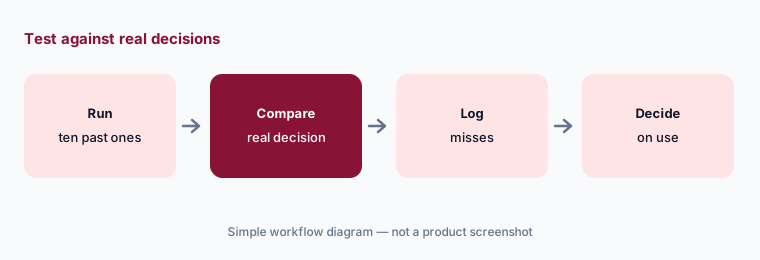
Primary workflow:
Run ten recent submissions through the AI Underwriter. Have a senior underwriter compare each recommendation and its cited guideline with the decision the team actually made before anyone relies on it.
2. Next best action: referral packages, declines, and broker follow-ups
What it is: For each submission the AI Underwriter suggests the next step: refer to higher authority, decline, or follow up with the broker, with the broker email “drafted and ready to send” (16 Jun 2026 post). Sixfold says it “takes action when given authority to do so”, and its FAQ says carriers decide what it may do on its own “by line, by risk size, and by action type”, so submissions move until they hit a boundary that needs human approval.
A decline or a broker email is the carrier speaking. Until you have watched its drafts for a while, no decline or broker message should leave without an underwriter’s approval.
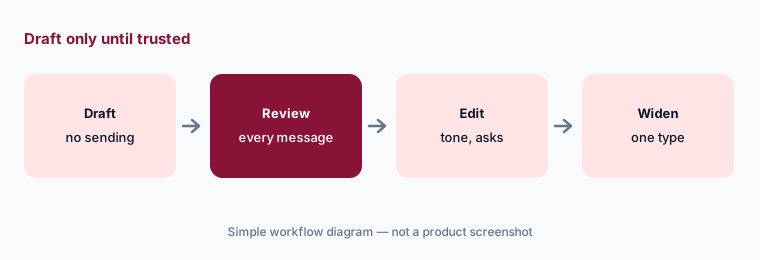
Draft only first:
Set Sixfold to draft declines, referrals, and broker emails without sending. Have a senior underwriter approve every one for a month before giving it authority over any action type.
3. Underwriting Brain: appetite ingestion and Playbooks
What it is: At the centre of the AI Underwriter is what Sixfold calls the Underwriting Brain: general underwriting knowledge across lines, plus each carrier’s own guidelines and appetite, loaded through what Sixfold calls its patented appetite ingestion engine and refined by underwriter feedback. Playbooks add carrier-specific references and documented practices (17 Apr 2026 post). Sixfold’s P&C FAQ says you upload guidelines and appetite documents and it turns them into a working setup “in minutes”.
Whatever goes into the Brain becomes the yardstick for every submission. An old appetite guide or a draft playbook will be applied as faithfully as the current one.
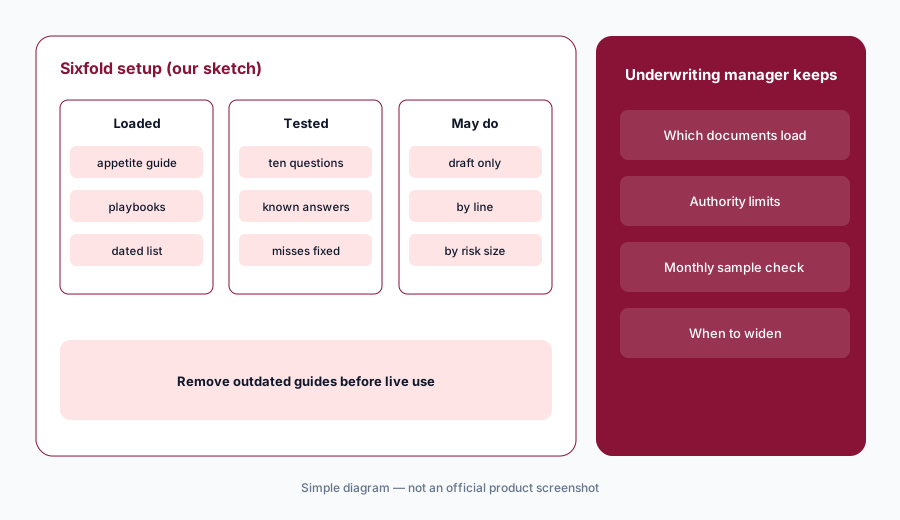
Test what it learned:
Have the underwriting manager list every guideline and playbook loaded into Sixfold with its date. Ask ten appetite questions with known answers and remove any outdated document before live use.
4. Institutional Intelligence: learning from your decisions
What it is: Sixfold’s Institutional Intelligence is a learning loop: carriers feed decision and outcome data (case statuses, and data sent through the Sixfold API) back in, and the AI Underwriter uses it to sharpen its picture of your appetite and what wins business. Sixfold said on 17 April 2026 that the first phase is “available today”, that broker performance, referral, policy, and loss data connections are being built with customers, and that “agentic self-learning comes next”. Each carrier runs in its own isolated environment.
A loop that learns from past decisions also learns past habits. If the team declined a class out of caution last year, the tool can learn to steer away from it even after appetite changes.
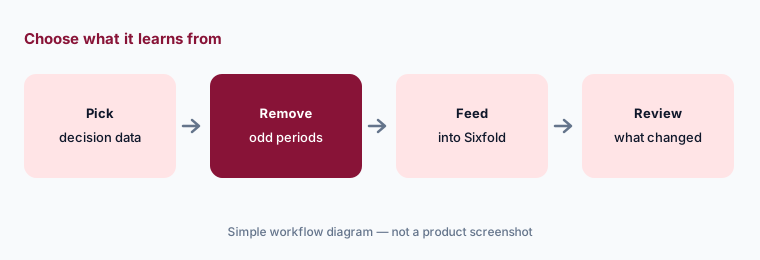
Choose what it learns from:
Before sending decision data to Sixfold, have the chief underwriting officer mark any periods that don’t reflect current appetite. Remove them, and review which recommendations changed a month later.
5. Distribution Intelligence: broker views against your targets
What it is: Distribution Intelligence (announced 24 September 2026) looks at every broker’s submission volume, submission quality, appetite fit, hit ratio, and more, then compares broker potential with growth targets that underwriting leaders set (or Sixfold suggests). It recommends “initiatives”, such as quoting more of a strong broker’s in-appetite submissions or moving their next submission up the queue, and passes them to the AI Underwriter with the rationale. It is the first part of what Sixfold calls its Portfolio Intelligence Suite. We found no availability label beyond the launch post.
Moving one broker’s submissions up the queue means another broker waits. Those priorities affect relationships, so the underwriting leader, not the tool, should decide them.
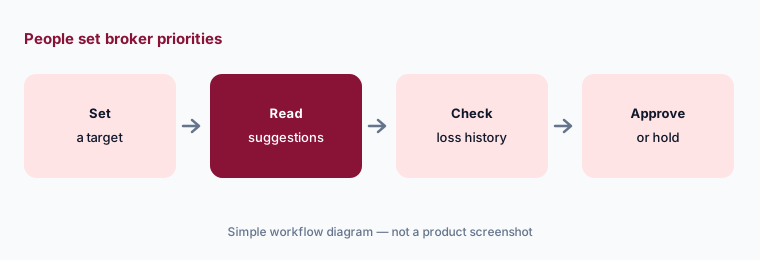
Approve each initiative:
Set one growth target in Distribution Intelligence. Have the head of distribution check every broker it suggests against loss history and team notes before any queue order changes.
6. AI Underwriter for Life & Health
What it is: The Life & Health AI Underwriter (2 September 2026, “available now”) covers life, disability, long-term care, and critical illness. It reads prescription histories, lab results, driving records, and financial information against the carrier’s underwriting manual (its own or a reinsurer’s), lists the relevant impairments, flags missing data, and recommends a debit or credit, an exclusion, or a postponement for each, with manual references. Findings roll up to one action, such as refer, decline, or postpone, and Sixfold says “each insurer decides how much human oversight to apply.” Sixfold quotes customer ClearView’s “55% reduction” in case evaluation time.
Life and health decisions use sensitive medical data and follow manual rules exactly. A missed lab trend or a wrong manual reference changes someone’s cover, so a life underwriter should review every recommendation.
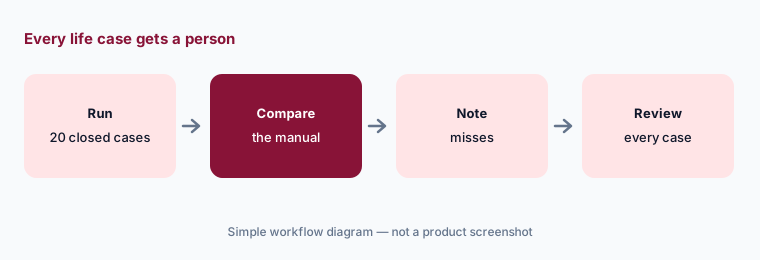
Every case gets a person:
Run twenty closed life cases through the Life & Health AI Underwriter. Have the chief life underwriter compare every impairment and manual reference with the final decision before it touches a new case.
Pricing context (October 2026)
Sixfold does not publish prices and has no pricing page (its /pricing address returns “not found”). Pricing is quote-only as of 18 Oct 2026. Ask how it is priced (by underwriter seat, by submission, or by line), whether Distribution Intelligence and the Life & Health AI Underwriter are separate, and what integration with your workbench or policy system costs.
Sixfold says customers have seen “50% to 97% faster processing, hit ratios up 15%, and 30% more GWP per underwriter”. These are vendor figures, not our measurement.
Uncertainty: We read Sixfold’s own posts and product pages only; it has no newsroom or pricing page. We found no availability label for Distribution Intelligence beyond its 24 September launch post, and Institutional Intelligence’s self-learning stage is described as coming next, not available. Results figures (50%–97%, 15%, 30%, ClearView’s 55%) are vendor and customer claims. We could not confirm prices, and we did not test Sixfold ourselves.
When it’s useful (honest take)
Useful when you are a commercial P&C carrier, MGA, or life insurer with a high submission or case volume, written appetite guides and manuals that are kept current, past decisions you can test it against, and senior underwriters who will review its drafts before giving it any authority.
Less useful when you are an agency or broker (see Zywave AI or Applied Epic AI), your appetite lives mostly in people’s heads rather than documents, or your core system vendor’s own agents (see Duck Creek AI or Guidewire AI) already cover your intake and triage needs.
Paying for Sixfold AI and a few other AI tools? The $9 AI toolkit spreadsheet lists every AI subscription you have, what each one costs, and how fast it pays for itself, so you can see which ones are worth the money.
Want someone to do it for you? AI toolkit audit — $19
Related options (educational)
| Need | Better home | Why |
|---|---|---|
| Submission recommendations with rationale, broker views, life cases | Sixfold AI (this page) | Quote only |
| Underwriting intake and triage inside a carrier core system | Duck Creek AI or Guidewire AI | Quote only; several items EA, RA, or early access |
| Agency-side renewals and prospecting | Zywave AI | Quote only; Advisor Agent early access |
| Reading guidelines or wording in a general tool | Claude for legal ops | See its guide; sanitized text only |
| Ad hoc analysis of sanitized submission data | ChatGPT for finance | See its guide; no personal or medical data |
FAQ
What is the Sixfold AI Underwriter?
Sixfold’s underwriting agent, launched 16 June 2026. It reads a submission, checks appetite, portfolio fit, and broker history, and gives a recommendation with its rationale and cited sources, plus a suggested next step such as a referral, a decline, or a broker follow-up.
Can Sixfold decline submissions on its own?
Only if a carrier gives it that authority. Sixfold says carriers set what it may do by line, risk size, and action type. A sensible start is draft-only, with a senior underwriter approving every decline and broker email.
What is Sixfold Distribution Intelligence?
A feature announced 24 September 2026 that looks at each broker’s submission volume, quality, appetite fit, and hit ratio against growth targets set by underwriting leaders, and suggests actions that feed into the AI Underwriter.
How much does Sixfold cost in October 2026?
Sixfold does not publish prices. Treat it as quote-only and ask how it is priced and whether Distribution Intelligence and the Life & Health product are separate.
Who should approve Sixfold output?
A senior underwriter for every decline, referral, and broker email; the underwriting manager for loaded guidelines and authority limits; the head of distribution for broker priorities; and a life underwriter for every life and health case.
Optional next step (if seats overlap)
If your underwriting team pays for an underwriting AI tool, core-system agents, and chat seats that all read the same submissions, that overlap is worth mapping. Map the overlap with the $19 AI toolkit audit or the $9 AI toolkit spreadsheet. Email Audit $19 or Toolkit spreadsheet $9.
Checkout is live via Stripe. After you pay, we email delivery (spreadsheet) or intake next steps (audit).