Tool · Healthcare ops · Oracle Health · Oct 2026
Oracle Health AI review (Oct 2026): Clinical AI Agent for physicians and nurses, ambient notes, coding suggestions, and chart search in Foundation EHR
Oracle Health’s Clinical AI Agent sits on Foundation EHR (the former Cerner Millennium line). In 2026 Oracle described ambient draft notes for ED and inpatient care, order drafting from conversation, coding suggestions with chart review, and a nursing Clinical AI Agent for voice discrete charting, acute summaries, and voice chart search. This page is about using those drafts for documentation busywork while a licensed clinician still owns every signed note. Each section has a Try this.
What this Oracle Health page covers
This page is for a CMIO, attending physician, APP, or charge nurse at a health system on Oracle Health Foundation EHR who wants a plain map of the Clinical AI Agent. It is not medical, coding, or billing advice.
Oracle’s Clinical AI Agent pages describe AI that drafts documentation, surfaces coding and scheduling helps, and supports nursing discrete charting — with the usual Oracle forward-looking feature disclaimer. Dated 2026 waves used here (ambient ED/inpatient March 2026, order drafting February 2026, coding suggestions August 2026, nursing agent September 2026) follow the Mon product timeline; confirm what your build and region actually have live.
Ground rules: the attending signs every physician note; the charge nurse owns nursing charting rules; coding leads sample suggestions before dual review stops; nobody pastes patient identifiers into an outside chat tool; and Oracle’s hour-saved figures are its claims, not our measurement.
Major features (with how someone uses them)
Examples at a glance: each feature has a concrete example from a real job plus a short Try this you can run this week.
1. Ambient draft notes for ED and inpatient (primary)
What it is: Oracle describes ambient draft notes for ED and inpatient settings as part of the Clinical AI Agent on Foundation EHR (2026 timeline: March 2026). The agent listens during the encounter or overnight continuity and drafts a progress note for clinician review — not a signed legal note until a person accepts it.
Overnight drafts can invent continuity that did not happen. Compare every draft with events and the prior note before signing.
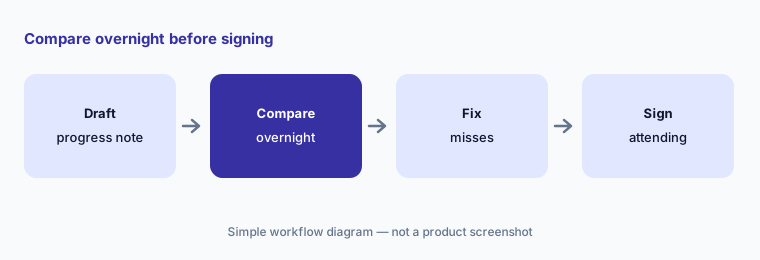
Primary workflow:
Run ten inpatient progress notes through the Clinical AI Agent draft. Have the attending compare each draft with overnight events and the prior note before signing.
2. Order drafting from conversation (Feb 2026)
What it is: Oracle describes order drafting from conversation (2026 timeline: February 2026) — the agent proposes labs, imaging, or meds heard in the room for clinician review before anything is placed.
A suggested order is not an order. Confirm allergies, refusals, and prior results first.
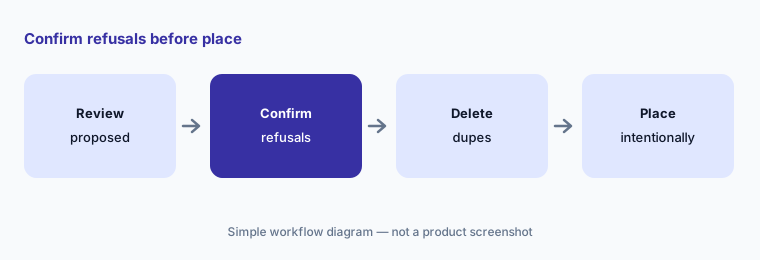
Confirm before place:
Review twelve visits with Clinical AI Agent order drafts. Have the attending confirm every suggested order against refusals and prior results before placing anything.
3. Automated coding suggestions and chart review (Aug 2026)
What it is: Oracle describes automated coding suggestions and chart-review assists as part of the Clinical AI Agent stack (2026 timeline: August 2026 wave). Suggestions are leads for a CDI or coding specialist — not a filed claim.
A tidy code list can still miss a procedure or over-code an E/M. Dual review stays on until samples match.
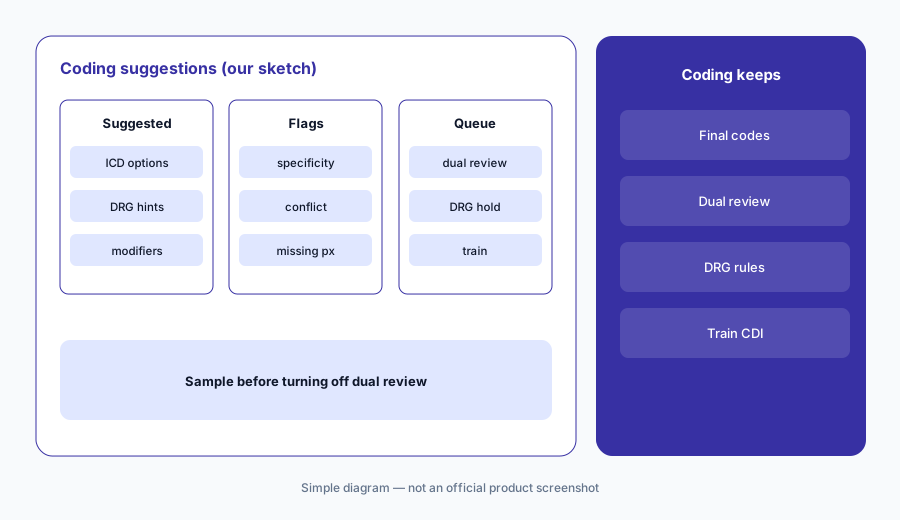
Sample before trust:
Sample forty Clinical AI Agent coding suggestions. Have the coding lead compare each with the final coded bill before widening automation.
4. Clinical AI Agent for nurses: voice charting and summaries (Sep 2026)
What it is: Oracle describes a Clinical AI Agent for nurses (2026 timeline: September 2026) with voice discrete charting, acute nursing summaries, and voice chart search — aimed at reducing keyboard time at the bedside.
Nursing charting rules, flowsheet mappings, and co-sign policies stay with nursing leadership. A wrong vital in a draft can still look tidy.
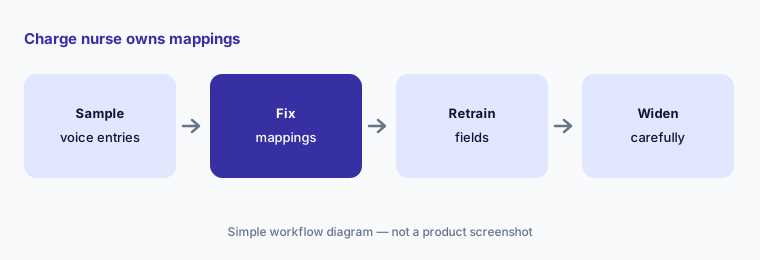
Charge nurse owns rules:
Sample twenty nursing voice-chart entries. Have the charge nurse fix every wrong flowsheet field before widening voice charting.
5. Voice chart search and acute nursing summaries
What it is: Alongside discrete charting, Oracle describes voice chart search and acute nursing summaries so nurses can ask the chart for recent vitals, meds, or overnight events without hunting tabs.
Search answers only what is in the chart. Outside records that never posted will not appear.
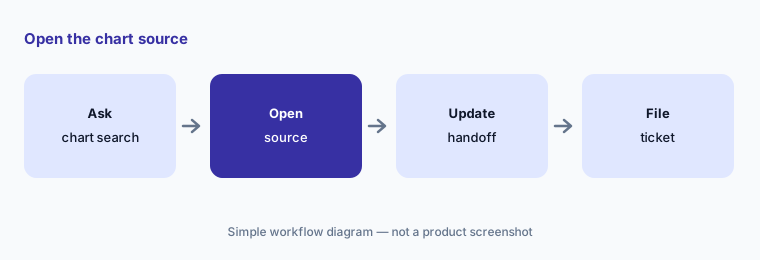
Open the source:
Ask the Clinical AI Agent three chart-search questions before handoff. Have the nurse open the source of each answer before relying on it.
6. Scheduling, referrals, and eligibility assists (planned / confirm live)
What it is: Oracle Health AI Agents pages also describe administrative assists — scheduling, referrals, eligibility, and intake — some marked as planned or dependent on region and clearance. Ask your Oracle representative what is generally available for your sites.
Anything that can book, cancel, or assert coverage needs a named owner and an escalation path.
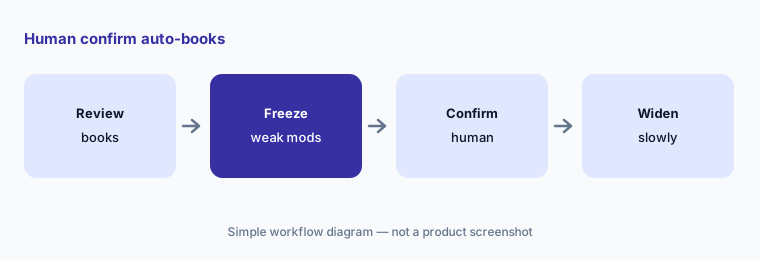
Human confirm books:
Review one week of AI-assisted schedule suggestions. Have patient-access confirm every auto-book before widening modalities.
Pricing context (October 2026)
Oracle Health does not publish a public price list for Clinical AI Agent seats or Foundation EHR AI add-ons as of 19 Oct 2026. Treat every commercial term as quote-only.
Ask which 2026 waves (ambient, order drafting, coding, nursing agent, admin agents) are generally available for your specialty, region, and Foundation build, and whether nursing and physician agents bill separately.
Uncertainty: We did not test Oracle Health Foundation EHR or Clinical AI Agent. Feature availability depends on region, regulatory clearance, and your build — Oracle’s pages include forward-looking disclaimers. Hour-saved and burden-reduction figures in Oracle materials are vendor claims, not our measurement. Confirm the March / February / August / September 2026 waves with your representative.
When it’s useful (honest take)
Useful when your health system already runs Oracle Health Foundation EHR, attendings still finish notes after shifts, charge nurses fight keyboard charting, and someone will name who signs physician notes and who owns nursing charting rules.
Less useful when you are standardized on Epic Systems (Epic Systems EHR AI), your main gap is ambulatory athenaOne ambient (athenahealth AI), you only need denial resubmission (Waystar AI), or you need an insurance agency AMS (Applied Epic AI — a different product).
Paying for Oracle Health AI and a few other AI tools? The $9 AI toolkit spreadsheet lists every AI subscription you have, what each one costs, and how fast it pays for itself, so you can see which ones are worth the money.
Want someone to do it for you? AI toolkit audit — $19
Related options (educational)
| Need | Better home | Why |
|---|---|---|
| Clinical AI Agent on Foundation EHR (ambient, orders, coding, nursing) | Oracle Health AI (this page) | Quote only |
| Health-system EHR AI (Art, Penny, Emmie) | Epic Systems EHR AI | Quote only; different EHR |
| Ambulatory athenaOne ambient + RCM AI | athenahealth AI | Quote only |
| Ambient notes with Linked Evidence (multi-EHR) | Abridge AI | Quote only |
| Ambient + Dragon Medical dictation stack | Microsoft Dragon Copilot AI | Quote only |
| Insurance agency AMS AI (not an EHR) | Applied Epic AI | Different company/product |
FAQ
What is Oracle Health Clinical AI Agent?
Oracle’s AI layer on Foundation EHR that can draft ambient notes, propose orders, suggest coding, and support nursing voice charting and chart search. A licensed clinician still reviews and signs.
Is Foundation EHR the same as Cerner?
Foundation EHR is Oracle Health’s EHR line that includes the former Cerner Millennium footprint. Ask your IS team which build and AI modules you actually run.
How much does Oracle Health AI cost in October 2026?
Oracle does not publish a public seat list for Clinical AI Agent. Treat pricing as quote-only and confirm with your representative.
Can the Clinical AI Agent sign notes or place orders on its own?
Do not configure it that way. The attending must review drafts and place or sign intentionally; nursing leadership owns nursing charting rules.
Who should check Oracle Health AI output?
The attending for physician notes and orders; the charge nurse for nursing charting; the coding lead for coding suggestions; patient-access for any booking assists.
Optional next step (if seats overlap)
If you pay for Oracle Health Clinical AI Agent, a separate ambient scribe, a coding tool, and a chat seat that all touch the same encounter, that overlap is worth mapping. Map the overlap with the $19 AI toolkit audit or the $9 AI toolkit spreadsheet. Email Audit $19 or Toolkit spreadsheet $9.
Checkout is live via Stripe. After you pay, we email delivery (spreadsheet) or intake next steps (audit).