Tool · Healthcare ops · Waystar · Oct 2026
Waystar AI review (Oct 2026): AltitudeAI autonomous claim resubmission, conversational RCM analytics, agentic CDI, and patient financial concierge
Waystar is a healthcare payment and revenue-cycle platform used across hospitals and large ambulatory groups. In August 2026 it expanded AltitudeAI with agentic capabilities that can resubmit eligible denied claims, answer revenue-cycle questions in natural language, assist CDI review, and guide patients on balances. This page is about using those agents for rework while a named billing or CDI owner still approves the rules. Each section has a Try this.
What this Waystar page covers
This page is for an RCM director, billing supervisor, CDI lead, or patient-financial-services manager evaluating Waystar AltitudeAI agents. It is not billing, coding, or medical advice.
Waystar’s 26 August 2026 announcement introduced autonomous claim resubmission, conversational revenue-cycle intelligence, expanded agentic clinical documentation, and an agentic patient financial concierge. Earlier AltitudeAI pillars include Authorization Manager, Prebill Anomaly Detection, and Recoupment Manager. Waystar cites platform scale of more than 7.5 billion transactions and coverage of roughly 60% of U.S. patients — vendor figures.
Ground rules: the billing supervisor defines which denial categories may auto-resubmit; the CDI lead reviews documentation recommendations; patient-financial services owns concierge scripts; nobody treats a payer percentage as a promise for your book of business.
Major features (with how someone uses them)
Examples at a glance: each feature has a concrete example from a real job plus a short Try this you can run this week.
1. Autonomous claim resubmission for eligible denials (primary)
What it is: Waystar describes agents that interpret payer responses, apply payer-specific intelligence, choose a next action, and automatically resubmit eligible rejected or denied claims (26 Aug 2026). Waystar notes payers ultimately pay roughly 70% of initially denied claims after rework — an industry framing in its release, not a guarantee for your payer mix.
Autonomous resubmit without a category allow-list will chase junk and anger payers. Start narrow.
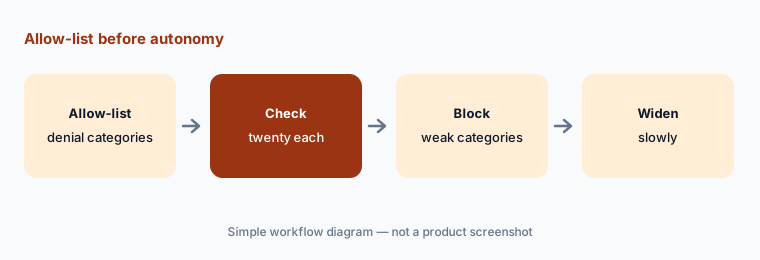
Primary workflow:
Take twenty denied claims Waystar's agent marked eligible to resubmit. Have the billing supervisor check each payer response and the chosen next action before widening autonomous resubmission.
2. Conversational revenue-cycle analytics
What it is: AltitudeAI embeds conversational AI in analytics so users can ask natural-language questions about trends, root causes, and financial impact. Waystar says early adopters reported up to a 75% reduction in time spent on data analysis — attributed early-adopter claim.
A fluent answer can still blame the wrong payer edit. Export the underlying claims before you change a process.
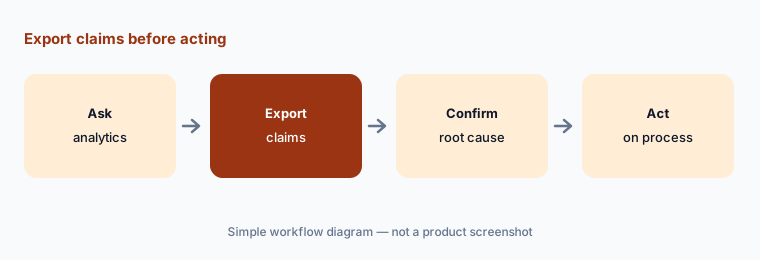
Export before acting:
Ask conversational analytics one denial question. Have the RCM analyst export the underlying claims and confirm the root cause before changing any workflow.
3. Agentic clinical documentation / CDI review
What it is: Waystar says AltitudeAI agents can analyze approximately 30,000 data points in the medical record in seconds, synthesize clinical information, make high-confidence recommendations, and organize evidence for specialist review (26 Aug 2026). Waystar expects about a 25% reduction in review time — its expectation, not our measurement. Earlier messaging also cited roughly 40% less manual correction workload for related agentic CDI work.
CDI recommendations change the record that drives payment. A CDI specialist still decides.
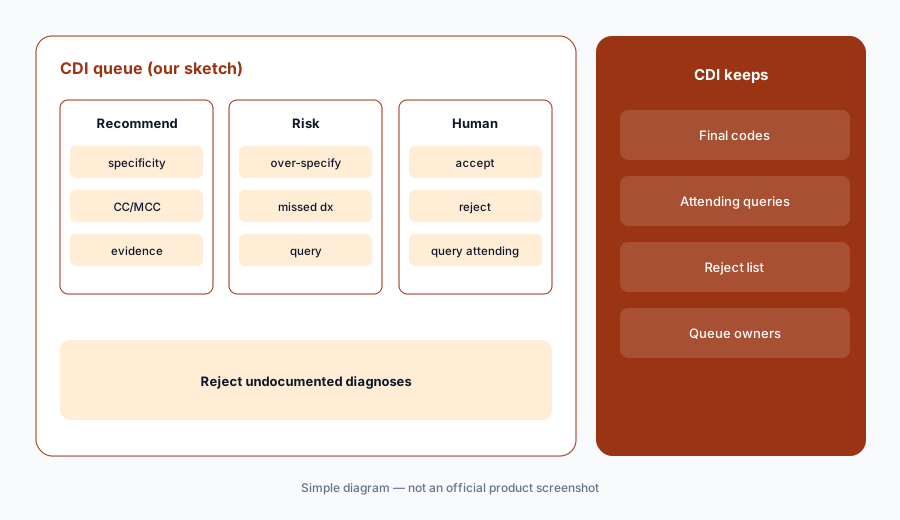
CDI decides:
Review twenty AltitudeAI CDI recommendations. Have the CDI specialist reject any diagnosis the attending never documented before widening the queue.
4. Agentic patient financial concierge
What it is: Waystar is advancing an AltitudeAI-powered concierge that uses patient financial journey context to explain balances and guide resolution across channels, aimed at reducing routine administrative burden while patients face large out-of-pocket spend (Waystar cites a $556B+ industry figure in its release).
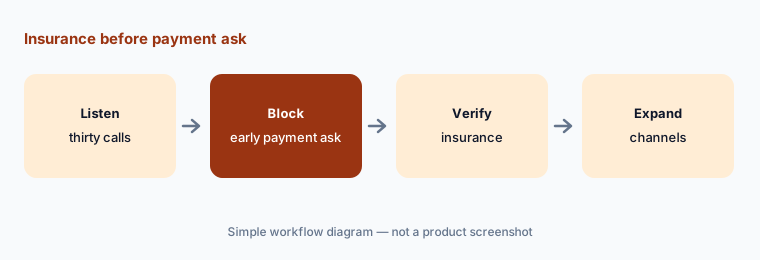
Tone matters. Scripts that pressure payment before insurance posts create complaints and refunds.
Fix scripts first:
Listen to thirty patient financial concierge conversations. Have the PFS director block any script that asks for payment before insurance is verified.
5. Authorization Manager and Prebill Anomaly Detection
What it is: Earlier AltitudeAI work includes Authorization Manager (clinical documentation with the auth request in-workflow) and Prebill Anomaly Detection to catch documentation, coding, and reimbursement issues before claims drop (Waystar blog).
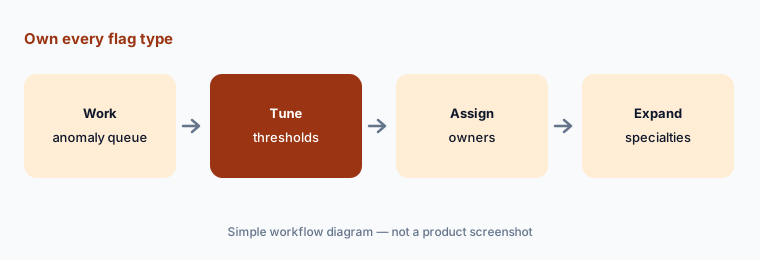
Prebill flags are only useful if someone works the queue daily.
Own the queue:
Work Prebill Anomaly Detection for one specialty for two weeks. Have the prebill lead assign a named owner to every flag type before expanding specialties.
6. Recoupment Manager for payer takebacks
What it is: Recoupment Manager uses AI to match payer recoupments to paid claims and surface takebacks as actionable workflows rather than silent AR holes (blog).
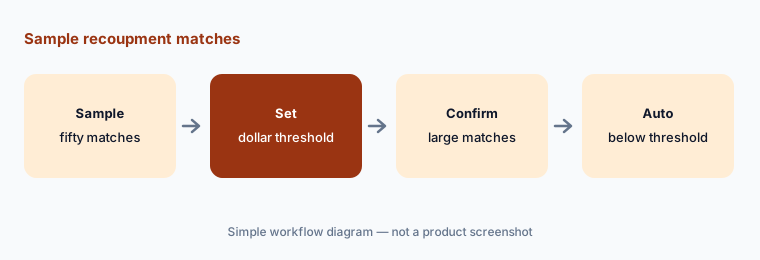
Matching errors create duplicate work. Sample matches before you trust auto-reconcile.
Sample matches:
Sample fifty Recoupment Manager matches. Have the cash posting supervisor require human confirmation above a dollar threshold before full auto-reconcile.
Pricing context (October 2026)
Waystar does not publish a public price list for AltitudeAI modules on its marketing site. Pricing is quote-only as of 19 Oct 2026.
Ask which agentic capabilities (resubmission, conversational analytics, CDI, patient concierge) are generally available versus showcase/preview, and how they are packaged against your current Waystar suite.
Uncertainty: We did not test Waystar. “Industry’s first” and percentage lift language in the August 2026 release are Waystar’s claims. Autonomous resubmission eligibility rules vary by payer and client configuration. Confirm GA vs showcase status with your Waystar team.
When it’s useful (honest take)
Useful when you already run Waystar for claims and payments, denial rework is eating staff time, CDI needs prioritization help, and a billing supervisor will own autonomy allow-lists.
Less useful when your gap is ambient clinical notes inside the EHR (athenahealth AI / Epic Systems EHR AI), or you need an insurance agency AMS (Applied Epic AI).
Paying for Waystar AI and a few other AI tools? The $9 AI toolkit spreadsheet lists every AI subscription you have, what each one costs, and how fast it pays for itself, so you can see which ones are worth the money.
Want someone to do it for you? AI toolkit audit — $19
Related options (educational)
| Need | Better home | Why |
|---|---|---|
| AltitudeAI denial, CDI, and patient-financial agents | Waystar AI (this page) | Quote only |
| Ambulatory EHR AI + Express Coding | athenahealth AI | Quote only |
| Health-system EHR Penny / Art | Epic Systems EHR AI | Quote only |
| Insurance AMS AI (different industry) | Applied Epic AI | Not RCM software |
| Sanitized denial-theme summaries in chat | Claude | No payer connectivity |
FAQ
What is Waystar AltitudeAI?
Waystar’s AI layer across its revenue-cycle platform. The August 2026 release added autonomous claim resubmission, conversational analytics, expanded agentic CDI, and a patient financial concierge.
Will autonomous resubmission fix all denials?
No. Waystar targets eligible rejects/denials with payer-specific next actions. Your billing supervisor must allow-list categories and sample results.
How much does Waystar AI cost in October 2026?
Waystar does not publish public AltitudeAI prices. Treat it as quote-only.
Is Waystar an EHR?
No. It is healthcare payment / RCM software that connects to EHRs and payers. Ambient note drafting lives in EHR or scribe tools.
Who should check Waystar AI output?
The billing supervisor for resubmits; the RCM analyst for conversational analytics actions; the CDI specialist for documentation recommendations; PFS for patient concierge scripts.
Optional next step (if seats overlap)
If you pay for Waystar agents, an EHR coding AI, and a separate denial vendor that all touch the same claim, that overlap is worth mapping. Map the overlap with the $19 AI toolkit audit or the $9 AI toolkit spreadsheet. Email Audit $19 or Toolkit spreadsheet $9.
Checkout is live via Stripe. After you pay, we email delivery (spreadsheet) or intake next steps (audit).