Tool · Healthcare ops · athenahealth · Oct 2026
athenahealth AI review (Oct 2026): athenaAmbient, Ambient Notes, Sage clinical copilot, Express Coding, and AI RCM for ambulatory practices
athenaOne is the cloud ambulatory EHR and revenue-cycle platform many independent and employed practices run on. In 2026 athenahealth pushed an AI-native clinical encounter — including athenaAmbient, a native ambient scribe athena says is available at no additional cost — plus Ambient Notes options, a chart assistant called Sage, and AI across coding, copays, and claim follow-up. This page is about using those features for documentation and billing busywork while a licensed clinician still owns every signed note and order. Each section has a Try this.
What this athenahealth page covers
This page is for a clinician, practice manager, or billing lead at a practice on athenaOne (or weighing it) who wants to know which AI features touch the visit, the chart, and the claim. It is not medical, coding, or billing advice.
athena announced broad availability of AI-native athenaOne experiences to more than 170,000 clinicians in an 13 August 2026 announcement, with athenaAmbient built into athenaOne. Earlier Ambient Notes and the Spring 2026 release add note-style controls, multilingual support, and front-desk AI for copays and fax triage. Sage answers chart questions; Express Coding and claim-follow-up AI sit on the RCM side.
Ground rules: the attending clinician reads and signs every ambient draft and suggested order; the billing supervisor samples coding suggestions before dual review stops; nobody pastes patient identifiers into an outside chat tool; and athena’s time-saved figures are its claims, not our measurement.
Major features (with how someone uses them)
Examples at a glance: each feature has a concrete example from a real job plus a short Try this you can run this week.
1. athenaAmbient draft notes, diagnoses, and order types (primary)
What it is: athenaAmbient is athena’s native ambient digital scribe inside the AI-native clinical encounter. Per athena and the August 2026 availability announcement, it captures the visit on desktop and mobile, drafts the note, suggests potential diagnoses and order types, and surfaces care-gap / documentation guidance during the visit. athena says it is delivered at no additional cost as part of routine updates — that is athena’s commercial claim; confirm with your representative.
A draft is not a signed note. Suggested orders must not be placed until the clinician agrees they match the conversation and the chart.
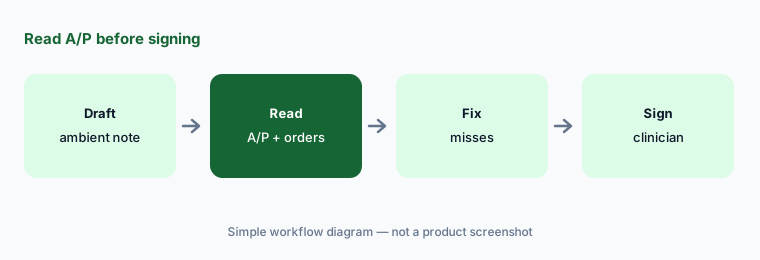
Primary workflow:
Pick ten encounters where athenaAmbient drafted the note. Have the attending clinician compare each draft note and suggested order with the visit before signing or placing anything.
2. Ambient Notes with style preferences and multilingual summaries
What it is: Ambient Notes remains available with partner ambient models (including iScribe AI and Suki AI). The Spring 2026 release adds customizable note style (verbosity, structure, formatting) and multilingual conversation summaries into English across multiple languages for iScribe.
Style prefs help, but a tidy wrong note is still wrong. Keep the same sign-off discipline as athenaAmbient.
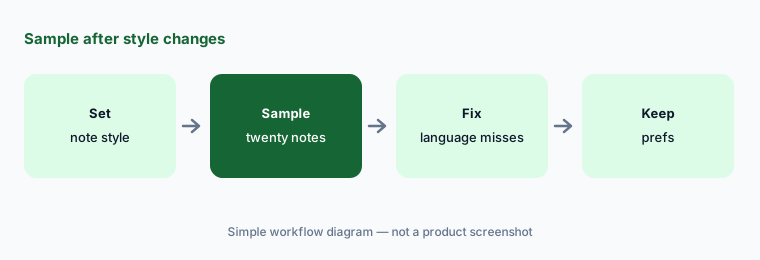
Check language coverage:
After changing Ambient Notes style prefs, have the clinician sample twenty notes and confirm every non-English exchange is reflected before signing.
3. Sage clinical copilot and visit-prep summaries
What it is: Sage is athena’s in-EHR assistant for chart questions. Related prep surfaces include problem-oriented patient summaries, “changes since last visit,” and “what to know today” style prompts drawn from the chart and ChartSync interoperability — some items were described as alpha / limited when first announced, so ask what your build has live.
Summaries omit what is not in the chart. External records that never arrived will not appear.
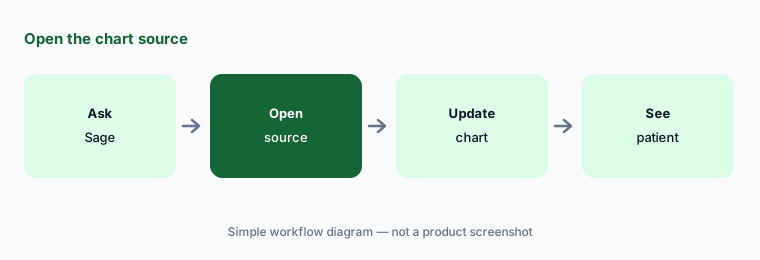
Open the source:
Ask Sage three pre-visit questions on a complex patient. Have the clinician open the source of each answer before relying on it in the room.
4. Patient Conversations AI and Waitlist Scheduling
What it is: athena describes AI help inside Patient Conversations (routine questions, triage to staff) and automated Waitlist Scheduling that contacts patients when an opening appears. Self-scheduling rules are also getting AI matching of visit type, provider, and time.
Anything that can book, cancel, or give clinical guidance needs a named owner and an escalation path.
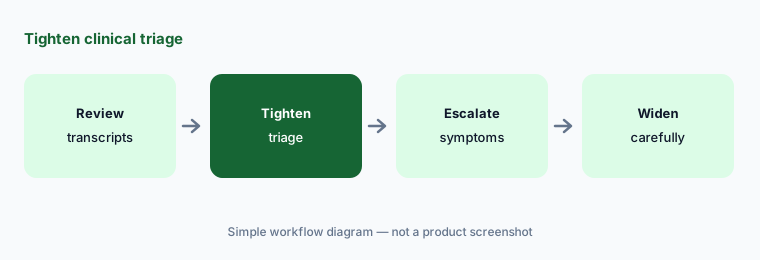
Tighten triage first:
Review one week of AI-assisted Patient Conversations. Have the practice manager escalate every clinical-symptom thread to a nurse before widening automation.
5. AI Express Coding and claim follow-up timing
What it is: On the revenue-cycle side, athena describes AI-powered Express Coding for charge capture and cleaner claims, AI that picks an optimal time to follow up on claims from payer processing trends, AI insurance-card capture, and AI-determined copay amounts at time of service (Spring 2026 release). None of that replaces a coder or biller checking the claim.
A suggested code or follow-up time is a lead. Payer quirks and documentation gaps still need a person.
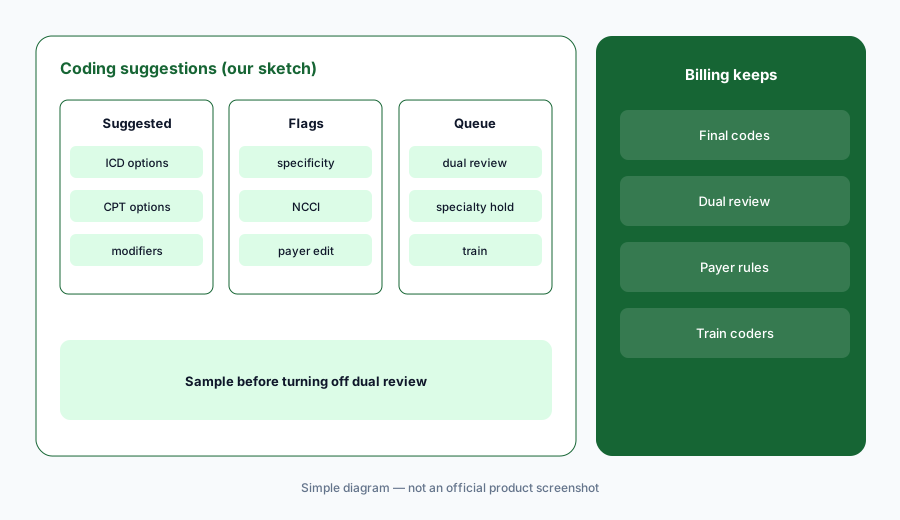
Check before trust:
Sample fifty Express Coding suggestions from one specialty. Have the billing supervisor compare each with the final coded claim before turning off dual review.
6. Clinical inbox fax triage and document extraction
What it is: Spring 2026 adds AI that redirects advertisement and spam faxes out of staff queues, and AI extraction of patient information from plain-text documents plus ADT event classification — aimed at care-coordination intake.
Spam filters can hide a real referral. Spot-check the spam folder for a month.
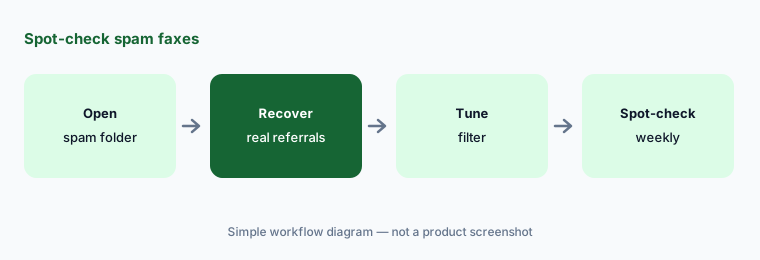
Spot-check spam:
Have the referral coordinator spot-check the AI spam fax folder every day for two weeks before trusting it unattended.
Pricing context (October 2026)
athenahealth does not publish a public price list for athenaOne seats or most AI features. The August 2026 announcement states athenaAmbient is available at no additional cost as part of routine updates — confirm that language for your contract. Treat other AI capabilities as quote-only as of 19 Oct 2026.
Ask whether Ambient Notes partner models (iScribe, Suki) are included or billed separately, and which Sage / inbox / RCM AI items are generally available for your specialty and region.
Uncertainty: We did not test athenaOne. Availability labels (alpha, limited release, broad availability) change by build; ask athena what your organization actually has enabled. Time-saved and same-day chart-completion figures in athena’s announcements are vendor claims, not our measurement. “No additional cost” for athenaAmbient is athena’s statement — verify on your order form.
When it’s useful (honest take)
Useful when your ambulatory practice already runs athenaOne, clinicians still finish charts after hours, billers rework preventable coding misses, and someone will name who signs notes and who samples coding AI.
Less useful when you are a health system standardized on Epic Systems (Epic Systems EHR AI) or Oracle Health, your main gap is denial resubmission inside a clearinghouse (Waystar AI), or you only need an insurance agency AMS (that is Applied Epic AI — a different product).
Paying for athenahealth AI and a few other AI tools? The $9 AI toolkit spreadsheet lists every AI subscription you have, what each one costs, and how fast it pays for itself, so you can see which ones are worth the money.
Want someone to do it for you? AI toolkit audit — $19
Related options (educational)
| Need | Better home | Why |
|---|---|---|
| AI inside athenaOne for ambient notes, chart Q&A, and RCM assists | athenahealth AI (this page) | Quote only; Ambient “no extra cost” per athena |
| Health-system EHR AI (Art, Penny, Emmie) | Epic Systems EHR AI | Quote only; different product from Applied Epic |
| RCM agents for denials and CDI | Waystar AI | Quote only |
| Insurance agency AMS AI (not an EHR) | Applied Epic AI | Different company/product |
| General chat on sanitized ops lists | Claude (sanitized) | No EHR access |
FAQ
What is athenaAmbient?
athenahealth’s native ambient digital scribe inside athenaOne. It drafts visit notes and can suggest diagnoses and order types from the conversation. athena announced broad availability in August 2026 and says it is included at no additional cost — confirm for your contract.
Is this the same as Applied Epic?
No. athenaOne is an ambulatory EHR/RCM platform. Applied Epic is an insurance agency management system (see Applied Epic AI on this site). Different industries and vendors.
How much does athenahealth AI cost in October 2026?
athena does not publish a public price list. Ambient is described as no additional cost; treat other AI features as quote-only and ask your representative.
Can athenaAmbient place orders or sign notes on its own?
Do not configure the system to allow that. The attending clinician must review drafts and place or sign intentionally.
Who should check athena AI output?
The attending clinician for notes and orders; the billing supervisor for Express Coding and claim-follow-up AI; the practice manager for Patient Conversations and waitlist automation.
Optional next step (if seats overlap)
If you pay for athenaOne AI, a separate ambient scribe, a coding tool, and a chat seat that all touch the same visit, that overlap is worth mapping. Map the overlap with the $19 AI toolkit audit or the $9 AI toolkit spreadsheet. Email Audit $19 or Toolkit spreadsheet $9.
Checkout is live via Stripe. After you pay, we email delivery (spreadsheet) or intake next steps (audit).