Tool · Healthcare ops · Epic Systems · Oct 2026
Epic Systems EHR AI review (Oct 2026): Art AI Charting, Penny coding and appeals, Emmie patient AI, and Cosmos lookalikes for health systems
Epic Systems (Verona, Wisconsin) builds the EHR many U.S. health systems run. This page covers Epic’s built-in AI — Art for clinicians (including AI Charting), Penny for coding and appeals, Emmie for patients in MyChart, and Cosmos research tools — as described by Epic in 2026. It is not about Applied Systems’ Applied Epic agency management system (Applied Epic AI). Each section has a Try this.
What this Epic Systems page covers
This page is for a CMIO, attending clinician, coding lead, or patient-access lead at an Epic-using health system who wants a plain map of Art, Penny, Emmie, and Cosmos. It is not medical, coding, or billing advice, and it is not a review of Applied Epic.
On 4 February 2026 Epic described the release of AI Charting as part of Art: ambient listening, draft notes, suggested orders for clinician review, and voice commands to reshape note structure. Art Insights visit-prep summaries are already widely used per Epic’s own usage figures. Penny and Emmie extend AI into coding/appeals and patient billing conversations. Cosmos powers lookalike and Best Care Choices style tools on de-identified data.
Ground rules: the attending clinician reviews every AI Charting draft and suggested order before signing or placing; the coding lead samples Penny output; patient-access owns Emmie escalation rules; nobody treats Cosmos lookalikes as a care mandate without clinical judgment.
Major features (with how someone uses them)
Examples at a glance: each feature has a concrete example from a real job plus a short Try this you can run this week.
1. Art AI Charting: ambient notes and suggested orders (primary)
What it is: AI Charting listens during the visit, drafts the clinician’s note, and queues orders based on the conversation for clinician review (EpicShare, 4 Feb 2026). Clinicians can reshape note structure with voice commands (for example, bulleted HPI). Epic states clinicians must review drafts and suggested orders before they are placed, and that draft-edit metrics are monitored as a guardrail.
Ambient drafts can sound complete while missing a refusal, a differential, or a safety-net instruction. Read the plan before you sign.
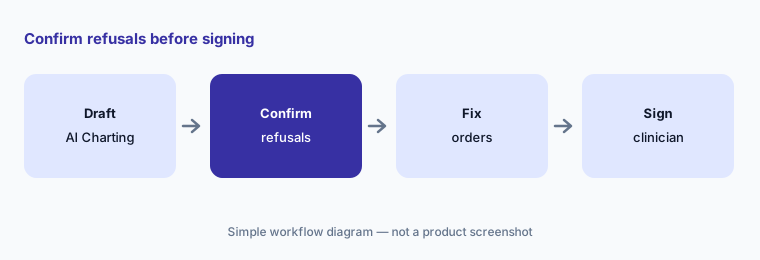
Primary workflow:
Pick ten visits Art AI Charting drafted. Have the attending clinician read each draft note and every suggested order against what was said in the room before signing or placing an order.
2. Art Insights visit-prep summaries
What it is: Art Insights pulls chart context into a concise prep summary. Epic reported Insights used over 16 million times each month — nearly 3× November 2025 usage (EpicShare). That figure is Epic’s, not ours.
Prep summaries inherit chart gaps. If outside records never arrived, Insights will not invent them correctly — it may simply omit them.
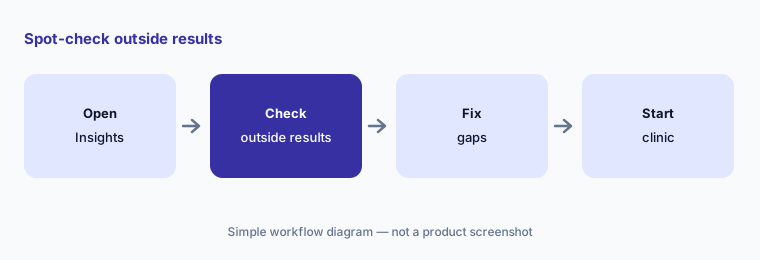
Spot-check sources:
Open Art Insights on twelve complex follow-ups. Have the clinician verify each critical outside result against the source system before clinic.
3. Emmie patient AI in MyChart and text
What it is: Emmie is Epic’s patient-facing AI inside MyChart and over text — scheduling help, bill explanation, payments, payment plans, and reimbursement statements. Epic says organizations see fewer billing-related customer-service messages, with escalation to live chat when needed. MyChart Central (one Epic ID across providers) is described as live in all 50 U.S. states.
Bill explanations must not invent balances. Patient-access should sample Emmie threads weekly.
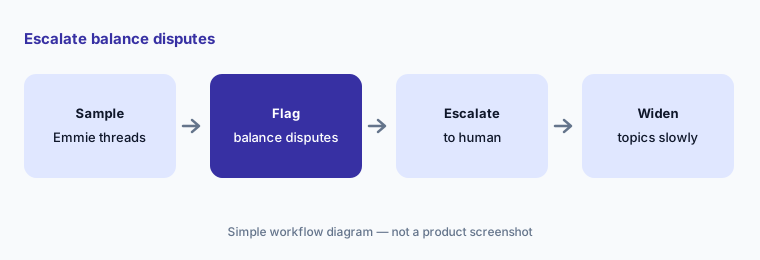
Sample weekly:
Sample forty Emmie billing threads. Have the patient-access manager escalate every balance dispute to a human before widening Emmie topics.
4. Penny for professional billing coding and denial appeals
What it is: Penny is Epic’s AI for operational and revenue-cycle workflows. Per the February 2026 EpicShare post, more than 200 organizations use Penny to automate professional billing coding, with many seeing a more than 20% reduction in coding-related denials (Epic’s figure). For medical-necessity denial appeals, Epic says letters are created 23% faster. Coding leads still own the rules and the samples.
Faster letters are not won appeals. A coding lead should sample before autonomy widens.
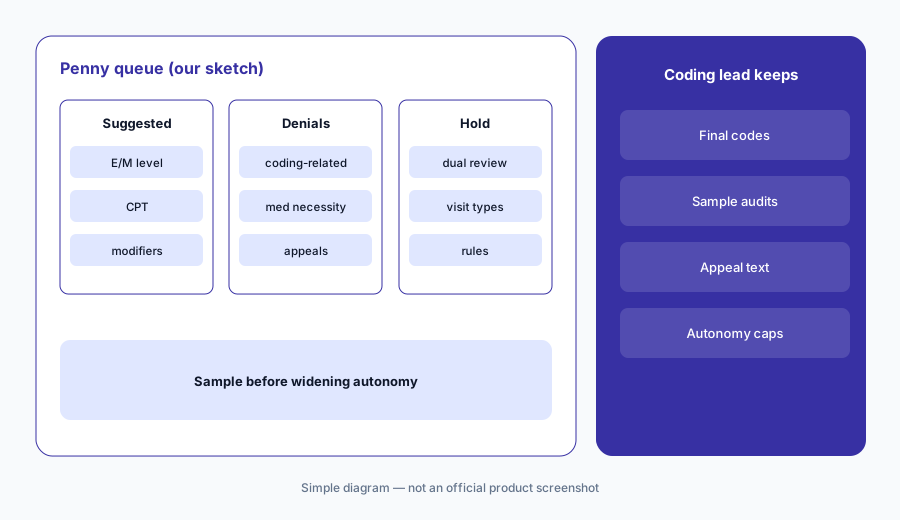
Sample before autonomy:
Sample fifty Penny-coded professional bills. Have the coding lead compare each with the final coder decision before widening autonomy.
5. Cosmos lookalikes and Best Care Choices
What it is: Cosmos is Epic’s de-identified research network. Tools such as lookalikes (compare a case to similar Cosmos patients) and Best Care Choices for My Patient (observational outcome patterns) are described in Epic leadership talks; usage figures (for example lookalikes used tens of thousands of times) are Epic’s. Curiosity predictive models were described as expanding to Cosmos contributors.
Observational lookalikes are not randomized evidence and not an order. Clinicians decide.
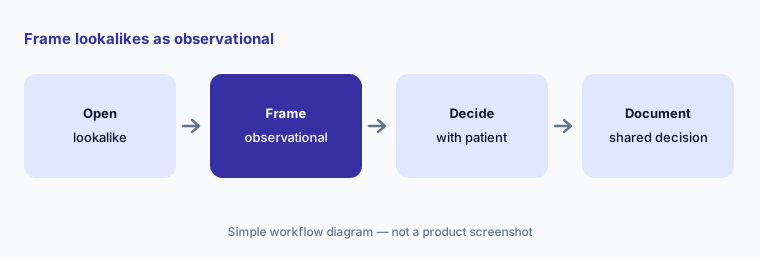
Frame carefully:
If you use a Cosmos lookalike or Best Care Choices view, have the clinician frame it as observational data and document the shared decision — never as a mandated pathway.
6. Agent Factory and Hello World communications
What it is: Epic has described Agent Factory as a platform to build, run, and monitor AI agents inside Epic workflows, with broader availability discussed on a longer horizon. Hello World communications can show patients that a call is from the health system. Treat Agent Factory items as roadmap-sensitive — ask your IS analyst what is live for your version.
Agents that can message patients or change charts need the same approval gates as any automation.
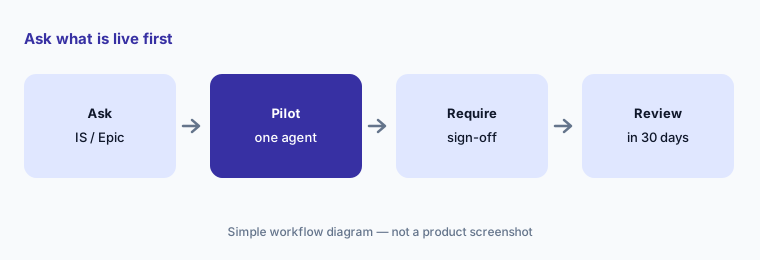
Ask IS first:
Ask your IS analyst which Agent Factory capabilities are live for your version. Have the CMIO require a named approver on every patient-facing agent action in the first pilot.
Pricing context (October 2026)
Epic Systems does not publish public list prices for Epic EHR modules or AI features. Pricing is quote-only as of 19 Oct 2026 through your Epic contract and implementation partners.
Ask which Art, Penny, Emmie, and Cosmos tools are included in your current agreement, which require additional licensing, and which specialties have AI Charting enabled.
Uncertainty: We did not test Epic. AI Charting release timing and specialty coverage vary by organization. Usage and denial-reduction figures are Epic’s claims. Agent Factory and Curiosity availability should be confirmed with your IS analyst. This page is about Epic Systems EHR — not Applied Epic AMS.
When it’s useful (honest take)
Useful when your health system already runs Epic, clinicians want ambient charting inside the EHR rather than a bolt-on only, coding leads will sample Penny, and patient-access will own Emmie escalations.
Less useful when you run an ambulatory-only athena practice (athenahealth AI), you need clearinghouse-level denial agents (Waystar AI), or you were looking for an insurance AMS named Epic (Applied Epic AI — different vendor).
Paying for Epic Systems EHR AI and a few other AI tools? The $9 AI toolkit spreadsheet lists every AI subscription you have, what each one costs, and how fast it pays for itself, so you can see which ones are worth the money.
Want someone to do it for you? AI toolkit audit — $19
Related options (educational)
| Need | Better home | Why |
|---|---|---|
| Built-in Epic Art / Penny / Emmie / Cosmos | Epic Systems EHR AI (this page) | Quote only |
| Ambulatory athenaOne AI | athenahealth AI | Quote only |
| RCM platform agents outside the EHR | Waystar AI | Quote only |
| Insurance agency AMS named Epic (different company) | Applied Epic AI | Not an EHR |
| General chat on sanitized ops data | Claude | No EHR access |
FAQ
Is Epic Systems EHR the same as Applied Epic?
No. Epic Systems (Verona, WI) makes a clinical EHR for health systems. Applied Epic is an insurance agency management system from Applied Systems. Different products, different buyers.
What is Art AI Charting?
A built-in Epic feature (part of Art) that listens during visits, drafts notes, and suggests orders for clinician review. Epic described its release in February 2026.
How much does Epic AI cost in October 2026?
Epic does not publish list prices. Treat Art, Penny, Emmie, and Cosmos tools as quote-only under your existing Epic agreement.
Can AI Charting place orders without a clinician?
Epic states clinicians must review suggested orders before they are placed. Keep that rule even if a future setting offers more automation.
Who should check Epic AI output?
The attending clinician for Art drafts and orders; the coding lead for Penny; patient-access for Emmie; the CMIO for any Agent Factory pilot.
Optional next step (if seats overlap)
If you pay for Epic Art, a separate ambient scribe, Penny, and a third coding AI that all touch the same encounter, that overlap is worth mapping. Map the overlap with the $19 AI toolkit audit or the $9 AI toolkit spreadsheet. Email Audit $19 or Toolkit spreadsheet $9.
Checkout is live via Stripe. After you pay, we email delivery (spreadsheet) or intake next steps (audit).