Tool · Healthcare ops · Abridge · Oct 2026
Abridge AI review (Oct 2026): ambient clinical notes, Linked Evidence, Epic Haiku/Hyperspace embedding, and coding support
Abridge builds ambient AI for clinical conversations — specialty-specific draft notes, Linked Evidence (note sentence back to transcript/audio), Epic-native capture in Haiku with review in Hyperspace, plus orders and coding/risk-gap support. Abridge’s site attributes trust from 300+ health systems. This page is about using those drafts for documentation busywork while a licensed clinician still owns every signed note. Each section has a Try this.
What this Abridge page covers
This page is for a CMIO, attending clinician, or coding lead evaluating ambient clinical documentation with auditability. It is not medical, coding, or billing advice.
Abridge positions one intelligence layer across clinicians, revenue cycle, and nursing draft documentation, with Linked Evidence so each note sentence can be opened against the audio. Epic embedding (capture in Haiku, review in Hyperspace) is a major enterprise path; multilingual and SSO/governance features are marketed for health-system rollout.
Ground rules: the clinician opens Linked Evidence on assessment sentences before signing; coding leads sample suggestions; nobody treats a tidy draft as a legal note until a named licensed person checks it; and Abridge’s time-saved / cognitive-load figures are its claims, not our measurement.
Major features (with how someone uses them)
Examples at a glance: each feature has a concrete example from a real job plus a short Try this you can run this week.
1. Linked Evidence: note sentence → transcript/audio (primary)
What it is: Linked Evidence is Abridge’s audit trail from a note sentence back to the underlying transcript and audio. It is the main reason many CMIOs pick Abridge when they need to show why a line was written.
If Linked Evidence does not match what was said, fix the line before you sign — do not hope the audio will “explain itself” later.
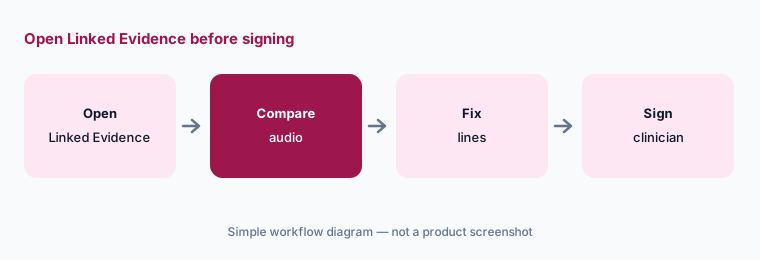
Primary workflow:
Pick ten Abridge draft notes. Have the clinician open Linked Evidence on every assessment sentence and fix any line that does not match the audio before signing.
2. Specialty-specific ambient draft notes
What it is: Abridge drafts specialty-specific notes from the clinical conversation — structured for how cardiology, primary care, or other specialties typically document — for clinician review.
Specialty templates can still miss a refusal or a safety-net instruction. Read the plan before you sign.
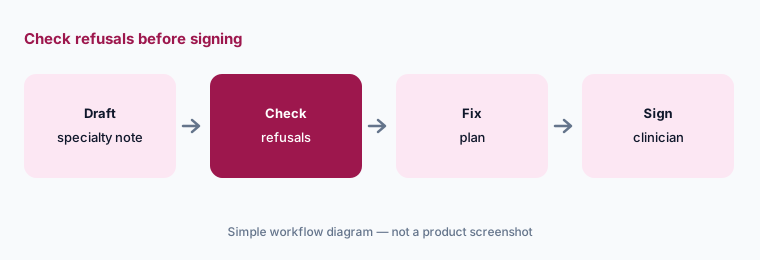
Check refusals:
Review twelve specialty ambient drafts. Have the clinician confirm every refusal and plan change against the visit before signing.
3. Epic Haiku capture and Hyperspace review
What it is: Abridge markets Epic-native capture in Haiku with review and edit in Hyperspace so clinicians stay inside Epic workflows. Confirm which Epic versions and specialties your IS team has certified.
Embedding does not remove the need to read the draft. Haiku capture still produces a draft, not a signed note.
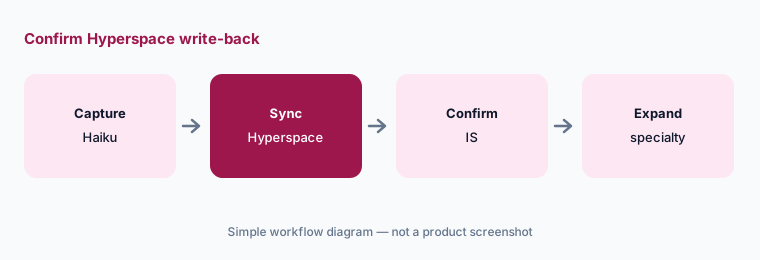
Confirm write-back:
Pilot twenty Haiku-captured visits. Have the CMIO confirm every draft appears in Hyperspace before expanding specialties.
4. Coding and risk-gap support from the conversation
What it is: Abridge describes coding and risk-gap support drawn from the clinical conversation so billable documentation is closer to ready for review. Coding leads still own specificity and HCC capture checks.
A suggested code is a lead. Payer quirks and missing ROS still need a person.
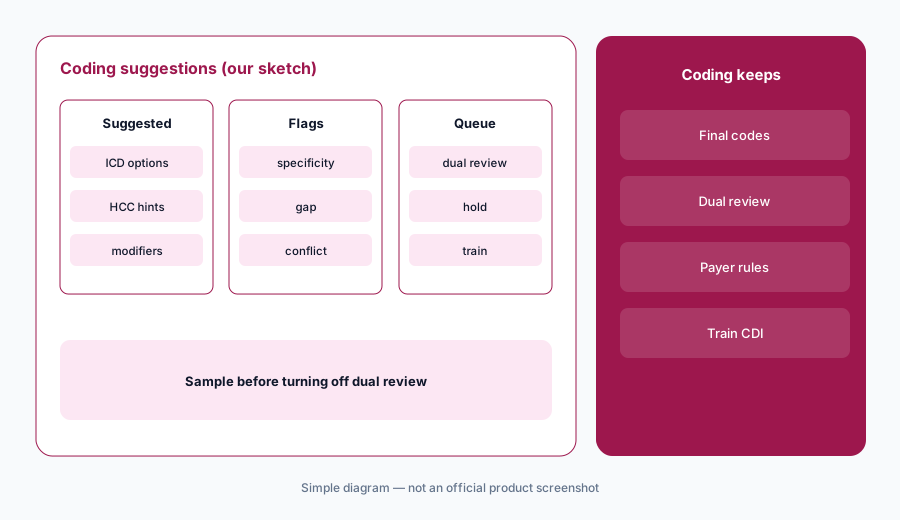
Sample before trust:
Sample thirty Abridge coding suggestions. Have the coding lead compare each with the final coded claim before turning off dual review.
5. Orders and care-signal assists from the visit
What it is: Abridge describes order supports and care-signal style assists that surface conditions or follow-ups heard in the visit for clinician review.
A suggested order or care signal is not an order. Confirm allergies, refusals, and prior results first.
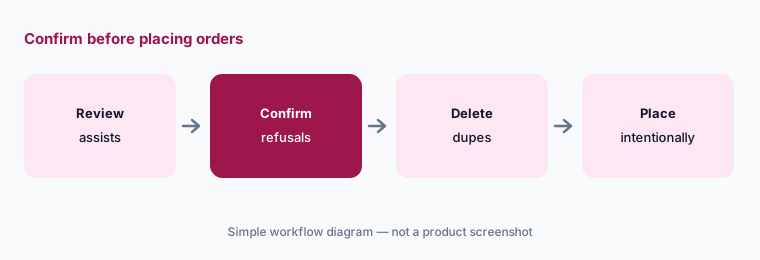
Confirm before place:
Review fifteen visits with Abridge order assists. Have the clinician confirm every suggestion against refusals and pending labs before placing.
6. Enterprise SSO, multilingual, and governance controls
What it is: Abridge markets enterprise SSO, governance, and multilingual support for health-system rollouts across 300+ attributed health systems (vendor claim on abridge.com as of 19 Oct 2026).
SSO does not equal clinical quality. Governance still needs named owners for note sign-off and coding samples.
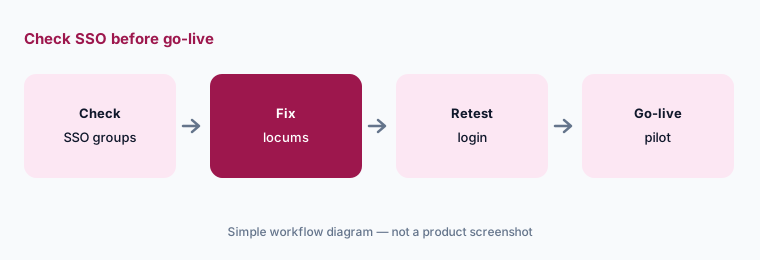
Check SSO first:
Before go-live, have IS verify SSO group mapping for every clinician in the pilot — including locums — and fix gaps.
Pricing context (October 2026)
Abridge does not publish a public per-clinician price list as of 19 Oct 2026. Treat commercial terms as quote-only enterprise contracts.
Ask whether Epic embedding, Linked Evidence retention, coding supports, and nursing product lines are included or billed as separate SKUs for your system.
Uncertainty: We did not test Abridge. Epic Haiku/Hyperspace embedding depends on your Epic version and Abridge certification. “300+ health systems” and time-saved / cognitive-load figures are Abridge’s claims, not our measurement. Confirm retention, BAA, and Linked Evidence storage with your security and compliance teams.
When it’s useful (honest take)
Useful when you need ambient notes with a sentence-level audio audit trail, clinicians already live in Epic Haiku/Hyperspace (or another supported EHR path), and someone will open Linked Evidence before signing.
Less useful when you only want dictation heritage inside Microsoft Dragon (Microsoft Dragon Copilot AI), your gap is Oracle Foundation nursing agents (Oracle Health AI), or your main problem is denial resubmission (Waystar AI).
Paying for Abridge AI and a few other AI tools? The $9 AI toolkit spreadsheet lists every AI subscription you have, what each one costs, and how fast it pays for itself, so you can see which ones are worth the money.
Want someone to do it for you? AI toolkit audit — $19
Related options (educational)
| Need | Better home | Why |
|---|---|---|
| Ambient notes with Linked Evidence + Epic embed | Abridge AI (this page) | Quote only |
| Ambient DAX + Dragon Medical dictation | Microsoft Dragon Copilot AI | Quote only |
| Ambient inside athenaOne | athenahealth AI | Quote only; Ambient “no extra cost” per athena |
| Art AI Charting inside Epic Systems | Epic Systems EHR AI | Quote only |
| Clinical AI Agent on Oracle Health Foundation | Oracle Health AI | Quote only |
| General chat on sanitized ops lists | Claude (sanitized) | No EHR access |
FAQ
What is Linked Evidence?
Abridge’s link from a note sentence back to the transcript and audio so a clinician can verify what was said before signing.
Does Abridge replace Epic or Oracle?
No. Abridge is ambient documentation software that embeds into EHRs (including Epic Haiku/Hyperspace). The EHR remains the system of record.
How much does Abridge cost in October 2026?
Abridge does not publish a public price list. Treat pricing as quote-only enterprise per-clinician contracts.
Can Abridge sign notes on its own?
Do not configure it that way. The clinician must review drafts — including Linked Evidence on assessment lines — before signing.
Who should check Abridge output?
The clinician for notes, Linked Evidence, and orders; the coding lead for coding suggestions; IS/security for SSO and retention.
Optional next step (if seats overlap)
If you pay for Abridge, a second ambient scribe, Epic Art AI Charting, and a coding tool that all touch the same visit, that overlap is worth mapping. Map the overlap with the $19 AI toolkit audit or the $9 AI toolkit spreadsheet. Email Audit $19 or Toolkit spreadsheet $9.
Checkout is live via Stripe. After you pay, we email delivery (spreadsheet) or intake next steps (audit).