Compare · Customer insight · Research and feedback AI · Oct 2026
Dovetail vs Enterpret (Oct 2026): AI customer-insight hubs for research and feedback
Dovetail and Enterpret both promise one place where a company’s customer evidence lives and AI that answers questions about it. They start from different ends. Dovetail grew up as a research repository for interviews and usability calls and now classifies continuous feedback too; Enterpret was built to sort large volumes of support tickets, reviews, and survey answers into a shared taxonomy. This page compares them by main input, who owns the taxonomy, and how each AI answers questions — not as a ranking — with a Try this for each.
What this comparison covers
This page is for a research ops lead, a voice-of-customer lead, or a product leader deciding where customer evidence should live — or whether the team needs both a research repository and a feedback analytics platform — who wants to know what each AI does with the evidence and who has to check it.
The short version: Dovetail is strongest when the evidence is interviews, usability sessions, and calls that researchers tag and turn into highlights and Docs; its Channels add continuous feedback, and Channels 2.0 (beta) groups it into ideas with owners. Enterpret is strongest when the evidence is thousands of tickets, reviews, and survey answers a month; its Adaptive Taxonomy classifies everything into one shared structure and its Agent answers questions with cited counts. Both now run AI agents in the background and offer MCP servers.
Prices and recent changes were re-checked on both vendors’ sites on 9 October 2026. Feature facts match our Dovetail AI review and Enterpret review (both read 9 October 2026). Accuracy and time-saving figures on either site are vendor claims.
| Question | Dovetail | Enterpret |
|---|---|---|
| Main input | Interviews, calls, documents, and surveys in Projects; continuous feedback in Channels | High-volume support tickets, reviews, surveys, calls, and community posts |
| How feedback is organized | Project tags and highlights; Channels 2.0 (beta) groups feedback into ideas with owners and status | Adaptive Taxonomy: three keyword levels plus themes and sub-themes; new themes added every Saturday |
| AI for questions | Chat (Fast and Deep research), Digital Twins, voice mode (beta, Enterprise) | Enterpret Agent (formerly Wisdom), with citations and verbatim quotes |
| Background AI work | Dovetail Agents (GA 15 July 2026): on demand, schedule, events, webhooks | Agent Automations (beta since June 2026): schedule or signal, Quality Monitor |
| MCP | Read-write MCP server; Claude and ChatGPT connectors | Enterpret MCP: cited queries in Claude, ChatGPT, Cursor, and more |
| Published prices | Free $0 (one channel, one project); Enterprise custom | None published; quote-only, with AI credits |
Major features (with how someone uses them)
Examples at a glance: each feature has a concrete example from a real job plus a short Try this you can run this week.
1. Top three feedback sources: which tool takes each (primary)
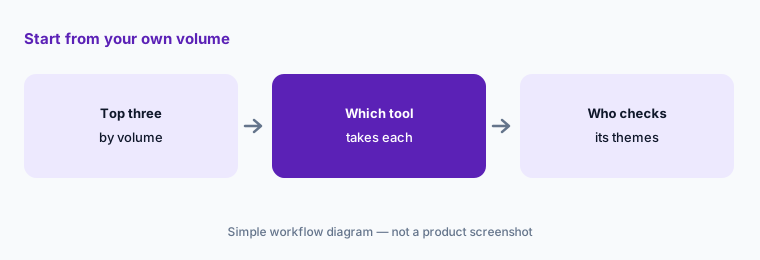
What it is: The fastest way to see which tool fits is to start from your own volume. Both ingest many of the same systems — Dovetail’s Sources (beta, 9 October 2026) lists Gong, Intercom, Zendesk, Freshdesk, Salesforce Service Cloud, the App Store, Google Play, G2, Sprig, Qualtrics, and others; Enterpret lists more than 50 sources across support, reviews, surveys, calls, and community. The difference is what each does well once the data is in: Dovetail’s Projects are built around transcripts, highlights, and tags a researcher works through; Enterpret is built around classifying every record into a taxonomy and counting it. Enterpret’s demo page recommends at least 1,000 feedback records a month.
For each source, also write who checks the themes that come out of it. A source nobody owns is the one where a wrong theme survives longest.
Primary workflow:
List your top three feedback sources by volume. Mark which tool would ingest each and who checks its themes.
2. Main input: interviews and research vs high-volume feedback
What it is: Dovetail Projects hold calls, recordings, documents, and surveys; researchers tag highlights, and Docs turn them into shareable findings with clips and reels. Channels classify continuous feedback, and Channels 2.0 (open beta since 1 September 2026) surfaces feature requests, bugs, and pain points as ideas with ARR and plan context from Salesforce or HubSpot. Enterpret starts from volume: every ticket, review, survey answer, and call is classified on arrival into its taxonomy, with account data such as segment and revenue attached, so you can count themes and watch them move over time.
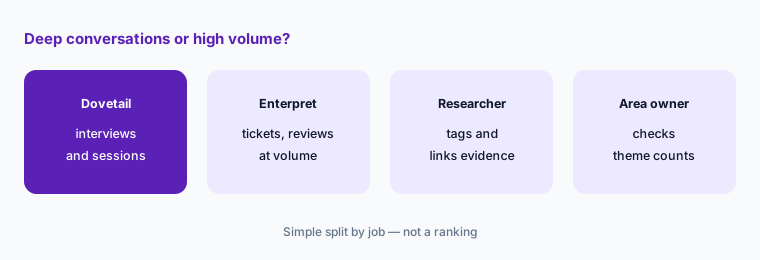
A single interview can change a roadmap; a single ticket rarely does. That is why the two tools treat evidence differently. If your decisions lean on a few deep conversations, a repository that keeps the full transcript and the researcher’s tags in view matters more than counts. If they lean on what thousands of customers keep saying, consistent classification and trend lines matter more.
Trace your last decisions:
List your last three roadmap changes. Write whether each came from interviews, ticket or review volume, or both.
3. Who owns the taxonomy: tags and ideas vs an Adaptive Taxonomy
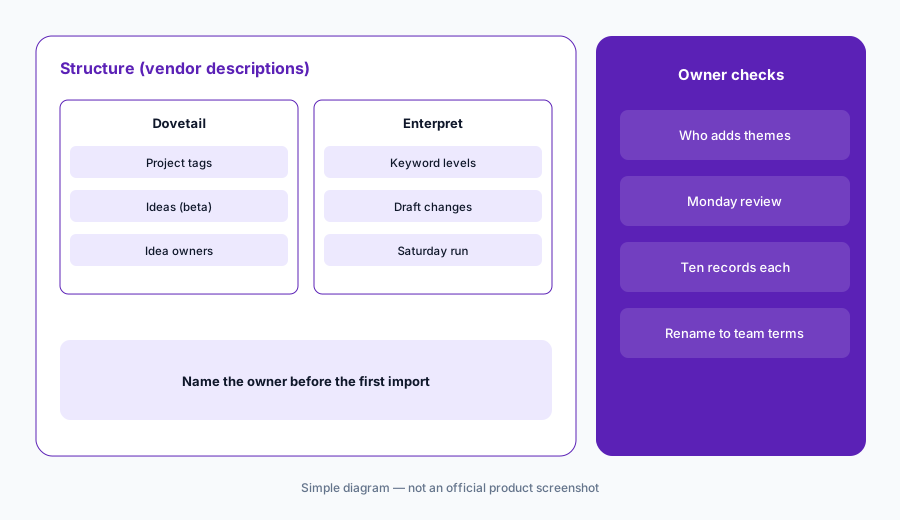
What it is: In Dovetail, structure comes from project tags researchers apply (with global tags, fields, and templates listed under Enterprise organization features) and from Channels, where Channels 2.0 lets people create their own ideas, bulk-move evidence between them (29 September 2026), and give each idea an owner, status, and priority. In Enterpret, the Adaptive Taxonomy is built during onboarding from your help docs and past feedback, edited by workspace admins in Edit Mode as draft changes, and extended automatically every Saturday by Dynamic Taxonomy, which adds new themes from unsorted feedback. Enterpret’s help center says uncommitted drafts are discarded at that run and there is no in-product view yet of what it added.
Either way, name the owner before the first import. In Dovetail, that is the researcher or ops lead who keeps tags consistent across projects and the PM who owns each idea. In Enterpret, it is one owner per product area who reviews new themes every week, because a new or renamed theme changes every trend line built on it.
One rule for both:
Write who may add or rename a theme in each tool and when new themes are reviewed. Check ten records under every theme added in the first two weeks.
4. How the AI answers questions: Chat and Digital Twins vs Enterpret Agent
What it is: Dovetail Chat answers questions across your Dovetail data in two modes — Fast, for cited everyday answers, and Deep research, which reasons across more evidence such as sales calls, support tickets, and research sessions. Digital Twins are personas built from real customer data that you can question, and voice mode (beta, Enterprise, 1 October 2026) lets you talk to Chat or a twin aloud. Enterpret Agent, formerly Wisdom, answers in plain language with a visible trail of its steps; Enterpret says every count and quote links to its source records, quotes are verbatim with speaker attribution, and it reports zero results rather than inventing a number. Admin-set workspace rules define your terms for everyone.
A Digital Twin’s answer is a rehearsal built from data, not a participant’s words, so never quote it as a customer. For any AI answer in either tool, open the cited highlights or records before you repeat it in a meeting.
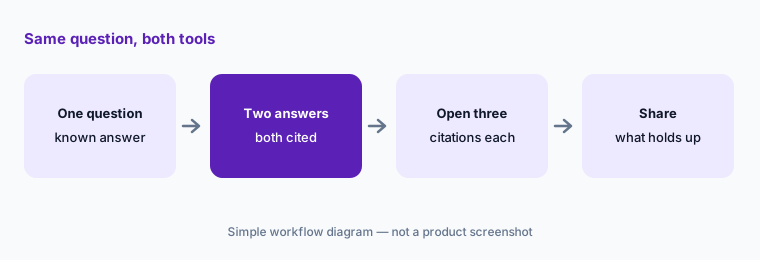
Same question, both tools:
Ask both AIs one question you already know the answer to. Open three citations in each and note which answer you could defend in a meeting.
5. Background agents: Dovetail Agents vs Agent Automations
What it is: Dovetail Agents (generally available since 15 July 2026) run on demand, on a schedule, on Dovetail events, or from Salesforce, Jira, and Slack webhooks, with skills, connectors such as Linear and Notion, and scoped tools you pick per agent; since 21 September you can create one by describing it in chat. Enterpret Agent Automations (beta since June 2026) run on a schedule or when a signal fires — a spike, a sentiment shift, an escalation — with templates such as Quality Monitor and Escalation Shield. Enterpret’s Agent asks before writing to an external system by default and acts with your own connected accounts.
Give every background agent a named owner who reads its first runs, limit it to the tools it needs, and keep anything that reaches customers or another team’s backlog behind a person’s approval. Pause the ones nobody reads.
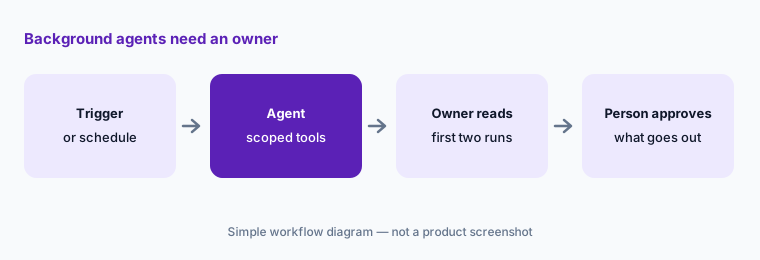
Scoped and owned:
Build one weekly digest in each tool with read-only tools and one destination. Name an owner who reads the first two runs before anyone else sees them.
6. Privacy, MCP, pricing transparency, and when you need both
What it is: Dovetail offers admin-set redaction across videos, audio, transcripts, and Channels data (listed under Enterprise security), a read-write MCP server, and connectors for Claude and ChatGPT (Dovetail says the Claude connector follows your Dovetail permissions). It publishes a Free plan — $0, one channel and one project, Chat within that project (as listed 9 Oct 2026) — and Enterprise at custom pricing. Enterpret says it scans incoming data for personal information and removes it before anything is stored, with ingestion blockers and scrubbing rules you configure; the Enterpret MCP brings cited answers into Claude, ChatGPT, Cursor, and other tools. Enterpret publishes no prices and meters Agent work in AI credits.
Many companies run a research repository and a feedback analytics platform side by side; the cost is two places to check. Other homes: Canny if the job is mostly counting feature requests, Productboard if feedback should link straight to roadmap items, and a spreadsheet plus careful reading if volume is low.
Price your real setup:
Ask Dovetail for an Enterprise quote and Enterpret for a quote at your monthly record volume. Ask each which AI features and how many credits or agent runs are included.
Pricing context (October 2026)
Dovetail publishes a free plan but no paid price (as listed 9 Oct 2026). Free is $0 with no card required: one channel, one project, Chat within a single project, and AI summaries. Enterprise is custom pricing through sales, with unlimited Agents, channels, projects, and Docs, dashboards, Chat queries from Slack and Teams, organization features, and redaction and SSO. See dovetail.com/pricing.
Enterpret publishes no prices (as listed 9 Oct 2026): its site has no pricing page and sells by demo and quote. Its help center says Enterpret Agent work uses AI credits — a monthly personal allowance per user, an organization pool for the subscription term, and top-ups only an Owner can buy — with no automatic overage, and that MCP access doesn’t use credits today. See how AI credits work.
Uncertainty: Neither vendor publishes a paid price. Dovetail’s Agents announcement says agents are on all paid plans while its pricing page lists only Free and Enterprise; Enterpret doesn’t publish credit allowance sizes. Dovetail’s Channels 2.0, Sources, and voice mode are beta, and Enterpret’s Agent OS (Enterpret Agent and Agent Automations) is beta. Both change often; dates are as shown on each vendor’s changelog and help center on 9 October 2026.
When it’s useful (honest take)
Dovetail is useful when researchers run interviews and usability sessions and need transcripts, highlights, and shareable findings in one place, with continuous feedback alongside — and someone keeps tags consistent and checks every AI answer against its highlights.
Enterpret is useful when thousands of tickets, reviews, and survey answers a month need one shared taxonomy and trend lines tied to account data — and owners review the weekly taxonomy additions and read the records behind every rising theme.
Less useful when (either one) volume is low enough to read by hand, nobody will own tags or themes, or the team expects AI answers to replace reading customers’ own words.
Still choosing between Dovetail and Enterpret? The $19 AI toolkit audit gives you a written plan for which tools to keep using and which to drop across your whole AI stack, including this pair.
Prefer to do it yourself? Spreadsheet — $9
Related options (educational)
| Need | Better home | Why |
|---|---|---|
| Interviews, research synthesis, and shareable findings | Dovetail AI | Chat, Agents, Channels 2.0, redaction |
| High-volume feedback across support, reviews, and surveys | Enterpret | Adaptive Taxonomy, cited Agent answers |
| Feature requests from tickets and calls | Canny AI | Autopilot inbox, dedupe |
| Feedback linked to roadmap items | Productboard AI | Insights tied to features |
| Running the studies themselves | Maze AI or UserTesting AI | Unmoderated, AI-moderated, video |
| In-product surveys | Sprig AI | Targeted surveys, AI themes |
FAQ
Is Dovetail or Enterpret better?
Neither in general, and this page is not a ranking. Dovetail leans toward interviews and research sessions with continuous feedback alongside; Enterpret leans toward classifying high volumes of tickets, reviews, and survey answers into one taxonomy. List your top three sources by volume and see which tool fits each.
How much do Dovetail and Enterpret cost in October 2026?
Dovetail publishes a Free plan ($0, one channel and one project) and Enterprise at custom pricing. Enterpret publishes no prices and meters its Agent work in AI credits. As listed on 9 October 2026.
What is the difference between Dovetail Chat and Enterpret Agent?
Dovetail Chat answers across your Dovetail data in Fast or Deep research mode, alongside Digital Twins and voice mode. Enterpret Agent, formerly Wisdom, answers over your classified feedback with cited counts and verbatim quotes and can run as background Agent Automations. In both, open the citations before you share an answer.
Who maintains the taxonomy in each tool?
In Dovetail, researchers apply project tags and people own ideas in Channels 2.0. In Enterpret, admins edit the Adaptive Taxonomy as draft changes and Dynamic Taxonomy adds new themes every Saturday. Name one owner per area in either tool.
Can I use both?
Yes — many teams keep interviews in a research repository and high-volume feedback in an analytics platform. Decide which tool is the record for each source, and have the researcher link interview highlights to the top feedback themes.
Optional next step (if seats overlap)
If research pays for a repository, CX pays for feedback analytics, and product pays for a feature-request tool that all summarize the same customers, that overlap is worth mapping before renewal. Map the overlap with the $19 AI toolkit audit or the $9 AI toolkit spreadsheet. Email Audit $19 or Toolkit spreadsheet $9.
Checkout is live via Stripe. After you pay, we email delivery (spreadsheet) or intake next steps (audit).