Compare · Healthcare ops · Oct 2026
athenahealth vs Epic Systems EHR (Oct 2026): ambulatory AI-native athenaOne vs Art, Penny, and Emmie for health systems
athenahealth and Epic Systems both now build AI into the EHR itself, but for different buyers. athenaOne is a cloud ambulatory EHR whose 2026 AI-native encounter includes athenaAmbient, Express Coding, and patient messaging AI. Epic Systems (Verona, Wisconsin) serves health systems with Art for clinicians, Penny for coding and appeals, and Emmie for patients. This page splits the two by job and setting, and asks when a practice should not switch EHRs just to get ambient AI. It is not a ranking, and each section has a Try this. Epic Systems here is the EHR company — not Applied Systems’ Applied Epic agency software.
What this comparison covers
This page is for a CMIO, medical director, practice administrator, or revenue-cycle lead deciding which EHR’s AI fits their setting — or a multi-site group that already runs one of them and is being pitched the other. It is not medical, coding, billing, or legal advice.
Facts come from our athenahealth AI and Epic Systems EHR AI reviews, re-checked against vendor sources on 19 October 2026: athenahealth’s AI-powered healthcare page and its 13 August 2026 availability announcement (AI-native athenaOne experiences for more than 170,000 clinicians; athenaAmbient “built natively into athenaOne at no additional cost”), and Epic’s EpicShare post of 4 February 2026 (AI Charting, Art Insights, Penny, Emmie). Neither vendor publishes EHR prices.
A note on names. Epic Systems makes the Epic EHR used by many health systems. Applied Epic is an insurance agency management system from Applied Systems (Applied Epic AI). They are unrelated.
Ground rules for either EHR: the attending clinician reviews every ambient draft and suggested order before signing or placing; the billing supervisor or coding lead samples coding AI before dual review stops; patient-access leaders own every patient-facing AI escalation rule; and vendor usage and outcome figures are their claims, not our measurement. This comparison is not a ranking.
| Question | athenahealth (athenaOne) | Epic Systems (Art, Penny, Emmie) |
|---|---|---|
| Built for | Ambulatory practices on one cloud, single-instance athenaOne | Health systems and hospitals running Epic, often with ambulatory clinics |
| Ambient notes | athenaAmbient (broad availability 13 Aug 2026, “at no additional cost” per athena); Ambient Notes partner options | Art AI Charting (EpicShare, 4 Feb 2026): draft notes and queued orders for review |
| Coding and claims | AI-powered Express Coding; claim follow-up timing; copay prediction; insurance card capture | Penny: professional billing coding at 200+ organizations; medical-necessity appeal letters |
| Patients | Patient Conversations AI assistant; Waitlist Scheduling | Emmie in MyChart and text: scheduling, bills, payments, payment plans |
| Chart summaries | Sage assistant; patient summaries | Art Insights visit prep (16M+ uses a month, per Epic) |
| Published price | None for athenaOne seats; athenaAmbient described as no additional cost | None; Epic does not publish list prices |
| Who signs off | Attending clinician for notes and orders; billing supervisor for coding | Attending clinician for notes and orders; coding lead for Penny |
Major features (with how someone uses them)
Examples at a glance: each feature has a concrete example from a real job plus a short Try this you can run this week.
1. Write down three AI jobs and ask what is generally available (primary)
What it is: Both vendors announce AI faster than every customer gets it. athena’s own AI page still shows athenaAmbient as “coming in 2026” even after its August broad-availability announcement, and Epic features roll out by version and organization (athenahealth AI; Epic Systems EHR AI). The fairest comparison starts with the jobs you need this year and a written answer about general availability for your specialty.
A demo shows what exists somewhere. Your question is what is live for your specialty, on your version, this year.
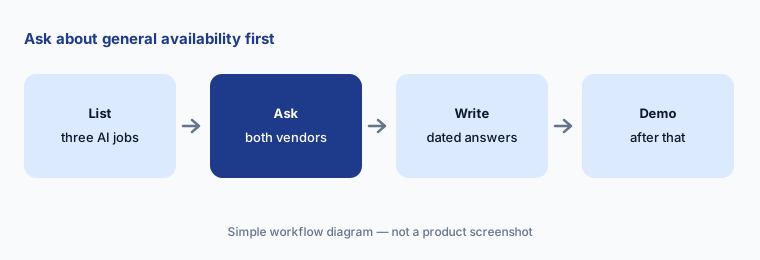
Primary workflow:
List the three AI jobs you need this year (ambient notes, coding, patient billing questions). Have the CMIO ask both vendors which are generally available for your specialty and write the answers down before any demo counts.
2. Ambient notes: athenaAmbient vs Art AI Charting
What it is: athenaAmbient captures the visit on desktop and mobile and drafts notes, potential diagnoses, and recommended order types, with care-gap guidance; athena says it is included at no additional cost (athenahealth AI). Epic’s Art AI Charting listens, drafts the note, and queues orders for clinician review, with voice commands to reshape notes (Epic Systems EHR AI).
Both draft orders as well as notes. In either system, a suggested order must not be placed until the clinician agrees it matches the visit.
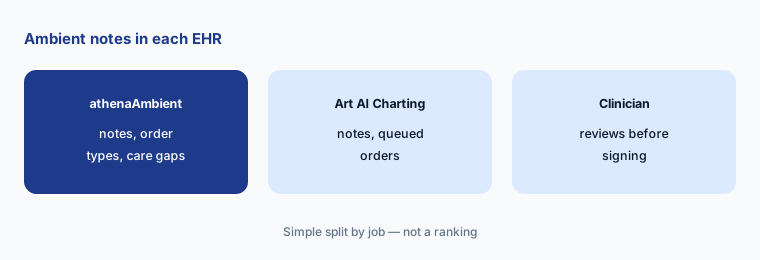
Read the orders:
In whichever system you run, have the attending clinician review ten ambient drafts and every suggested order against the visit before signing or placing anything.
3. Coding and claims: Express Coding vs Penny
What it is: athena describes AI-powered Express Coding for charge capture and cleaner claims, plus AI for claim follow-up timing, copay prediction, and insurance card capture (athenahealth AI). Epic says more than 200 organizations use Penny for professional billing coding, many with more than a 20% reduction in coding-related denials, and that medical-necessity appeal letters are created 23% faster (EpicShare) — Epic’s figures.
Coding AI changes what you bill. Whoever owns coding compliance should own the sample, not the vendor.
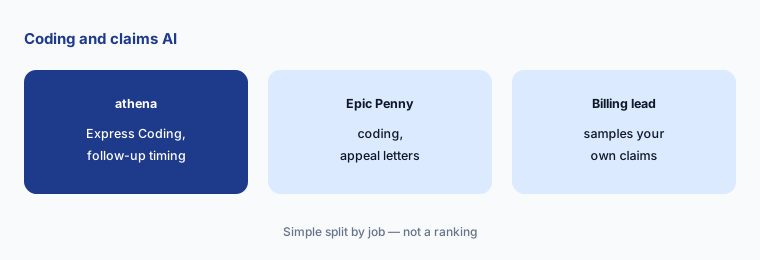
Sample your own claims:
Have the billing supervisor sample fifty AI coding suggestions in your current EHR and record mismatches by specialty before comparing any vendor denial figures.
4. Patient-facing AI: Patient Conversations vs Emmie
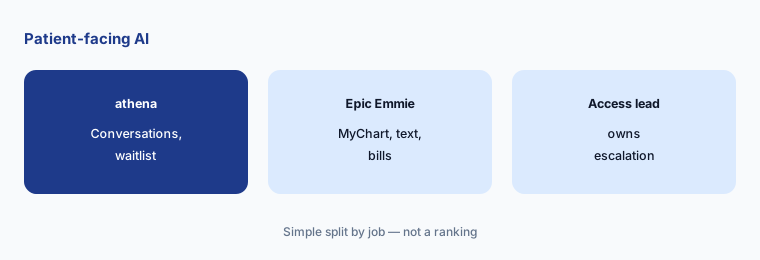
What it is: athena’s Patient Conversations adds an AI assistant that answers routine questions and triages to staff, and Waitlist Scheduling contacts patients when an appointment opens (athenahealth). Epic’s Emmie works in MyChart and over text to schedule, explain bills, take payments, set up payment plans, and produce statements, escalating to live chat when needed (EpicShare).
Anything that answers a patient about symptoms or money needs a named owner and a clear escalation path in either system.
Write escalation rules:
Have the patient-access director read fifty AI-handled patient messages and write escalation rules for every billing and symptom miss before turning on more automation.
5. Chart summaries: Sage vs Art Insights
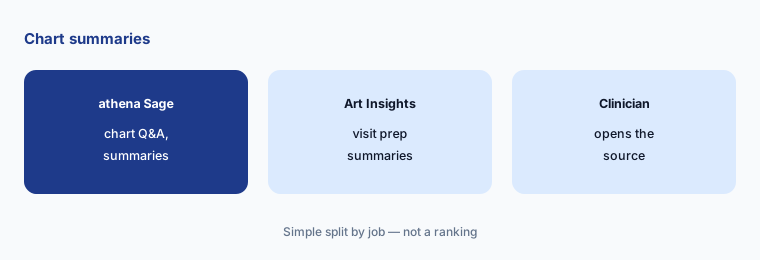
What it is: athena offers Sage, an in-EHR assistant for chart questions, and patient summaries for visit prep (athenahealth AI). Epic’s Art Insights builds visit-prep summaries and, per Epic, is used more than 16 million times a month (Epic Systems EHR AI).
A summary only includes what is in the chart. Outside records that never arrived will be missing in both.
Open the source:
Have one clinician compare five AI pre-visit summaries with the full chart and outside records before relying on summaries for complex patients.
6. When not to switch EHRs just for ambient AI
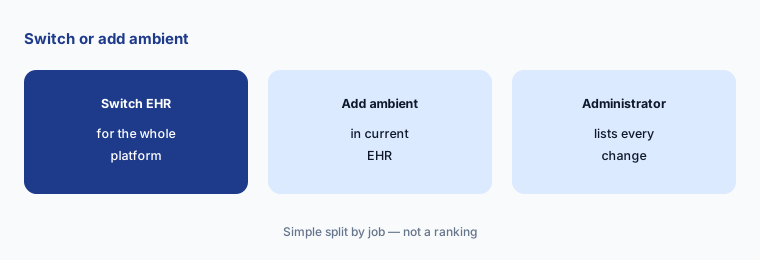
What it is: An EHR change touches scheduling, billing, interfaces, and training for every user. If ambient notes are the main gap, third-party scribes such as Suki AI, Abridge AI, and Microsoft Dragon Copilot AI integrate with both athenahealth and Epic, and athena’s own Ambient Notes includes partner options.
Switch for the whole platform, not for one feature. A missing feature this quarter may arrive in your current EHR next quarter.
List what would change:
Before any EHR switch, have the practice administrator list every workflow that would change besides ambient notes and price a third-party ambient pilot in your current EHR.
Pricing context (October 2026)
Neither vendor publishes EHR list prices as of 19 Oct 2026. athenahealth states athenaAmbient is built into athenaOne at no additional cost (its claim — confirm on your order form); other athena AI features are quote-only. Epic Systems does not publish prices; Art, Penny, and Emmie licensing is quote-only through your Epic contract.
Ask each which AI features are included in your current agreement, which need separate licensing, and what implementation or analyst time each feature requires on your side.
Uncertainty: Availability differs by version, specialty, and organization in both systems. athena’s own AI page still labels athenaAmbient “coming in 2026” although its August release announced broad availability. Usage and outcome figures (Epic’s 16M+ Insights uses and Penny denial reductions; athena’s clinician counts) are vendor claims. We did not test either EHR. Epic Systems is not Applied Epic.
When it’s useful (honest take)
Useful when you are choosing between an ambulatory cloud EHR and a health-system EHR, or a multi-site organization is being pitched the other system’s AI and needs to compare jobs, not demos.
Less useful when your gap is only ambient notes (see Suki AI or Abridge AI), you run eClinicalWorks (eClinicalWorks AI), you need inpatient coding (Akasa AI), or you are an insurance agency (Applied Epic AI — a different product).
Still choosing between athenahealth and Epic Systems? The $19 AI toolkit audit gives you a written plan for which tools to keep using and which to drop across your whole AI stack, including this pair.
Prefer to do it yourself? Spreadsheet — $9
Related options (educational)
| Need | Better home | Why |
|---|---|---|
| Ambulatory AI-native EHR with athenaAmbient | athenahealth AI | Quote only; Ambient “no additional cost” per athena |
| Health-system EHR AI (Art, Penny, Emmie) | Epic Systems EHR AI | Quote only |
| Hospital EHR Clinical AI Agent | Oracle Health AI | Quote only |
| Ambulatory EHR with Genie and Sunoh | eClinicalWorks AI | EHR from $499/provider/mo |
| Ambient scribe across several EHRs | Suki AI | Quote only |
FAQ
What is the main difference between athenahealth and Epic Systems AI?
athenahealth builds AI into athenaOne for ambulatory practices (athenaAmbient, Express Coding, patient messaging). Epic Systems builds AI into its health-system EHR (Art for clinicians, Penny for coding and appeals, Emmie for patients). This is not a ranking.
Is Epic Systems the same as Applied Epic?
No. Epic Systems makes the Epic EHR. Applied Epic is an insurance agency management system from Applied Systems.
Should we switch EHRs to get ambient AI?
Usually not for ambient alone. Third-party ambient scribes integrate with both EHRs. Switch for the whole platform and list every workflow that would change first.
How much do athenahealth and Epic AI cost in October 2026?
Neither publishes list prices. athena says athenaAmbient is included at no additional cost; other features from both vendors are quote-only.
Who should approve AI output in either EHR?
The attending clinician for notes and orders, the billing supervisor or coding lead for coding AI, and the patient-access director for patient-facing AI escalation rules.
Optional next step (if seats overlap)
If your organization pays for EHR AI add-ons, a third-party ambient scribe, and a coding tool that all touch the same visit, that overlap is worth mapping. Map the overlap with the $19 AI toolkit audit or the $9 AI toolkit spreadsheet. Email Audit $19 or Toolkit spreadsheet $9.
Checkout is live via Stripe. After you pay, we email delivery (spreadsheet) or intake next steps (audit).