Compare · Sales enablement · Oct 2026
Highspot vs Seismic (Oct 2026): AI sales enablement platforms
Seismic completed its merger with Highspot on 18 August 2026. Highspot and Seismic are now one company under the Seismic name, selling two sales enablement platforms: Highspot (now “Highspot by Seismic”) and Seismic. So this is not a contest between rivals. It is a look at two products from the same company that both still serve customers today — what each one’s AI does with content, training, and coaching, and who approves the output — for teams already on one of them, or evaluating either. It is not a ranking, and each section has a Try this.
What this comparison covers
This page is for a sales enablement lead, product marketing manager, or sales manager whose team works in Highspot or Seismic — or who has both on a shortlist — and wants to know how the two products’ AI differs today, now that one company owns both. The question it answers: for the enablement jobs you need done, what each platform’s AI does and who approves the content.
Status, checked on 17 October 2026. Seismic announced on 18 August 2026 that it had completed its merger with Highspot. Highspot’s merger page says “The merger is complete. Highspot and Seismic are now one company under the Seismic name.” Highspot customers keep “the same login, workflows, and support,” Highspot’s product plans continue, and there are “no migration plans for Highspot by Seismic customers”. Seismic’s merger page says Seismic customers’ platform, contract, and support “remain the same today.” Asked which platform to evaluate, Highspot’s merger FAQ says “both platforms continue to serve customers today.” Seismic’s CEO wrote on 1 September that the combined company “will not look exactly like either company did before.”
Seismic Shift ran 12–15 October 2026 in Carlsbad, California, and we re-checked both products on 17 October. Seismic’s 13 October 2026 press release says Deal Agent is “now available in both the Highspot by Seismic and Seismic platforms.” It also introduced the Library Agent and announced Seismic Everywhere integrations with Canva, ServiceNow, Microsoft 365 Copilot, and Slack, without availability dates. It announced no merged product, no migration, and no price or package change. Both merger pages still carry their pre-Shift wording, and Highspot’s pricing page is unchanged. Items Seismic only previewed, with no availability, are left out. Read this page as a snapshot of the two products as each is described today. Facts come from the same vendor pages as our Highspot AI and Seismic AI reviews. Customer results and combined-company figures are vendor claims and are not repeated.
| Question | Highspot (Highspot by Seismic) | Seismic |
|---|---|---|
| Ownership | Part of Seismic since 18 August 2026; same login, workflows, and support; no migration plans announced (unchanged after Seismic Shift) | The parent company; customers’ platform, contract, and support “remain the same today” |
| AI brand | Highspot Agents (including the Deal Agent and GTM Agent), plus AI across content, training, and meetings | Aura AI: Aura Chat and ten Aura Agents (Admin, Analytics, Lesson, Library, Page, Meeting, Presentation, Program, Roleplay, Search), plus Deal Agent since Seismic Shift (13 Oct 2026) |
| Deal Agent | Since Highspot’s Fall Launch ’25; also in Slack and Salesforce | Now available, per Seismic’s 13 Oct 2026 Shift announcement: deal risks, missing stakeholders, next-best actions |
| Answers and content for reps | Answers grounded in approved content in Highspot, Slack, the CRM, and search; content intelligence down to the slide | Aura answers grounded in approved content and existing permissions; Presentation Agent builds decks from approved content; LiveDocs |
| Content governance | GTM Agent monitors usage, training adoption, and compliance; can archive dated assets, reassign owners, and apply labels | Library Agent and AI tagging keep the library organized; permissions, version control, and audit trails |
| Training | AI-assisted course authoring, AI-generated knowledge checks, adaptive learning paths with test-out | Lesson Agent turns Pages, videos, and decks into quiz-ready lessons on Seismic Learning (formerly Lessonly) |
| Practice and coaching | AI Role Play (multi-persona), Meeting Intelligence with call summaries and delivery feedback | Roleplay Agent with real-time feedback; automated pass/fail in Lessons; coaching insights for managers |
| Inside other AI tools | Highspot MCP Server in the ChatGPT and Claude app stores; tools also in Microsoft Copilot, Agentforce, Slack, and custom agents | Aura MCP Server for tools such as ChatGPT and Microsoft Copilot Studio; Aura also in Slack, Microsoft tools, and Claude |
| Published pricing | None: Good, Better, and Best packages, each “Contact sales” (checked 17 Oct 2026) | None: no public pricing page; quoted by sales (checked 17 Oct 2026) |
Major features (with how someone uses them)
Examples at a glance: each feature has a concrete example from a real job plus a short Try this you can run this week.
1. Start from your three enablement jobs (primary)
What it is: Both platforms cover the same broad ground — content, answers for reps, training, practice, coaching, and analytics — and both now put AI agents across it. Feature lists won’t separate them; your jobs will. Write down the three enablement jobs you most need done this year (for example: “new reps find the right deck without asking,” “product launch training before quarter start,” “managers coach on real calls”), and for each, note which AI feature in each platform handles it and which person approves the result before reps or buyers see it.
Why it matters: if you already run one of these platforms, the merger FAQ says nothing changes today and there are no migration plans — so the useful question is whether your current platform’s AI covers your three jobs, not which logo wins. If you are evaluating, ask the account team to show each job live in both, and get in writing what is available now versus planned.
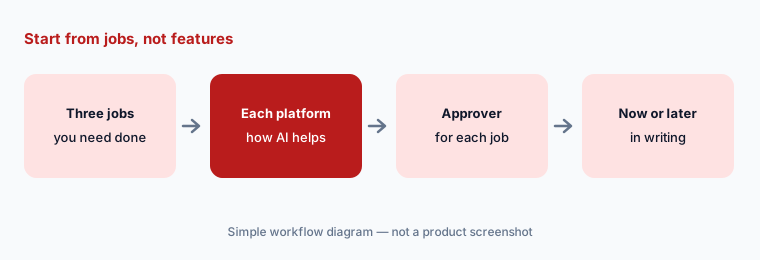
Primary workflow:
List the three enablement jobs you most need done. Note how each platform’s AI handles each and who approves the content.
2. Answers and content for reps
What it is: Highspot: Highspot Agents give answers and guidance “grounded in your approved content” in Highspot, Slack, the CRM, and search, and the Deal Agent recommends next steps and content, writes meeting recaps, and builds a deal-specific Digital Sales Room. Seismic: Aura answers and summarizes “grounded in approved content” and respects existing content permissions; the Search Agent shows where answers come from, and the Presentation Agent builds decks from trusted Seismic content instead of repurposing old slides.
Why it matters: in both, an answer is only as current as the approved content behind it. Ask each platform the same five questions a new rep asked last month, check that every answer links to a current approved asset, and have product marketing correct anything stale at the source rather than in the answer.
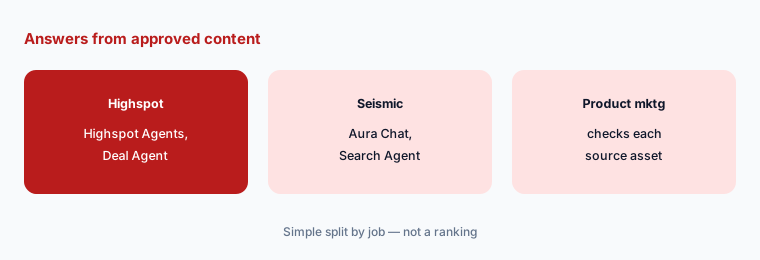
Same five questions:
Ask your platform’s AI the five questions new reps asked most last quarter. Have product marketing check each answer points to a current approved asset.
3. Content governance: GTM Agent vs Library Agent
What it is: Highspot’s GTM Agent monitors content usage, training adoption, and compliance, and can “archive dated assets, reassign owners, and apply labels,” assess the health of a Spot, and pinpoint content gaps. Seismic’s Library Agent helps “keep content clean and organized,” with AI-powered tagging and maintenance on top of role-based permissions, version control, and audit trails. At Seismic Shift, Seismic said the Library Agent flags “outdated, conflicting or missing messaging” and “surfaces recommended changes for review and approval before updating content” (13 October 2026). The release doesn’t say whether it is generally available or a pilot.
Why it matters: archiving or relabeling content changes what every rep can find. Let either agent propose a clean-up list first, have the content owner approve it, and keep a record of what was archived and why — legal-reviewed and regulated content especially.
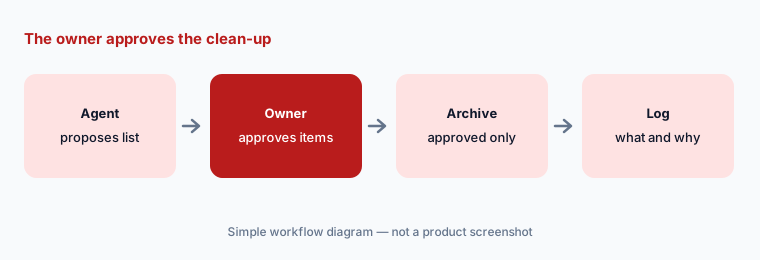
Propose, then approve:
Have your platform’s AI propose a clean-up list for one content area. Archive only what the content owner approves, and log why.
4. Training: AI-assisted authoring and lessons
What it is: Highspot Training & Coaching includes AI-accelerated authoring of courses and criteria from your existing content, AI-generated knowledge checks, certifications, and adaptive learning paths where reps can test out of what they know. Seismic’s Lesson Agent “transforms existing content like Pages, videos, and presentations into structured, field-ready lessons” that are quiz-ready, on Seismic Learning — the former Lessonly — with interactive courses, AI-powered role-plays, and AI-driven assessments.
Why it matters: a quiz generated from a deck tests whether someone read the deck, not whether they can sell the product. Have enablement and the product expert check every question and answer key before a lesson is assigned, and drop questions about details reps don’t need.
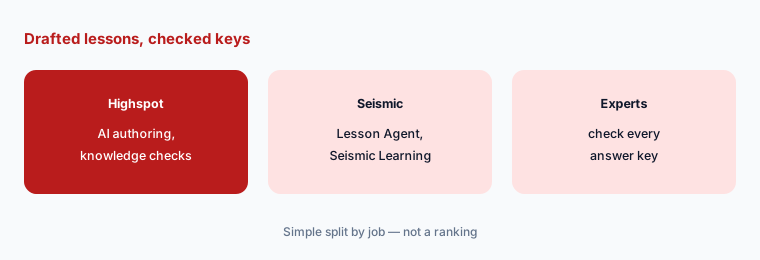
Check every answer key:
Generate one lesson and knowledge check from a launch deck. Have the product expert check every question and answer key before anyone is assigned it.
5. Practice and coaching: role plays and calls
What it is: Highspot’s AI Role Play builds practice conversations from your content, messaging, and deal context, including multi-persona sessions, with feedback tied to your skills framework; Meeting Intelligence adds call summaries, objections, transcripts, and delivery feedback for 1:1 coaching. Seismic’s Roleplay Agent gives on-demand practice “grounded in trusted content” with real-time feedback, and the Spring ’26 release added automated pass/fail in Lessons; coaching tools add AI-driven skills assessments and insights for managers.
Why it matters: AI feedback on a role play or a call is coaching input, not a verdict on a rep. Have managers set the pass bar for any automated pass/fail, review a sample of AI feedback against their own judgment, and keep decisions about people with people.
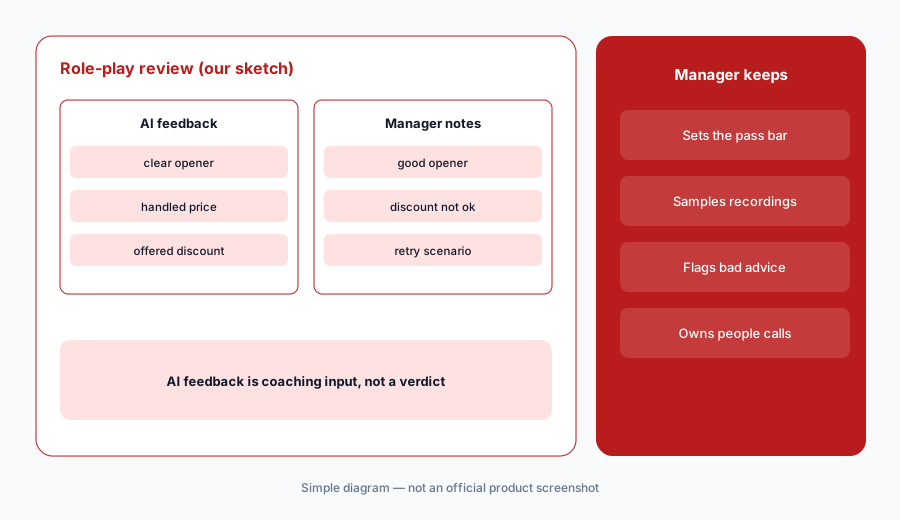
Manager sets the bar:
Before using automated pass/fail on a role play, have the sales manager review three recordings and agree the pass bar with enablement.
6. Inside ChatGPT, Claude, and Copilot: two MCP servers
What it is: Both products now reach into outside AI tools. The Highspot MCP Server is available in the ChatGPT and Claude app stores, according to a Highspot post updated 13 July 2026, and its tools also work in Microsoft Copilot, Agentforce, Slack, and custom agents. The Aura MCP Server extends Seismic content and workflows into tools such as ChatGPT and Microsoft Copilot Studio “while maintaining permissions, governance, and control.” At Seismic Shift, Seismic said its MCP server makes its content and agents available through AI assistants from Anthropic, OpenAI, Google, and Meta. It also announced a Microsoft 365 Copilot connector and Slack actions under Seismic Everywhere, with no availability dates (13 October 2026). The merger FAQ adds that the company sees “near-term opportunities to bring the best AI from each platform to the other, with more details to be shared in the coming months.”
Why it matters: an MCP connection lets a general chat tool pull your enablement content and deal answers, so IT and the content owner should approve which tool connects and who can use it. Confirm in writing whether a connection carries your platform’s content permissions through — and expect this area to change first as the two products are brought together.
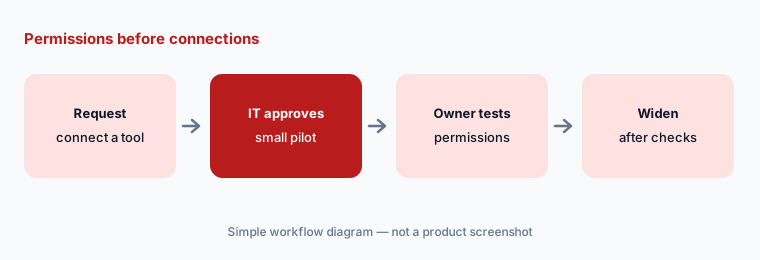
Test permissions first:
Before connecting either MCP server to a chat tool, have IT approve a small pilot and the content owner test that restricted content stays restricted.
Pricing context (October 2026)
Neither product publishes prices (checked 17 Oct 2026, after Seismic Shift; the Shift announcements included no prices). Highspot’s pricing page lists three packages, each “Contact sales”: Good (equip and engage: content governance, AI search and answers, Highspot Agents, AI-generated knowledge checks), Better (adds AI-assisted training authoring, adaptive learning, and Role Play in training), and Best (adds Meeting Intelligence, Role Play for coaching, agents with deal and meeting context, and the MCP Server). Seismic has no public pricing page — https://www.seismic.com/pricing/ returns “not found” (404) — and plans are quoted by sales.
Because both are now sold by one company, ask your account contact for a written quote that names the product, package, seat count, which AI agents and features are included (including Deal Agent), any usage limits, and what your renewal terms say about future packaging. The merger FAQ says prospects “should expect clear options” and that the combination “doesn’t remove the need for transparent packaging and terms.”
Uncertainty: Seismic completed its merger with Highspot on 18 August 2026. Seismic Shift (12–15 October 2026) brought Deal Agent to both products but no published merged roadmap, migration plan, or packaging change. Seismic says more on sharing AI between the platforms will come “in the coming months,” so names, packages, and which AI features land in which product may still change. Neither product publishes prices or AI usage limits. Some features are recent, pilots, or announced without availability dates (Highspot’s MCP Server in app stores; some Seismic Search Agent sources; Seismic Everywhere integrations announced at Shift). Older names (Aura Copilot, Lessonly) still appear in places. Customer results and combined-company figures are vendor claims and are not repeated here.
When it’s useful (honest take)
Highspot is useful when you want AI that works across content, deal context, and coaching — the Deal Agent, GTM Agent, AI Role Play, and Meeting Intelligence — and your content and enablement owners will approve what the agents propose.
Seismic is useful when you want Aura’s named agents for decks, lessons, library clean-up, and roleplay on top of a governed content library, with product marketing and enablement approving output before reps or buyers see it.
Less useful when (either one) you need a published price now, you’d be signing a long contract before the combined roadmap is public, or nobody owns content and training after launch.
Still choosing between Highspot and Seismic? The $19 AI toolkit audit gives you a written plan for which tools to keep using and which to drop across your whole AI stack, including this pair.
Prefer to do it yourself? Spreadsheet — $9
Related options (educational)
| Need | Better home | Why |
|---|---|---|
| Highspot’s AI on its own | Highspot AI | Deal Agent, GTM Agent |
| Seismic’s Aura AI on its own | Seismic AI | Aura Agents, Lessonly |
| Readiness and AI role play | Mindtickle AI | Practice, coaching |
| Call recording and deal signals | Gong | Conversations, not content |
| Enablement in a learning platform | WorkRamp AI | Training, not content |
| Approved answers for RFPs | Loopio AI | Response library |
FAQ
Are Highspot and Seismic the same company now?
Yes. Seismic completed its merger with Highspot on 18 August 2026, and Highspot’s merger page says they are now one company under the Seismic name. Both platforms still serve customers: Highspot (Highspot by Seismic) keeps the same login, workflows, and support, and there are no migration plans announced.
Should I choose Highspot or Seismic?
This page is not a ranking. List the three enablement jobs you most need done, note how each platform’s AI handles each and who approves the content, and ask the account team what is available now versus planned. The merger FAQ says the company will help you evaluate the solution that fits.
What was announced at Seismic Shift 2026?
Seismic Shift ran 12–15 October 2026 in Carlsbad, California. Seismic’s 13 October press release said Deal Agent is now available in both Highspot by Seismic and Seismic, introduced the Library Agent, and announced Seismic Everywhere integrations (Canva, ServiceNow, Microsoft 365 Copilot, Slack) without availability dates. It announced no migration, merged product, or price change, and on 17 October both merger pages still said nothing changes for customers today.
How much do Highspot and Seismic cost in October 2026?
Neither publishes prices (checked 17 October 2026). Highspot lists Good, Better, and Best packages, each marked “Contact sales,” and Seismic has no public pricing page. Seismic Shift brought no price changes. Ask for a written quote naming the package, seats, included AI features, and usage limits.
Do both work inside ChatGPT or Claude?
Both have MCP servers. Highspot says its MCP Server is in the ChatGPT and Claude app stores and works with Microsoft Copilot, Agentforce, Slack, and custom agents. Seismic’s Aura MCP Server works with tools such as ChatGPT and Microsoft Copilot Studio. Have IT approve any connection and test that permissions carry through.
Optional next step (if seats overlap)
If you pay for an enablement platform, a separate call recorder, an LMS, and chat seats that all promise answers for reps, that overlap is worth mapping. Map the overlap with the $19 AI toolkit audit or the $9 AI toolkit spreadsheet. Email Audit $19 or Toolkit spreadsheet $9.
Checkout is live via Stripe. After you pay, we email delivery (spreadsheet) or intake next steps (audit).