Tool · Learning ops · Seismic · Oct 2026
Seismic AI review (Oct 2026): Aura AI for sales content, learning, and coaching
Seismic is an enablement platform for sales and customer-facing teams: governed content, training, coaching, and buyer engagement. Its AI is Aura — Aura Chat for questions and a set of Aura Agents for jobs like building decks, turning content into lessons, and keeping the library clean. Seismic’s learning product is the former Lessonly, and since 18 August 2026 Seismic also owns Highspot. This page is about using Aura while product marketing and enablement approve what it produces. Each section has a Try this.
What this Seismic page covers
This page is for an enablement lead, a product marketing manager, or a sales manager whose team works in Seismic — or is comparing enablement platforms — and wants to know what Aura AI does with content, lessons, and practice, and who has to check it. The question it answers: which enablement jobs Aura’s agents can start, and where product marketing, enablement, or a manager signs off.
Names, checked on 17 October 2026. Aura AI is “Seismic’s trusted intelligence layer for GTM execution.” A 2025 Seismic explainer calls the assistant Aura Copilot; the 2026 pages call the conversational workspace Aura Chat and list ten Aura Agents: Admin, Analytics, Lesson, Library, Page, Meeting, Presentation, Program, Roleplay, and Search. Lessonly no longer has its own site — lessonly.com now opens Seismic’s Learning page, and Lessonly’s old terms sat in Seismic’s legal archive when we checked on 11 October. Seismic said its Spring ’26 release (16 June 2026) was its “final seasonal launch” before a continuous release cadence. At Seismic Shift, its 13 October 2026 press release added Deal Agent to the Seismic platform and formally introduced the Library Agent (see sections 5 and 6). The Aura Agents page still lists the same ten agents on 17 October. The release also uses the name “Seismic AI” for how AI experiences are branded and governed, while Seismic’s other pages still say Aura.
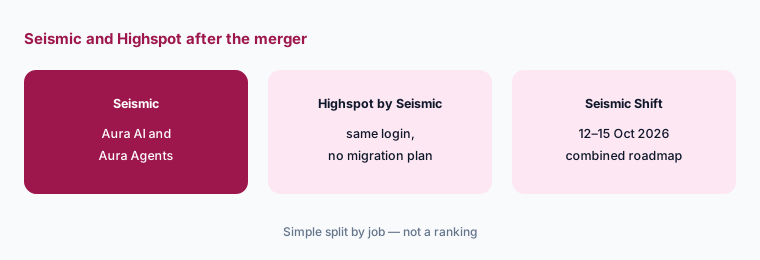
Seismic also completed its merger with Highspot on 18 August 2026. Seismic’s merger page says Seismic customers’ platform, contract, and support “remain the same today,” and on 17 October it still pointed to Seismic Shift (12–15 October 2026) for the combined roadmap. Seismic’s Shift press releases announced new agents and integrations but no change to plans, contracts, or prices. For financial services, a 14 October 2026 release introduced Seismic Compliance (archiving and approval workflows for Digital Sales Rooms, Bulk Email, and Workspace), a Theta Lake partnership, and an expanded Seismic Social (formerly LiveSocial). Seismic Social is now in the Seismic platform and writes post copy “with Seismic Aura AI within firm-defined guardrails.” This page doesn’t cover those in depth. Ground rules: Aura drafts, summarizes, and suggests; product marketing approves anything a buyer will see, enablement approves lessons before anyone is assigned them, and AI roleplay feedback is coaching input. Seismic’s customer counts and results figures are not repeated here.
Major features (with how someone uses them)
Examples at a glance: each feature has a concrete example from a real job plus a short Try this you can run this week.
1. Aura answers and summaries for new reps (primary)
What it is: Aura answers questions and summarizes content “grounded in approved content,” and Seismic says it “always respects your established content permissions.” In the Spring ’26 release the Search Agent uses content metadata and business context and shows where answers come from (with pilot search across the web, Atlassian, and Notion). Aura Chat has a full-screen workspace, chat history, and moves between agents in one conversation.
Why it matters: a one-page summary is often the first thing a new rep reads about a product, and summaries tend to flatten caveats — the plan a feature is limited to, or the region it isn’t sold in. Have product marketing correct the summary before it’s shared, and save the corrected version in Seismic so the next rep gets the checked one.
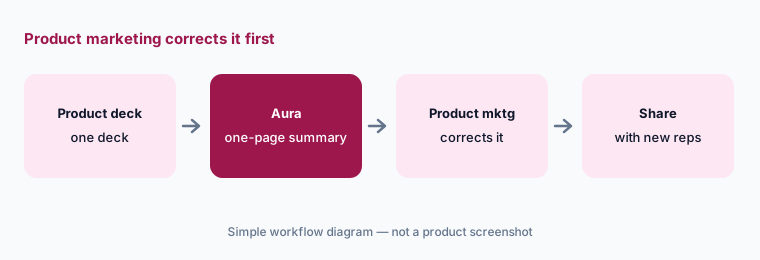
Primary workflow:
Ask Seismic’s AI for a one-page summary of one product deck for a new rep. Have product marketing correct it before it’s shared.
2. Presentation Agent and LiveDocs: decks from approved content
What it is: The Presentation Agent helps sellers “quickly create approved, context-based presentations” built from trusted Seismic content and account needs, instead of repurposing old slides. Seismic’s LiveDocs helps reps personalize content and tailor messaging, and the Meeting Agent helps prepare for meetings and follow up.
Why it matters: a deck assembled from approved slides can still say the wrong thing for this customer — a case study from a competitor’s subsidiary, or a feature that isn’t in their region. Have the seller read every slide before the meeting and have product marketing review any deck that goes beyond standard slides.
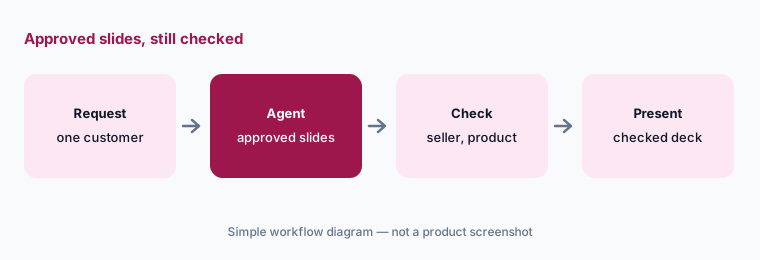
Approved slides, still checked:
Have the Presentation Agent build one customer deck from approved content. Have product marketing check every custom slide before it goes to the customer.
3. Lesson Agent and Seismic Learning (formerly Lessonly)
What it is: The Lesson Agent “transforms existing content like Pages, videos, and presentations into structured, field-ready lessons” that are quiz-ready. It sits on Seismic Learning — the former Lessonly — which offers interactive courses, AI-powered role-plays, video practice, and AI-driven assessments. The Program Agent helps enablement teams track how programs are performing.
Why it matters: a lesson built from a deck can turn a speaker note or an old slide into a quiz answer. Have the product owner check every question and answer, and keep assignment as a separate, human step: enablement decides who gets the lesson and when, not the agent.
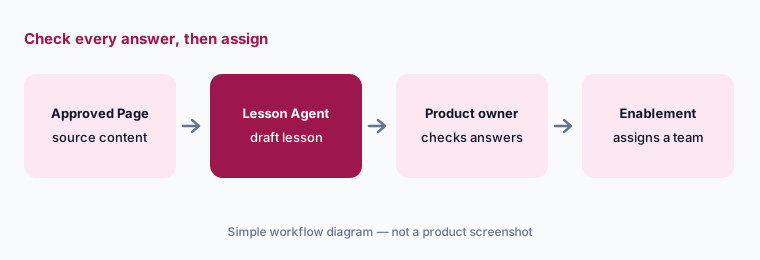
Check, then assign:
Turn one approved product Page into a lesson with the Lesson Agent. Have the product owner check every quiz answer before enablement assigns it.
4. Roleplay Agent and coaching
What it is: The Roleplay Agent gives customer-facing teams on-demand practice “grounded in trusted content,” with real-time feedback and post-practice recommendations. The Spring ’26 release added multi-language support, automated pass/fail in Lessons, and progress visibility through Programs. Seismic’s coaching tools add AI-driven skills assessments and rep and team performance insights for managers.
Why it matters: automated pass/fail can quietly become a gate for real customer work. Decide up front who sets the pass threshold and what a manager does with a fail — usually a coaching conversation, not a block. Review a few sessions by hand before relying on the AI’s view of what “good” sounds like.
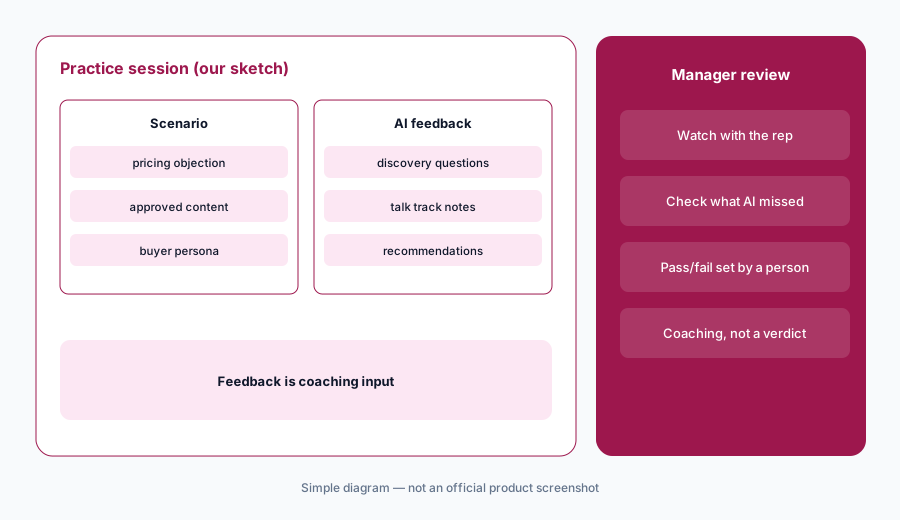
Feedback as coaching input:
Run one Roleplay Agent session on a pricing objection. Have the rep’s manager review the AI feedback with the rep before any pass/fail is used.
5. Library Agent: tagging and clean-up with an owner
What it is: The Library Agent helps “keep content clean and organized,” and Aura offers AI-powered tagging, maintenance, and organization; the older Aura Copilot explainer describes bulk AI tagging and summary suggestions. Seismic Content has role-based permissions, version control, and audit trails, and retires outdated files so reps get the latest approved version. At Seismic Shift (13 October 2026), Seismic said the Library Agent identifies “outdated, conflicting or missing messaging,” manages metadata, content controls, and expiration, and “surfaces recommended changes for review and approval before updating content.” The release doesn’t say whether it is generally available or a pilot, so confirm it’s in your plan.
Why it matters: a wrong tag can hide a regulated document from the people who must use it, and an automatic retirement can remove the only approved version. Let the agent propose; have the content owner approve each retag or retirement, and check the audit trail afterwards.
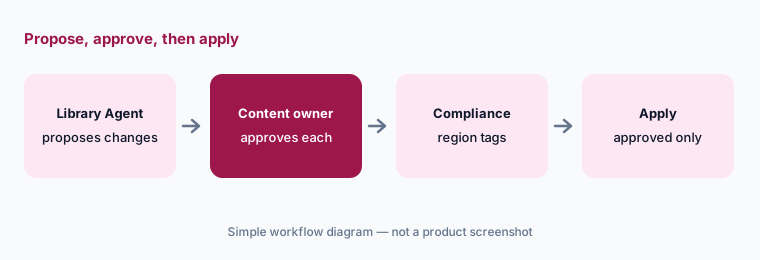
Propose, approve, then apply:
Ask the Library Agent which assets in one folder look outdated. Have the content owner approve each change before anything is retired.
6. Aura MCP Server, and Seismic with Highspot
What it is: The Aura MCP Server extends Seismic content and workflows into outside AI tools such as ChatGPT and Microsoft Copilot Studio “while maintaining permissions, governance, and control,” and Aura also works in Slack, Microsoft tools, and Claude. Seismic’s AI FAQ says it doesn’t send your data to third parties to train their models, uses third-party models through Microsoft Azure, Google Gemini, and IBM watsonx, marks generative AI with an icon, and makes generative AI features opt-in by default.
New at Seismic Shift (13 October 2026): Deal Agent is “now available in both the Highspot by Seismic and Seismic platforms.” It pulls together CRM activity, meetings, emails, and buyer engagement to surface risks, missing stakeholders, and next-best actions. Under the name Seismic Everywhere, Seismic also announced integrations with Canva, ServiceNow, Microsoft 365 Copilot (a connector that surfaces governed Seismic content in Copilot chats), and Slack (including creating a Digital Sales Room). The release gives no availability dates for these integrations, so confirm with your account team which ones you can switch on.
Why it matters: once Seismic answers inside another AI tool, people may not notice which answers came from approved content. Start with a pilot group, test that someone without access to a restricted folder can’t get answers from it, and have IT and enablement agree on who can connect new tools. Treat Deal Agent’s next steps like any other suggestion: the account owner checks them against the CRM before acting. If you also run Highspot, ask your account team what the merger means for your roadmap before you build on either MCP server.
Permissions before a wider rollout:
Connect the Aura MCP Server to one outside AI tool for a pilot group. Have IT confirm that answers respect each user’s content permissions before more people get access.
Pricing context (October 2026)
Seismic doesn’t publish prices. We checked on 17 Oct 2026: there is still no public pricing page, https://www.seismic.com/pricing/ returns “not found” (404), and the Seismic Shift announcements included no prices. Plans and the Aura features in them are quoted by sales; the merger FAQ (https://www.highspot.com/seismic-merger/, checked 17 Oct 2026) tells prospects to ask their point of contact about capabilities, implementation, pricing, and the combined company.
When you ask for a quote, get in writing which Aura Agents and Aura Chat features are included, whether Deal Agent and the Library Agent are included, whether any are pilots, any usage limits, and whether the learning product (the former Lessonly) is part of the plan. Seismic says generative AI features are opt-in by default, so also confirm which ones your admin will switch on.
Uncertainty: Seismic completed its merger with Highspot on 18 August 2026. At Seismic Shift (12–15 October 2026) it added Deal Agent and announced Seismic Everywhere integrations without availability dates; previewed items with no availability are not covered here. Names, packages, and which agents land in which product may still change. Some Spring ’26 items were pilots (personalized prompts, extra Search Agent sources). Older names (Aura Copilot, Lessonly) still appear in places. No prices are published. Seismic’s customer counts and results figures are not repeated here.
When it’s useful (honest take)
Useful when your sales and customer-facing teams already rely on governed content in Seismic, product marketing owns what buyers see, and you want Aura to summarize content, build decks from approved slides, turn content into lessons, run practice, and tidy the library — with owners approving each output.
Less useful when you mainly need a general employee LMS, nobody owns content governance, you need a published price, or you’d rather wait for clearer post-merger platform plans before signing a long contract.
Paying for Seismic AI and a few other AI tools? The $9 AI toolkit spreadsheet lists every AI subscription you have, what each one costs, and how fast it pays for itself, so you can see which ones are worth the money.
Want someone to do it for you? AI toolkit audit — $19
Related options (educational)
| Need | Better home | Why |
|---|---|---|
| Governed sales content, lessons, and practice with AI agents | Seismic AI (this page) | Aura Agents, Aura Chat |
| Sales content and coaching platform now owned by Seismic | Highspot AI | Nexus, Deal Agent |
| AI roleplay and readiness programs | Mindtickle AI | ElevateOS |
| Call recording and deal insights | Gong | Integrates with Seismic |
| Employee and customer LMS with compliance content | Litmos AI | Course libraries |
| AI training videos from scripts | Synthesia | Video-first |
FAQ
What happened to Lessonly?
Lessonly is part of Seismic. On 17 October 2026 lessonly.com still opened Seismic’s Learning page, and when we checked on 11 October Lessonly’s old subscription terms sat in Seismic’s legal archive. Seismic Learning offers interactive courses, AI-powered role-plays, video practice, and assessments.
What is Seismic Aura?
Aura AI is Seismic’s AI layer. Aura Chat is the conversational workspace (an earlier explainer called the assistant Aura Copilot), and Aura Agents handle specific jobs: Admin, Analytics, Lesson, Library, Page, Meeting, Presentation, Program, Roleplay, and Search. At Seismic Shift (October 2026) Seismic also made Deal Agent available on the Seismic platform.
How much does Seismic cost in October 2026?
Seismic doesn’t publish prices; there was still no public pricing page on 17 October 2026, and the Seismic Shift announcements included no prices. Ask sales for a written quote that lists the Aura features, any pilots or usage limits, and whether learning is included.
Did Seismic buy Highspot?
Yes. Seismic announced on 18 August 2026 that it had completed its merger with Highspot, operating under the Seismic name. Both platforms continue to serve customers. At Seismic Shift (12–15 October 2026) Seismic made Deal Agent available in both platforms; it announced no migration or price changes.
Does Seismic use our data to train AI models?
Seismic’s AI FAQ says it does not send your data to third parties to train their models, and that generative AI features respect content permissions and are opt-in by default. User feedback on AI features may be used to improve Seismic’s own models.
Optional next step (if seats overlap)
If you pay for an enablement platform, a separate deck builder, a role-play tool, and chat seats that all summarize the same product content, that overlap is worth mapping. Map the overlap with the $19 AI toolkit audit or the $9 AI toolkit spreadsheet. Email Audit $19 or Toolkit spreadsheet $9.
Checkout is live via Stripe. After you pay, we email delivery (spreadsheet) or intake next steps (audit).