Tool · Law firm ops · EvenUp · Oct 2026
EvenUp AI review (Oct 2026): personal injury demand letters, medical chronologies, AI Drafts, communication agents, and Pre-Litigation as a Service
EvenUp sells AI built only for plaintiff personal-injury firms. It is best known for demand letters, either drafted by AI for your team to finish or drafted and reviewed by EvenUp's legal professionals, plus MedChrons medical chronologies. In 2026 it added AI voice and text Communication Agents (28 January), Pre-Litigation as a Service (PLAAS, 13 May), and Lexis+ with Protégé inside its Companion assistant. This page is about using it while the handling attorney still signs every demand. Each section has a Try this.
What this EvenUp page covers
This page is for a managing attorney, pre-litigation lead, case manager, or demand writer at a plaintiff PI firm. It is educational, not legal advice and not medical advice. EvenUp's own subscription terms (version 9.3.26) say its service is not professional legal services and that the customer must review output for accuracy and completeness.
EvenUp says it is used by 30% of the top 100 PI firms and handles more than 10,000 cases a week (13 May 2026); its homepage cites 2,000+ PI firms. Outcome claims on its pages — a 69% higher likelihood of policy-limit settlements, 9+ hours saved per case, records requested 66 days faster under PLAAS — are EvenUp's figures, not our measurements. EvenUp also markets comparisons with jury results and settlements from its dataset; treat those as context for the attorney, not as a valuation.
Ground rules: a licensed attorney owns any filing, citation, demand, deadline, client message, or discovery response that comes out of EvenUp. The handling attorney checks every injury, treatment date, and specials figure against the records and bills and signs every demand; client-facing agent scripts are approved by an attorney before any agent calls or texts a client.
Major features (with how someone uses them)
Examples at a glance: each feature has a concrete example from a real job plus a short Try this you can run this week.
1. Demand letters: AI drafts or professionally reviewed (primary)
What it is: EvenUp offers two routes on its demands page: AI + You (Express Demands drafted by its Piai model in minutes; your team reviews, edits, and finalizes) and AI + Professional Review (drafted by AI and reviewed by EvenUp's legal professionals, delivered in 1–5 days). Demands include a facts-and-liability narrative, a treatment timeline with ICD codes, past and future medical expenses, a pain-and-suffering analysis, and organized exhibits; Express Demands keep line-level references that stay intact when you edit.
Professional review by the vendor is not attorney review by your firm. The handling attorney still owns every figure and every word sent to a carrier.
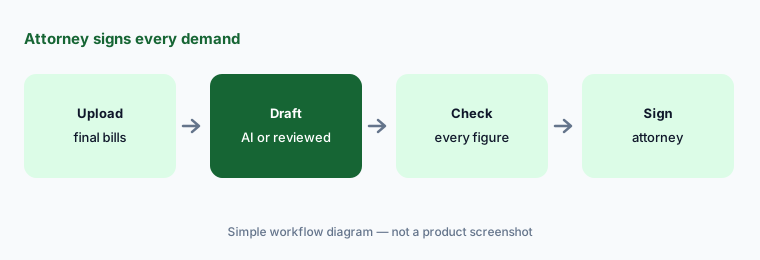
Primary workflow:
Send five closed cases through EvenUp's demand workflow. Have the handling attorney compare every injury, treatment, and specials figure with the demand your firm actually sent before using it on open files.
2. MedChrons medical chronologies and bill summaries
What it is: MedChrons turn medical records into a color-coded, searchable treatment timeline with diagnoses, procedures, ICD codes, prior history, and an exhibit list; each timeline entry jumps to the underlying record (EvenUp). As with demands, you pick AI-assembled (your team reviews) or professionally reviewed, with optional nurse review for clinical risks and priors. Communication Agents and the platform also produce bill summary breakdowns that link to the latest bill for each provider (EvenUp).
Prior treatment and gaps in care are where a chronology helps or hurts. Check those entries first, against the records, not against the summary.
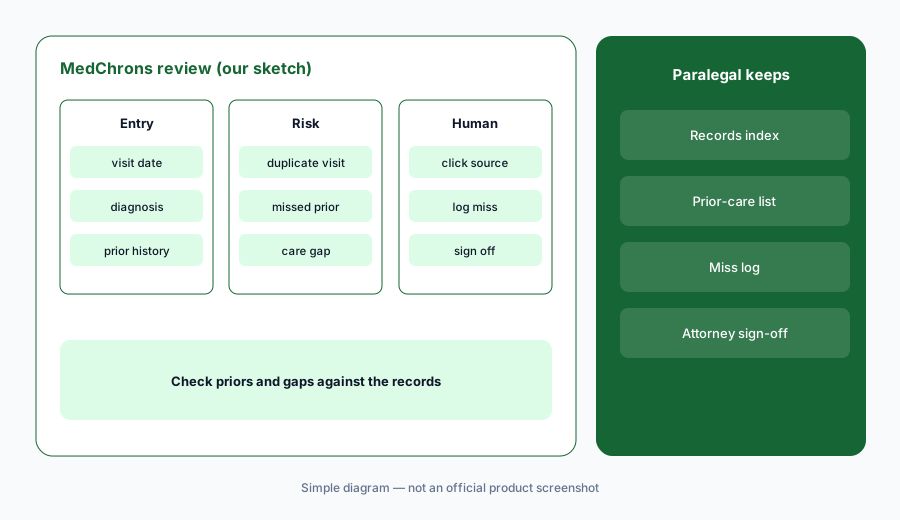
Check priors and gaps first:
Run MedChrons on two closed cases that already have a firm chronology. Have the paralegal and handling attorney click every prior-treatment and gap entry through to the record before relying on it for open files.
3. AI Drafts, Mirror Mode, and Firmwide Knowledge Base
What it is: AI Drafts produces demands, complaints, medical and deposition summaries, negotiation summaries, and discovery responses (interrogatories, requests for admission, requests for production) from the case files you select, with line-level citations (EvenUp). Mirror Mode copies the format and language of a sample document; the 28 Jan 2026 update added attorney-controlled file selection, manual redaction, and exhibit references that stay aligned; Firmwide Knowledge Base (13 May 2026) applies firm rules on liability, causation, damages, and objections across drafts.
Discovery responses and complaints are filings or served papers. A draft that mirrors your best prior work can also mirror its old mistakes.
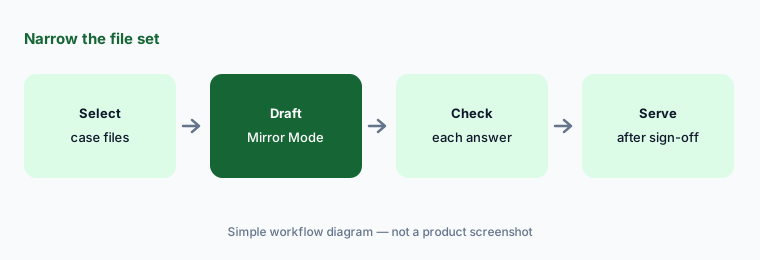
Narrow the file set:
Draft responses to one closed set of interrogatories with AI Drafts. Have the attorney of record compare every objection and answer with the served version before using it on a live set.
4. Communication Agents for calls and texts
What it is: Communication Agents (launched 28 Jan 2026) are AI voice and SMS agents that open insurance claims, confirm liability and coverage with carriers, check in with clients on treatment (English and Spanish), chase medical records, and verify provider balances; EvenUp says the agents record all communications and surface issues for staff (product page). EvenUp's figures include 9+ hours reclaimed per case.
An agent talking to a client or a carrier is speaking for the firm. Scripts, escalation rules, and what an agent may never say (advice, case value, settlement talk) need attorney sign-off first.
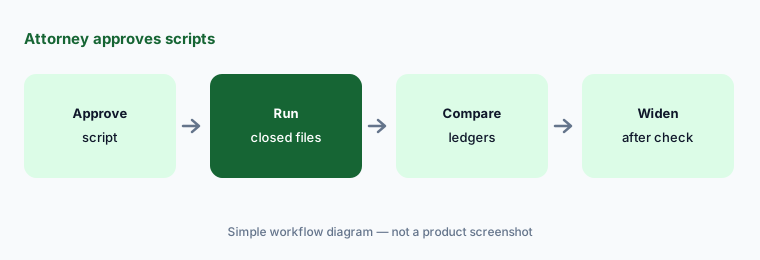
Attorney approves scripts:
Run balance-verification calls on ten closed cases where you know the final balances. Have the managing attorney compare every agent result with the ledger and approve any client-facing script before agents call clients.
5. Pre-Litigation as a Service (PLAAS)
What it is: PLAAS (13 May 2026) combines EvenUp's AI with its U.S.-based case-management team to run pre-litigation: claim setup and investigation, care coordination and treatment tracking, records and bills retrieval, demand preparation to firm standards, settlement negotiation with carriers, and optional lien resolution. EvenUp reports 95% of available third-party policy limits recovered, demands 47 days faster, and about $1,000 per case in carrying costs saved — its figures.
This is outsourcing, not only software. Who negotiates for the client, who approves each offer, and how the firm supervises nonlawyer staff it does not employ are questions for your ethics counsel and engagement terms.
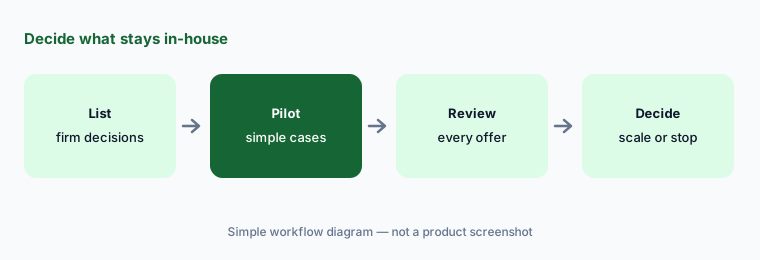
Decide what stays in-house:
Before any PLAAS pilot, list every decision that stays with the firm. Have the managing attorney sign that list and review every settlement offer on pilot cases personally.
6. Companion assistant with Lexis+ with Protégé
What it is: Companion is EvenUp's AI assistant: it summarizes cases at intake, surfaces treatment gaps, flags demand-ready cases, drafts in Word, schedules recurring case checks, and can launch Communication Agents (EvenUp). LexisNexis and EvenUp announced an alliance on 1 Sep 2026; EvenUp's LexisNexis page now says Companion is powered by Protégé for legal research, with citations and Shepard's Signal indicators. Each user needs their own Protégé entitlement, and EvenUp says only case details such as jurisdiction, case type, and key dates are shared with LexisNexis.
Research answers inside a case tool still need the same checks as anywhere else. Read the case before the answer shapes a demand or a complaint.
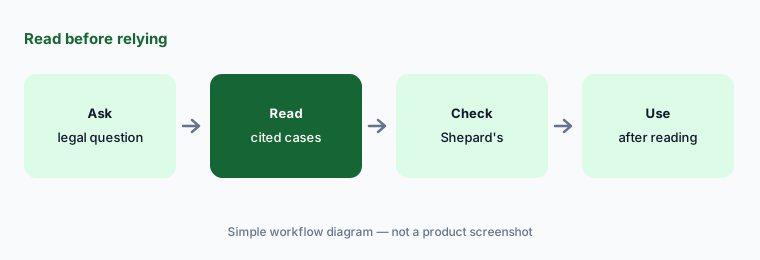
Read before relying:
Ask Companion one legal question on a closed case. Have the handling attorney read every cited authority and its Shepard's signal before using Companion research on an open file.
Pricing context (October 2026)
EvenUp publishes no price list: evenuplaw.com/pricing redirects to the homepage, and the demands page says “All-In-One, Case-Based Pricing” without a figure (checked 20 Oct 2026). We treat it as quote-only and do not print third-party per-demand figures.
EvenUp's subscription terms (version 9.3.26) explain the structure: fees are set in each Order Form and generally due in advance; usage limits can be credits, cases, or pages; use above the limit is billed monthly in arrears at the Order Form's overage rate; and fees can change at renewal with 60 days' notice. Lexis+ with Protégé in Companion requires a separate Protégé entitlement per user.
Ask which demand route (AI + You or professionally reviewed), MedChrons, Communication Agents, and PLAAS services your quote covers, how a “case” is counted, and what happens to unused credits.
Uncertainty: We did not test EvenUp. Features, dates, and pricing structure come from EvenUp's blog, product pages, and subscription terms, and from the LexisNexis alliance release, all read on 20 Oct 2026. Settlement, policy-limit, time-saved, and adoption figures and “first” or “#1” language are EvenUp's claims; outcomes depend on the case and the lawyer.
When it’s useful (honest take)
Useful when you are a plaintiff PI firm with a demand backlog, medical records are the bottleneck, and a handling attorney and paralegal will check every injury, date, and dollar figure against the records and bills.
Less useful when your firm already drafts demands inside its case system (Filevine AI), your work is general small-firm practice (Clio AI), or you mainly need legal research and briefs (CoCounsel Legal, Lexis+ with Protégé, or Harvey AI for large firms).
Paying for EvenUp and a few other AI tools? The $9 AI toolkit spreadsheet lists every AI subscription you have, what each one costs, and how fast it pays for itself, so you can see which ones are worth the money.
Want someone to do it for you? AI toolkit audit — $19
Related options (educational)
| Need | Better home | Why |
|---|---|---|
| PI demands, chronologies, pre-lit service | EvenUp (this page) | Case-based quote |
| PI case management with demand drafting | Filevine AI | Custom quote |
| Lexis-grounded research and drafting | Lexis+ with Protégé | Quote only |
| Westlaw-grounded research and briefs | CoCounsel Legal | Configurator or quote |
| Small-firm deadlines, bills, client updates | Clio AI | From $49/user; AI on Core and above |
FAQ
What does EvenUp do?
EvenUp builds AI for plaintiff personal-injury firms: demand letters, MedChrons medical chronologies, AI Drafts for complaints and discovery, Communication Agents for calls and texts, the Companion assistant, and Pre-Litigation as a Service (PLAAS) with its own case-management team.
How much does EvenUp cost in October 2026?
EvenUp publishes no price list and describes case-based pricing. Its subscription terms say fees and usage limits (credits, cases, or pages) are set in each Order Form, with overage billed monthly.
Can EvenUp send a demand for my firm?
EvenUp drafts and, on reviewed tiers, has its legal professionals review demands, but its terms say it does not provide legal services. A licensed attorney at your firm owns and signs every demand.
When did Communication Agents and PLAAS launch?
EvenUp announced Communication Agents on 28 January 2026 and Pre-Litigation as a Service (PLAAS) on 13 May 2026.
Who should check EvenUp output?
The handling attorney for every demand figure; a paralegal and attorney for chronologies; the attorney of record for discovery responses and complaints; the managing attorney for agent scripts and every settlement decision under PLAAS.
Optional next step (if seats overlap)
If you pay for EvenUp, a case-management system with its own demand drafting, and a research subscription that all touch the same PI file, that overlap is worth mapping. Map the overlap with the $19 AI toolkit audit or the $9 AI toolkit spreadsheet. Email Audit $19 or Toolkit spreadsheet $9.
Checkout is live via Stripe. After you pay, we email delivery (spreadsheet) or intake next steps (audit).