Tool · Ops & automation · GitBook · Oct 2026
GitBook AI review (Oct 2026): docs-site answers for product and ops
GitBook when the canonical page is a docs site developers or operators already read. Answers should cite a page. Confluence AI if the wiki is Confluence. The compare is GitBook vs Confluence. Internal cards are Guru AI.
What this page covers
This page is for ops and product leads whose procedures and API notes live on a GitBook site. An assistant on that site should answer from published pages and link them. We did not fetch a price. Unpublished drafts are not answers. If Confluence or Notion is the real wiki, do not stand up a second docs site just to get a chat box. The compare page covers that choice.

Major features (with how someone uses them)
Examples at a glance: each feature has a concrete ops example plus a short Try this.
1. Cite a published page or say you cannot (primary)
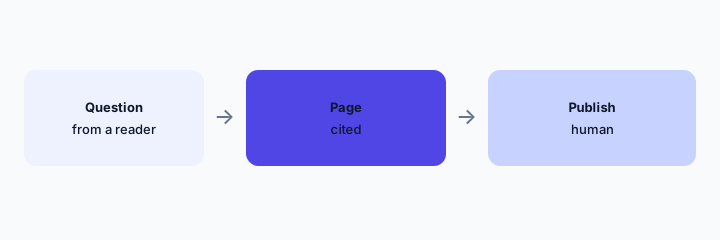
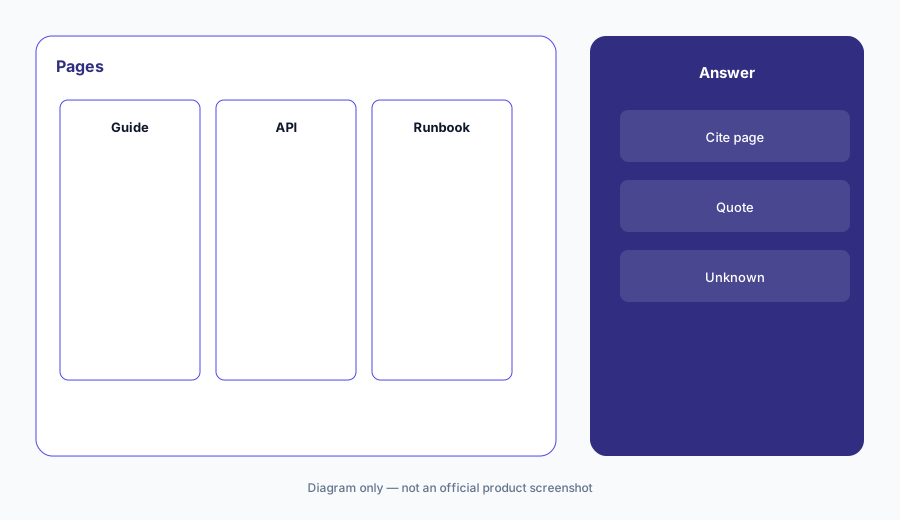
What it is: Ask a question a new operator would ask. Require the page URL. Open it. If the answer adds a step the page does not contain, delete the step. Unpublished drafts do not count.
Primary workflow:
Ask one question. Require a URL on the published site. If the URL 404s, the answer is Unknown.
2. Draft a page, then a human publishes
What it is: Turning a rough note into a docs outline is fine. Publishing is not. Scribe can supply the click steps. GitBook holds the page people trust. Put an owner and a review month on anything the assistant drafted.
Publish check:
Turn five bullets into an outline. Mark every command you have not run as Unverified. Do not publish those lines.
3. Decide who the site is for before you connect a bot
What it is: A public docs site and an internal runbook site are different audiences. Do not point a public assistant at internal pages. Do not point an internal assistant at a stale public copy. Write the audience on the space.
Audience check:
Name the audience for each GitBook space: public, customer, or internal. A space with mixed pages gets split.
4. Versus Confluence and Guru
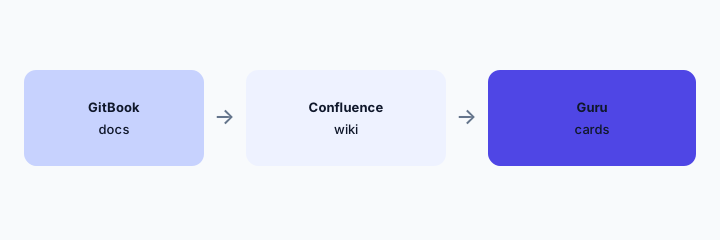
What it is: Confluence AI when Confluence is the team wiki. Guru AI when the unit is a verified card. GitBook when a docs site is the canonical read. GitBook vs Confluence is the side-by-side. Do not migrate a wiki to get an assistant.
Home for the job:
List ten docs. Mark each GitBook, Confluence, or Guru. Fix the ones that exist in two places.
Pricing context (October 2026)
We did not open this vendor’s public price table for this review. October 2026 is the date of the page, not a quote. Use the vendor’s live pricing page and your invoice.
If an assist is included or missing on your plan, record that from the admin screen.
Uncertainty: Names, limits, and which workspaces have the assist change. This page does not claim a dollar price or a general-availability date.
When it’s useful (honest take)
Useful when a docs site is already canonical and answers cite published URLs. Less useful if the assistant invents steps. Less useful as a second wiki beside Confluence.
Paying for GitBook AI and a few other AI tools? The $9 AI toolkit spreadsheet lists every AI subscription you have, what each one costs, and how fast it pays for itself, so you can see which ones are worth the money.
Want someone to do it for you? AI toolkit audit — $19
Related options (educational)
| Need | Better home | Why |
|---|---|---|
| Docs site people already read | GitBook (this page) | Cite a published URL |
| Team wiki in Confluence | Confluence AI | Stay in the wiki |
| Verified internal cards | Guru AI | Cards, not a site |
| The choice written out | GitBook vs Confluence | Do not migrate for chat |
Inventory seats by job on the stack map for knowledge ops.
FAQ
Can the assistant answer from drafts?
Treat drafts as unpublished. Answers should cite live pages.
How much does GitBook cost?
We do not say. Check GitBook’s pricing and your invoice.
Public or internal?
Pick one audience per space. Do not mix contracts into a public bot.
Should we leave Confluence?
Only if GitBook is already the canonical site. Not for the assistant alone.
Optional next step (if seats overlap)
If two AI seats would answer the same question, map the overlap with the $19 AI toolkit audit or the $9 AI toolkit spreadsheet. Email Audit $19 or Toolkit spreadsheet $9.
Checkout is live via Stripe. After you pay, we email delivery (spreadsheet) or intake next steps (audit).