Alternatives · Sales & marketing · Nov 2026
Apollo.io alternatives (Nov 2026): Clay from ~$54, Lusha Starter $49.90, ZoomInfo contact sales — when Basic at $49 still isn’t the right fit
Apollo.io lists a Free plan and Basic at $49 a month, with Professional at $99 a month on the schema we read. Teams often look at Clay, Lusha, or ZoomInfo when they need waterfall enrichment, different credit math, or enterprise contracts. Price credits at your real monthly burn, not the empty-seat sticker, and keep a human QA gate before any sequence.
What this alternatives page covers
This page is for founders, SDR leads, and revops folks who pay for Apollo.io or are pricing it against other prospecting and enrichment tools. A named person owns the credit budget and the QA gate before send.
Apollo figures come from apollo.io/pricing schema offers read on 6 November 2026 (Free $0, Basic $49/mo, Professional $99/mo, Enterprise contact). Alternative facts come from Clay pricing and Lusha pricing, also read on 6 November 2026. ZoomInfo pricing did not show public list prices to us.
Apollo bundles search, enrichment, and sequences. Clay leans waterfall enrichment across many providers. Lusha is credit-led contact data. ZoomInfo is usually a sales-led enterprise deal. The useful question is which jobs you would actually move.
Ground rules: every credit burn has an owner and a QA gate before outreach. This page is not a ranking.
| Tool | Entry paid plan | Fees and limits to check |
|---|---|---|
| Apollo.io | Basic $49 a month (schema on pricing page); Free plan $0 | Professional $99 a month; Enterprise contact for pricing; credits meter reveals (schema, 6 Nov 2026) |
| Clay | Launch starts at about $54 a month (annual credit packs) or $60 monthly | Actions and data credits scale with sliders; Growth floor about $185–$205 a month on the page we read |
| Lusha | Starter $49.90 a month; Free plan available | Professional $69.90 a month; Premium $399.90; credits and seats rise by plan |
| ZoomInfo | List prices not shown on the public pricing page we fetched | Contact sales / request demo; confirm contract terms before budgeting |

Major features (with how someone uses them)
Examples at a glance: each feature has a concrete example from a real job plus a short Try this you can run this week.
1. List price and the jobs you keep
What it is: Apollo schema lists Free at $0, Basic at $49 a month, Professional at $99 a month, and Enterprise as contact for pricing (Apollo pricing). Clay Launch shows floors around $54 a month on annual credit packs and $60 monthly, with a $167/mo annual-actions floor on the card we read (Clay pricing). Lusha Starter is $49.90 a month; Professional $69.90; Premium $399.90 (Lusha pricing).
A year of Apollo Basic at $49 monthly is $588. That is easy to beat on sticker price only if the alternative covers the same enrichment and sequence jobs you actually run.
List the jobs you keep:
List the enrichment jobs Apollo does for you today: company fields, person emails, phone reveals, sequences, or dialer. Mark which jobs you would lose sleep over if they broke, and price only the alternatives that cover those jobs on your real monthly credit burn.
2. Credits, seats, and real monthly burn
What it is: Apollo meters reveals with credits that differ by plan (Apollo pricing). Lusha Starter includes 400 credits a month on the base monthly price we read; Professional 600 credits with 2 seats; Free lists 40 credits (Lusha pricing). Clay meters separate data credits and actions that rise with the sliders (Clay pricing).
Empty-seat stickers lie. Price last month’s reveals, then multiply by each vendor’s credit math before you switch.
Add burn to sticker:
Write last month’s email, phone, and company reveals. Map each to the credit cost on Apollo, Clay, and Lusha, then compare totals.
3. Bundled sequences or waterfall enrichment
What it is: Apollo combines database search, enrichment, and sequences on paid plans (Apollo pricing). Clay is built around tables and waterfall enrichment across many providers (Clay pricing; see Clay review). Lusha focuses on contact data across workspace, extension, API, and MCP (Lusha pricing).
If your main pain is dirty rows across providers, Clay may replace Apollo’s enrichment job without replacing sequences. If you want one login for data plus outreach, staying closer to Apollo-style bundles can be simpler.
Split enrichment from send:
Write whether you need better data, better sequences, or both. Price waterfall tools only if data quality is the main gap.
4. Self-serve vs contact-sales deals
What it is: Apollo lists Enterprise as contact for pricing (Apollo pricing). ZoomInfo’s public pricing page did not show list prices to our fetch on 6 November 2026 (ZoomInfo pricing). Clay Growth and Enterprise sit above Launch (Clay pricing). Lusha Scale/Enterprise is sales-assisted on the page we read (Lusha pricing).
Enterprise quotes hide renewal cliffs. Get the seat count, credit pool, and annual total in writing before you leave a self-serve plan.
Get the quote in writing:
Write seats, credit pool, export rights, and year-one total for any contact-sales tool before you cancel Apollo.
5. Free plans and pilots
What it is: Apollo and Lusha both list Free plans (Apollo pricing; Lusha pricing). Clay lists a Free card on its pricing page (Clay pricing). Free tiers are for proof of field quality, not for a full outbound program.
Run a 50-row sample on Free or a short paid pilot. Expand only if match rates beat your current Apollo batch.
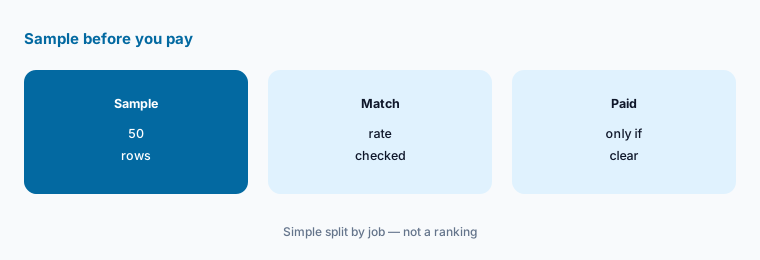
Check a 50-row sample:
Pick 50 domains you already know. Run them through each Free or trial tier, note email match rate, and only then pick a paid plan.
6. One owner for credits and the move
What it is: Apollo, Clay, Lusha, and ZoomInfo all keep billing while you migrate, and sequences, CRM syncs, and credit pools have to move with you (Apollo pricing; Clay pricing; Lusha pricing).
A named owner and a cutover date matter more than which database you pick. Two data platforms billing for three months wipe out the first year of savings.
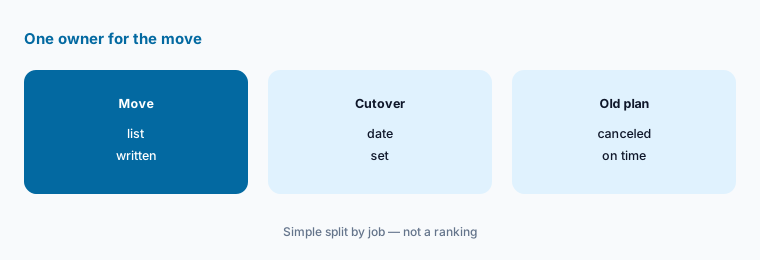
Set the cutover date:
Write the owner, the cutover date, every sequence and enrichment job that has to move, and the date the old plan is canceled.
Pricing context (November 2026)
Apollo.io (pricing page schema, read 6 Nov 2026): Free $0; Basic $49 a month; Professional $99 a month; Enterprise contact for pricing. Credits meter email, phone, and company reveals. Annual card prices were not clearly separated in the schema we read — confirm the yearly toggle on the live page.
Clay (pricing page, read 6 Nov 2026): Free card listed; Launch starts at about $54 a month on annual credit packs or $60 monthly, with a $167/mo annual-actions floor shown on the card; Growth floors about $185–$205 a month ($446/mo annual-actions floor on the card we read). Data credits and actions scale with sliders.
Lusha (pricing page, read 6 Nov 2026): Free (40 credits); Starter $49.90 a month (400 credits, 1 seat) or about $449 a year; Professional $69.90 a month (600 credits, 2 seats) or about $629 a year; Premium $399.90 a month. Enterprise/Scale contact sales.
ZoomInfo (pricing page, read 6 Nov 2026): no public list prices shown to us — contact sales / request a demo and get seats and exports in writing.
Uncertainty: Apollo’s on-page schema showed monthly Basic $49 and Professional $99; older public write-ups often cited lower annual seat prices and an Organization tier. Clay slider floors move with credit packs. Lusha credit packs scale price with volume. ZoomInfo did not expose list prices. Check each live pricing page and admin console on the day you buy.
When it’s useful (honest take)
Stay on Apollo when search, enrichment, and sequences in one login beat stitching tools together. Move when waterfall coverage, a different credit curve, or an enterprise contract clearly wins on a measured sample.
None of these help if nobody owns credits or if two data platforms keep billing for months. Set a cancel date before you start.
Still choosing between Apollo.io and another data platform? The $19 AI toolkit audit gives you a written plan for which tools to keep using and which to drop across your whole AI stack, including this pair.
Prefer to do it yourself? Spreadsheet — $9
Related options (educational)
| Need | Better home | Why |
|---|---|---|
| Apollo alone | Apollo.io review | See that review for current plans |
| Clay alone | Clay review | See that review for current plans |
| Cold email sending | Smartlead vs Instantly | See that comparison |
| Instantly lead credits | Instantly.ai review | See that review for current plans |
FAQ
What are the best Apollo.io alternatives in 2026?
It depends on the job. Clay (Launch from about $54–$60 a month), Lusha (Starter $49.90), and ZoomInfo (contact sales) are common options as of 6 November 2026, alongside Apollo’s own Free, Basic $49, and Professional $99 plans. Match the tool to enrichment, sequences, or enterprise contracts. This page is not a ranking.
Is there a free Apollo alternative?
Apollo, Clay, and Lusha all list Free plans on the pages we read on 6 November 2026. Free tiers are for small samples, not full outbound programs.
Why doesn’t ZoomInfo show a price?
zoominfo.com/pricing did not show public list prices to our fetch on 6 November 2026. Get a written quote for seats and exports before you budget.
Do these tools charge for credits?
Usually yes. Apollo and Lusha meter reveals with credits. Clay meters data credits and actions. Price at your real monthly burn.
Who should own a data-platform migration?
One named person with a cutover date, a list of sequences and enrichment jobs to rebuild, and a date the old plan is canceled.
Optional next step (if seats overlap)
If Apollo’s credit burn is mostly a few enrichment jobs, price Clay or Lusha on that burn with a 50-row sample, then set a cutover owner and cancel date before you move anything. Map the overlap with the $19 AI toolkit audit or the $9 AI toolkit spreadsheet. Email Audit $19 or Toolkit spreadsheet $9.
Checkout is live via Stripe. After you pay, we email delivery (spreadsheet) or intake next steps (audit).