Tool review · Ops & automation · Trintech · Nov 2026
Trintech review (Nov 2026): Cadency for large enterprises and Adra for mid-sized finance teams — reconciliation, transaction matching, close tasks and journal entries with AI agents, no published prices
Trintech sells financial close and reconciliation software in two lines: Cadency for large, complex, and public companies and Adra for leaner mid-sized teams. It lists AI agents for variance analysis, flux, exceptions, and accruals. There are no published prices. Count your reconciliations and close days first, because that is what its claims are measured in.
What Trintech does
This review is for controllers, chief accounting officers, and accounting managers who run month-end close and reconciliations. It covers the two product lines, what they automate, and how to test them.
Facts come from the Trintech home page, the Cadency page, and the Adra page, read on 10 November 2026. Percentages on those pages are Trintech’s own claims and are marked that way here.
Trintech’s site groups buyers into Large Enterprise (“complex, public, and global organizations”) and Mid-Enterprise (“lean finance teams”). Adra is described as quick to implement; Cadency as a platform for global leadership, policy, and controlled change.
Ground rules: one close owner sets the baseline and success measures; AI-suggested journal entries and write-offs still need a reviewer. For close tools compared, see BlackLine vs FloQast.
Major features (with how someone uses them)
Examples at a glance: each feature has a concrete example from a real job plus a short Try this you can run this week.
1. Transaction matching
What it is: Adra Matcher does multi-way matching (3-way, 4-way, and more) against bank, card, point-of-sale, merchant, and delivery-service data, and can read raw data without spreadsheet clean-up. Trintech’s home page claims 99%+ auto-match rates; the Adra page claims a 70% reduction in matching time (Adra; Trintech).
Match rates depend on how messy your data is. Test with a real month, not a demo file.
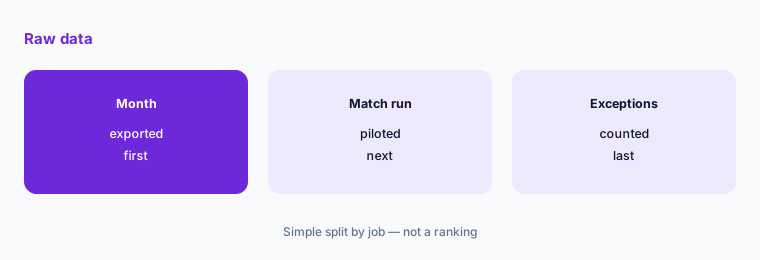
Set your baseline:
Count your balance sheet accounts reconciled each month, the bank and card transactions matched by hand, and the business day your close ends. Write all three before any demo, because Trintech’s claims are reductions in exactly these numbers.
2. Balance sheet reconciliation
What it is: Adra Balancer takes matched transactions into balance sheet reconciliations. Cadency says it streamlines reconciliation as data moves in from your system of record and notifies accountants of items needing attention with risk factors; it claims a 90% reduction in accounts to be reconciled (Adra; Cadency).
A big drop in accounts to reconcile usually comes from rules that auto-certify low-risk accounts. Ask which rules your auditors will accept.
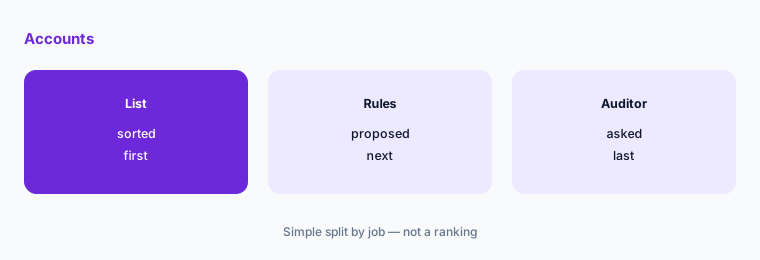
Sort by risk:
List your balance sheet accounts with last month’s balance and activity. Mark which are low risk, then ask your auditor which of those could be reconciled by rule.
3. Close task management
What it is: Adra Task Manager provides close checklists, task libraries, status updates, and separation of duties. Cadency describes a dashboard-driven workflow that orchestrates system and close activities and flags bottlenecks. Adra claims a 60% reduction in time to close; the home page claims 75%+ (Adra; Cadency; Trintech).
If your close checklist lives in a spreadsheet, start here; it is the easiest win to measure.
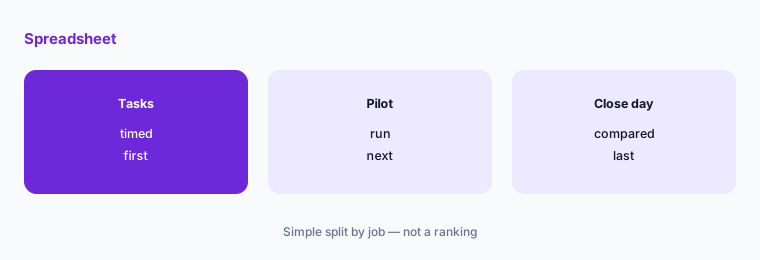
Time your close:
Write the business day each close task finished last month and who owned it. After a pilot month, compare the same tasks and the final close day.
4. Journal entries
What it is: Adra Journal Entry standardizes and centralizes journal creation, posting, and reporting with two-way communication to your ERP. Cadency claims a 75% reduction in time preparing and reviewing journal entries (Adra; Cadency).
Count recurring journals first. Those are the ones that save time; one-off adjustments still need people.
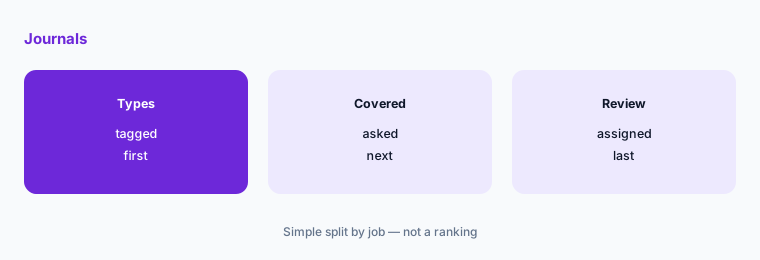
Tag your journals:
Export last month’s journal entries and tag each as recurring, accrual, or one-off. Ask Trintech which types it prepares automatically and who reviews them before posting.
5. AI agents
What it is: The home page lists a Variance Analysis Agent, Flux Agent, Exception Management Agent, Accruals Intelligence Agent, and Data Access Agent, and says the agents handle reconciliations, matching, and journal entries while your team keeps oversight and every action stays explainable and audit-ready (Trintech).
Ask what each agent does without a person approving it, and what the audit trail shows.
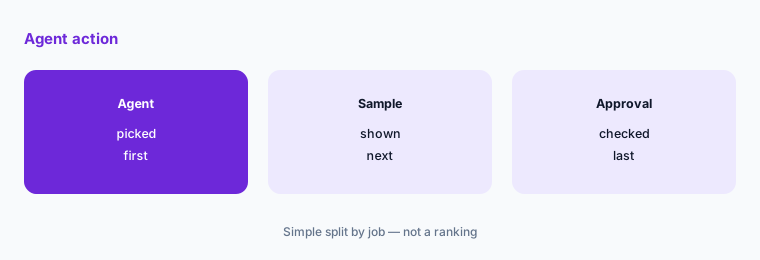
Ask for the trail:
Pick one agent, such as flux or accruals. Ask Trintech for a sample of what it prepared, who approved it, and what the audit trail records.
6. ERP fit and pricing
What it is: Trintech lists integrations with Microsoft Dynamics, NetSuite, Oracle, Planful, SAP, ServiceNow, and Workday (Trintech). No prices appear on its home, Cadency, or Adra pages, and trintech.com/pricing returned not found on 10 November 2026.
Get a quote for the line that fits your size, and ask what implementation costs and how long it takes.
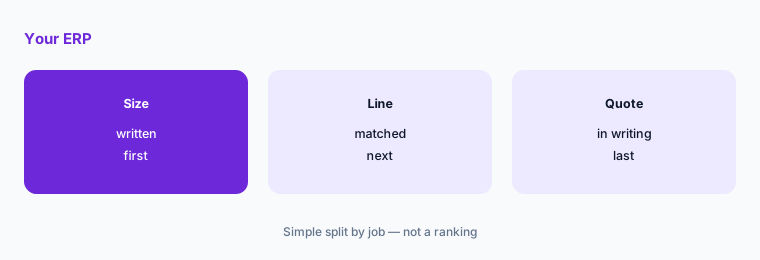
Get it in writing:
Write your ERP, number of entities, and accounting headcount. Ask Trintech which line fits (Adra or Cadency), the subscription price, implementation cost, and timeline in writing.
Pricing context (November 2026)
No published prices (read 10 Nov 2026): no amounts on the home page, Cadency, or Adra pages; trintech.com/pricing returned not found.
Two lines: Cadency for large, complex, public, and global companies; Adra for lean mid-enterprise teams.
Ask for subscription price, implementation cost, and timeline in writing, and compare against your current close hours.
Uncertainty: Product details are as displayed on Trintech’s pages on 10 November 2026. Percentages (auto-match rates, time to close, journal time) are Trintech’s claims, not tested here. No prices are published; confirm terms in writing.
When it’s useful (honest take)
Useful when you reconcile many accounts or high transaction volumes, your close runs past the first week, and one close owner can set a baseline.
A poor fit if you have few accounts and a short close, or your ERP or current close tool already covers matching and checklists well.
Paying for Trintech and a few other AI tools? The $9 AI toolkit spreadsheet lists every AI subscription you have, what each one costs, and how fast it pays for itself, so you can see which ones are worth the money.
Want someone to do it for you? AI toolkit audit — $19
Related options (educational)
| Need | Better home | Why |
|---|---|---|
| Close tools compared | BlackLine vs FloQast | See that page |
| Order to cash and close | HighRadius review | See that review |
| Close management | Numeric review | See that review |
| Close and reconciliation | BlackLine review | See that review |
FAQ
How much does Trintech cost?
Trintech does not publish prices. On 10 November 2026 its home, Cadency, and Adra pages showed no amounts, and trintech.com/pricing returned not found. Ask for a written quote.
What is the difference between Cadency and Adra?
Trintech positions Cadency for large, complex, public, and global organizations, and Adra for lean mid-enterprise finance teams. Adra is described as quick to implement.
What does Trintech automate?
Transaction matching, balance sheet reconciliation, close task management, journal entries, intercompany, audit and compliance, consolidation, and reporting.
Which ERPs does Trintech work with?
Its site lists Microsoft Dynamics, NetSuite, Oracle, Planful, SAP, ServiceNow, and Workday.
What AI agents does Trintech offer?
The home page lists Variance Analysis, Flux, Exception Management, Accruals Intelligence, and Data Access agents, with the team keeping oversight.
Optional next step (if seats overlap)
If your finance team pays for a close tool, a matching tool, and ERP add-ons, list where they overlap before adding another platform. Map the overlap with the $19 AI toolkit audit or the $9 AI toolkit spreadsheet. Email Audit $19 or Toolkit spreadsheet $9.
Checkout is live via Stripe. After you pay, we email delivery (spreadsheet) or intake next steps (audit).