Tool review · Ops & automation · HighRadius · Nov 2026
HighRadius review (Nov 2026): AI agents for order-to-cash, AP, close and treasury — no list prices, outcome-based pricing with $0 implementation fees, and what to measure before you sign
HighRadius sells AI automation for the finance office: collections, cash application, deductions, AP, close, reconciliation, and cash forecasting. It shows no list prices; its home page describes an outcome-based option with $0 implementation fees, nothing until go-live, and a gain share after that. Write your current DSO and collections hours first, because that is what the price is measured against.
What HighRadius does
This review is for controllers, credit and collections managers, AR and AP leads, and treasury teams at mid-sized and large companies. It covers what HighRadius does, how it prices, and how to test it.
Facts come from the HighRadius home page and the HighRadius pricing page, read on 10 November 2026. Improvement figures on those pages are HighRadius’s own claims and are marked that way here.
HighRadius is aimed at high-volume finance work: many customer invoices, many remittances to match, many deductions to dispute. A small team with a few dozen invoices a month will likely not see the same return.
Ground rules: one owner in finance for the project and the success measures; AI suggestions on credit and write-offs still need a person to approve them. For close tools see BlackLine vs FloQast.
Major features (with how someone uses them)
Examples at a glance: each feature has a concrete example from a real job plus a short Try this you can run this week.
1. Order to cash: collections, cash application, deductions
What it is: HighRadius lists collections management, cash application, deductions management, credit management, and an e-invoicing portal for order to cash. Its agent list includes worklist prioritization, dunning emails, an in-app dialer, remittance capture, payment-to-invoice matching, and a deductions validity predictor (HighRadius).
It claims a 10% reduction in DSO and past dues and 40% higher productivity for order to cash. Those are vendor numbers; set your own baseline so you can check them.
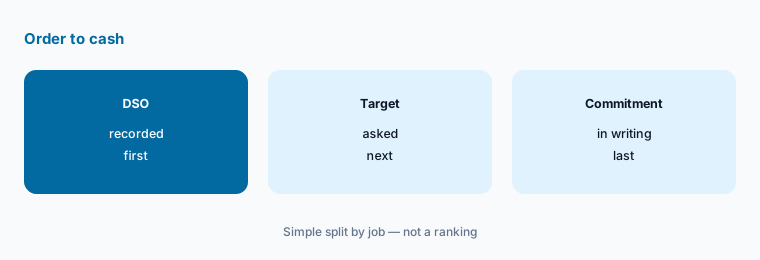
Set your baseline:
Pull your last three months of days sales outstanding (DSO), past-due balance, and the hours your team spent on collections and cash application. Write them down before the first demo, because HighRadius prices against improvement in numbers like these.
2. Accounts payable automation
What it is: For AP it lists email and e-invoice capture, duplicate and fraud checks, 3-way matching, non-PO GL coding, invoice exception handling and approval, a supplier portal with onboarding and bank account validation, and vendor payments across multiple rails (HighRadius).
Measure invoices handled per person per month today. Touchless rates only matter if exceptions still reach someone quickly.
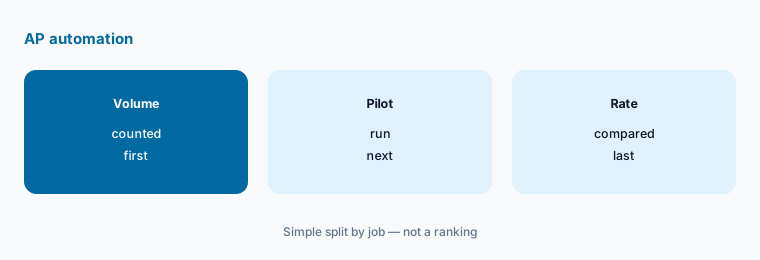
Count your exceptions:
Count last month’s invoices and how many needed manual coding, matching, or approval chasing. Ask HighRadius to run a sample of those in a pilot and report its exception rate.
3. Close, reconciliation, and intercompany
What it is: Close tools listed include financial close, balance sheet reconciliation, daily revenue reconciliation, intercompany management, anomaly detection, journal posting, and consolidation and reporting with FX conversion and intercompany elimination (HighRadius).
HighRadius claims 30% fewer days to close. If you already use a close tool, compare what each covers before adding another.
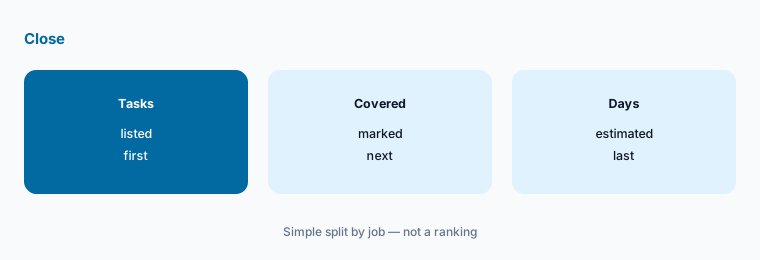
Map your close:
List your close tasks by day and owner. Mark each one HighRadius says it automates, and mark which your current close tool already handles, before estimating days saved.
4. Treasury and cash forecasting
What it is: Treasury tools listed include cash management with bank statement download and reconciliation, daily cash position, cash forecasting from AR and AP data with scenario analysis and variance, and treasury payments with duplicate and fraud detection (HighRadius).
It claims 50% lower idle cash and 95% accurate cash forecasting. Test the forecast against weeks you have already closed, where you know the real number.
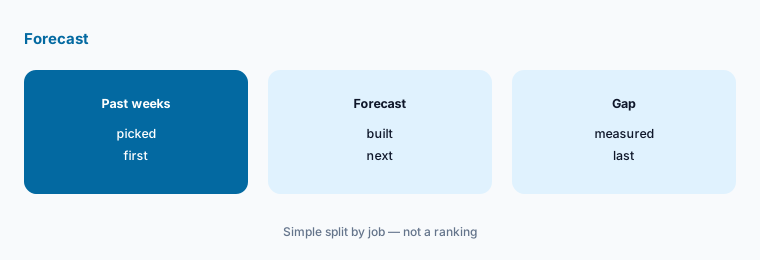
Backtest the forecast:
Pick the last 13 weeks you have already closed. Ask for a forecast built only from data available at the start, then compare each week with your real cash balance.
5. ERP fit and scale
What it is: HighRadius lists integrations for SAP, Oracle, Microsoft Dynamics, and NetSuite, says it orchestrates 190+ AI agents on one platform, and says it is used by 1,500+ finance teams at large enterprises and mid-sized organizations (HighRadius pricing; HighRadius).
Confirm which ERP version and modules the integration supports and who maintains it. Ask how the agents hand off when one step fails.
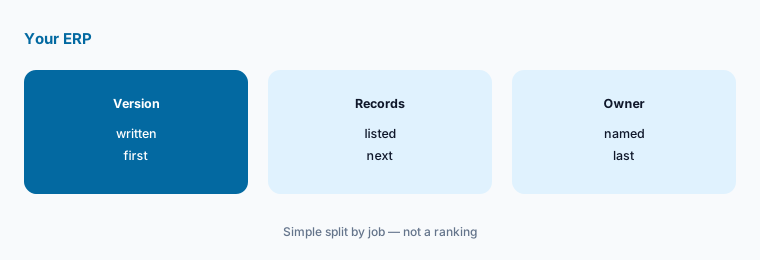
Check the integration:
Write your ERP name, version, and the modules you use. Ask HighRadius in writing which records its integration reads and writes, and who owns fixes after an ERP update.
6. Pricing: subscription or pay for outcomes
What it is: The pricing page describes subscription pricing with no upfront license and no separate upgrade or maintenance fees, sized to the features you use. The home page describes an outcome-based option where you pay only when the AI agents improve agreed KPIs (mutually agreed success criteria), with $0 implementation fees, $0 until go-live, and a gain share after go-live (HighRadius pricing; HighRadius).
An outcome-based deal is only as good as its baseline and how the gain share is calculated. Get both in the contract.
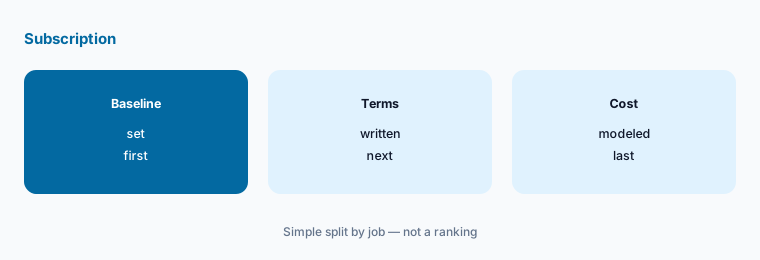
Model the gain share:
Ask for the outcome-based terms in writing: the baseline, the KPIs, how improvement is measured, and the gain-share percentage. Calculate what you would pay if every target is met.
Pricing context (November 2026)
No list prices (pricing page, read 10 Nov 2026): subscription SaaS, priced to the features you use, with server, storage, and upgrade costs included.
Outcome-based option (home page): implementation fees $0, fees until go-live $0, then a gain share tied to agreed KPI improvements.
Ask for both models in writing and compare them against your own baseline numbers.
Uncertainty: Product and pricing details are as displayed on HighRadius’s pages on 10 November 2026. Improvement figures (DSO, productivity, days to close, forecast accuracy) are HighRadius’s claims, not tested here. No list prices are published; confirm terms in writing.
When it’s useful (honest take)
Useful when your finance team handles high volumes of invoices, remittances, or deductions, you can write down today’s DSO and hours, and one finance owner runs the project.
A poor fit if invoice volume is low or your ERP and current tools already cover collections and close well. Write the baseline into the contract before any outcome-based deal.
Paying for HighRadius and a few other AI tools? The $9 AI toolkit spreadsheet lists every AI subscription you have, what each one costs, and how fast it pays for itself, so you can see which ones are worth the money.
Want someone to do it for you? AI toolkit audit — $19
Related options (educational)
| Need | Better home | Why |
|---|---|---|
| Close tools compared | BlackLine vs FloQast | See that page |
| Close management | Numeric review | See that review |
| Bookkeeping AI | Digits review | See that review |
| AI help for finance work | Claude for finance | See that page |
FAQ
How much does HighRadius cost?
HighRadius does not publish list prices. On 10 November 2026 its pricing page described subscription pricing sized to the features you use, and its home page described an outcome-based option with $0 implementation fees, $0 until go-live, and a gain share afterward.
What does HighRadius do?
It automates finance work across order to cash (collections, cash application, deductions, credit, e-invoicing), accounts payable, close and reconciliation, consolidation and reporting, treasury, and B2B payments.
Which ERPs does HighRadius work with?
Its pricing page lists integrations for SAP, Oracle, Microsoft Dynamics, and NetSuite.
Are HighRadius’s KPI improvements guaranteed?
Its home page advertises “guaranteed KPI improvements” such as a 10% reduction in DSO, and separately describes outcome-based pricing tied to agreed KPIs. Get the baseline, the measures, and the gain-share terms in the contract.
Who should own HighRadius at a company?
One named finance leader, often the controller or head of AR, who sets the baseline numbers, approves AI suggestions on credit and write-offs, and checks results against the contract.
Optional next step (if seats overlap)
If your finance team pays for AR, AP, and close tools on top of your ERP, list where they overlap before adding another platform. Map the overlap with the $19 AI toolkit audit or the $9 AI toolkit spreadsheet. Email Audit $19 or Toolkit spreadsheet $9.
Checkout is live via Stripe. After you pay, we email delivery (spreadsheet) or intake next steps (audit).