Tool review · Ops & automation · Earnix · Nov 2026
Earnix review (Nov 2026): AI pricing, underwriting and customer-engagement decisions for insurers and banks — what it covers, what its claims mean, and how to scope a demo when there is no public price
Earnix sells an AI decision system built for insurers, covering pricing, the rate engine that turns prices into quotes, underwriting, and customer engagement, with versions for banking loans and deposits. It does not publish prices; you book a demo. Write down where your last rate changes lost time so the demo answers your problem, not the vendor’s.
What Earnix does
This review is for pricing actuaries, underwriting leads, product managers, and IT owners at insurers, and for lending teams at banks, who are looking at Earnix or comparing it with other pricing tools. It covers what Earnix sells, how to read its claims, and how to scope a demo.
Facts come from the Earnix home page, read on 10 November 2026. The figures it shows (quote speed, time to create rates, transactions per year) are Earnix’s own claims and are marked that way here.
Earnix is useful when rate changes take months because analysis, approval, and system changes happen in different tools. It does not replace actuarial judgment or regulator approval, and models still need someone accountable for them.
Ground rules: one owner for each model in production, with a record of who approved each change. For a specialty-insurance pricing tool see the hyperexponential review; for another pricing modeling tool see the Akur8 review.

Major features (with how someone uses them)
Examples at a glance: each feature has a concrete example from a real job plus a short Try this you can run this week.
1. Pricing for insurers
What it is: Earnix lists pricing among its core products for personal and commercial property and casualty, health, life and retirement, group benefits, and IoT and telematics insurance (Earnix).
Pricing software is only as useful as the step it speeds up. Know whether your delay is in building models, testing them, or getting them into the quoting system.
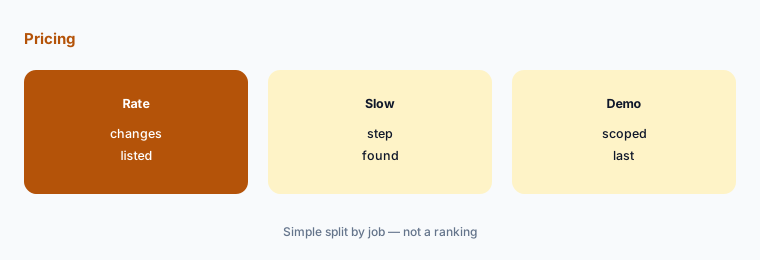
Find your slow step:
Write the last three rate changes your team filed: the line of business, how many weeks from analysis to live rates, and where the time went (data, modeling, approvals, filing, or system changes). Bring that list to an Earnix demo and ask which of those steps it shortens.
2. The rate engine behind quotes
What it is: Earnix lists an enterprise engine that turns approved rates into quotes, and says its customers quote 12 times faster than legacy systems and process over 4 billion transactions a year (Earnix). Those are vendor figures, not measured here.
If your quoting system is the bottleneck, ask how the engine connects to your policy system and who maintains the rate tables after go-live.
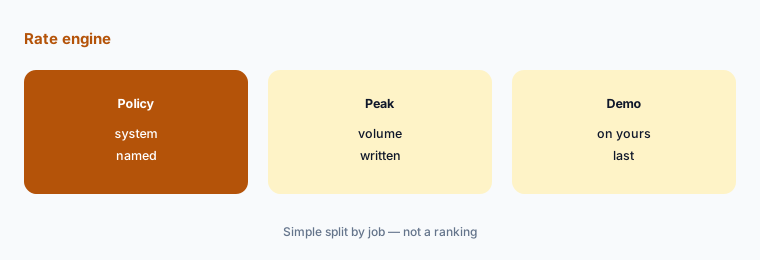
Ask about your systems:
Write your policy system, quote volume at peak, and the response time you need. Ask Earnix to show the engine working against numbers like yours, not the headline figure.
3. Underwriting and customer engagement
What it is: Earnix lists underwriting and customer engagement products alongside pricing, and its home page describes sharing pricing context with customer-facing teams in real time (Earnix). A customer quote on the page credits that with shorter call handling and better conversion.
These are separate products from pricing. Decide whether you are buying one or several before the demo, so the quote matches.
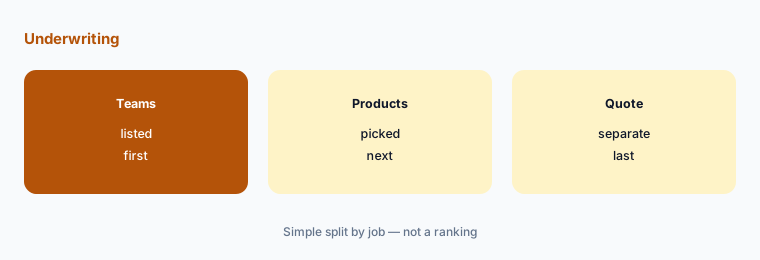
Scope the products:
List which teams would use Earnix: pricing, underwriting, service, or all three. Ask for a demo and a quote scoped to that list, with each product priced separately.
4. Copilot and filing help
What it is: Earnix lists Earnix Copilot and a Filing Accelerator among its featured capabilities, and says North American customers have had zero filing errors and fines and cut rate creation to 4 days from 6 months (Earnix). Those outcomes are customer claims from the vendor.
Filing work differs by state and line. Ask which states and lines the filing help supports today, and what a person still checks before submission.
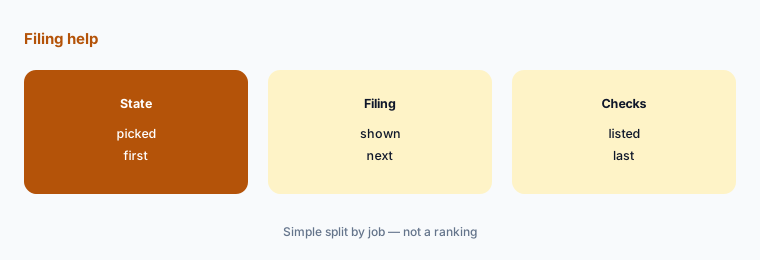
Test one filing:
Pick one recent filing in one state. Ask Earnix to show how its filing help would produce it, and list every step a person on your team still has to check.
5. Guidewire and ISO connections
What it is: Earnix lists a Price-It for Guidewire accelerator, a Price-It integration for ISO content, and an Elevate data pricing accelerator, plus a Q4 2026 release (Earnix).
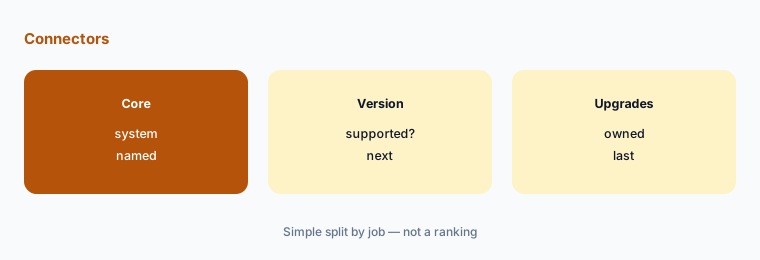
If you run Guidewire or use ISO loss costs, these connectors can shorten setup. Ask what version they support and who owns the connector when either side updates.
Check the connectors:
Write your core policy system and version and whether you use ISO content. Ask Earnix which connectors apply, which versions they support, and who maintains them after upgrades.
6. No public price: how to scope a demo
What it is: Earnix does not publish prices; its site offers a 30-minute demo and says more than 100 insurers use it (Earnix). It also sells versions for personal loans, auto loans, mortgages, deposits and savings, and commercial loans.
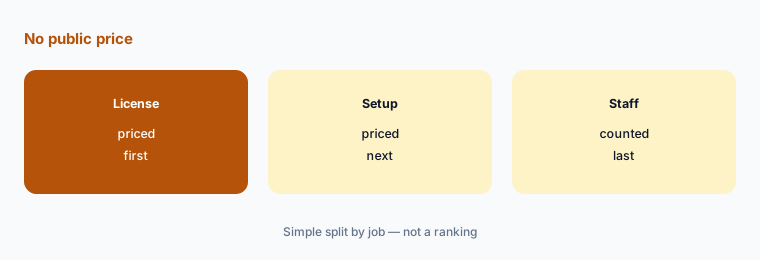
Enterprise pricing tools are usually multi-year contracts with implementation work. Get the license, implementation, and internal staffing needs written down separately.
Ask for separate cost lines:
Before a second meeting, ask Earnix for license, implementation, and support costs on separate lines, the contract length, and how many of your own people the project needs.
Pricing context (November 2026)
Earnix does not publish prices on earnix.com (read 10 Nov 2026). Pricing comes through a demo and a quote.
Products listed: pricing, an enterprise rate engine for quotes, underwriting, and customer engagement; featured capabilities include Earnix Copilot, a Filing Accelerator, Price-It for Guidewire, a Price-It integration for ISO content, and an Elevate data pricing accelerator.
Ask for license, implementation, and support as separate lines, plus contract length and renewal terms.
Uncertainty: Product names and figures are as displayed on Earnix’s home page on 10 November 2026. Quote speed, rate creation time, filing outcomes, and transaction counts are Earnix and customer claims, not tested here. There is no public price; confirm all costs in writing.
When it’s useful (honest take)
Useful when rate changes take months across several tools and teams, you can name the slow step, and someone owns each model in production.
A poor fit if your rate changes are rare and simple, or your core system is not one its connectors support. Scope the smallest product set that fixes your slow step.
Paying for Earnix and a few other AI tools? The $9 AI toolkit spreadsheet lists every AI subscription you have, what each one costs, and how fast it pays for itself, so you can see which ones are worth the money.
Want someone to do it for you? AI toolkit audit — $19
Related options (educational)
| Need | Better home | Why |
|---|---|---|
| Specialty pricing | hyperexponential review | See that review |
| Pricing models for insurers | Akur8 review | See that review |
| Core policy system | Guidewire review | See that review |
| Insurance tools by job | Insurance ops stack map | See that page |
FAQ
What is Earnix used for?
Earnix sells AI decision software for insurers and banks, covering pricing, a rate engine for quotes, underwriting, and customer engagement, with versions for loans and deposits.
How much does Earnix cost?
Earnix did not publish prices on 10 November 2026. You book a demo and get a quote; ask for license, implementation, and support as separate lines.
Does Earnix work with Guidewire?
Earnix lists a Price-It for Guidewire accelerator among its featured capabilities. Ask which Guidewire versions it supports.
Which insurance lines does Earnix cover?
Its site lists personal and commercial property and casualty, health, life and retirement, group benefits, and IoT and telematics.
Who should own Earnix at an insurer?
A named owner in pricing or actuarial for the models, plus an IT owner for the connectors, with a record of who approved each change in production.
Optional next step (if seats overlap)
If your pricing team pays for a modeling tool, a rate engine, and separate analytics seats, list where they overlap before adding another platform. Map the overlap with the $19 AI toolkit audit or the $9 AI toolkit spreadsheet. Email Audit $19 or Toolkit spreadsheet $9.
Checkout is live via Stripe. After you pay, we email delivery (spreadsheet) or intake next steps (audit).