Alternatives · Sales & marketing · Nov 2026
Kajabi alternatives (Nov 2026): Teachable $39, Skool $9, Podia $42, Systeme.io free — when Basic at $179 is too much
Kajabi Basic is $179 a month ($143 billed annually) for 5 products and 2,500 contacts. Creators often look at Teachable, Skool, Podia, or Systeme.io when that bill outgrows their revenue. Check transaction fees, not just the sticker price, and name who owns the move before you migrate students.
What this alternatives page covers
This page is for course creators, coaches, and small education businesses who pay for Kajabi or are pricing it against cheaper platforms. A named person owns the student list, the checkout, and the move.
Facts come from the Kajabi pricing page, Teachable pricing, Skool pricing, Podia pricing, and Systeme.io pricing, read on 5 November 2026. Thinkific’s pricing page did not load for us that day, so it is not priced here.
Kajabi bundles courses, community, email, website, and checkout. Cheaper tools often do one or two of those well. The useful question is which jobs you would actually move, not which logo has the longest feature list.
Ground rules: every platform bill has an owner and a revenue line it supports. This page is not a ranking.
| Tool | Entry paid plan | Fees and limits to check |
|---|---|---|
| Kajabi | Basic $179 a month ($143 billed annually) | 5 products, 2,500 contacts, 2 admin users; no revenue share; card fees from 2.9% + $0.30 |
| Teachable | Starter $39 a month ($29 billed annually) | 5 products; 7.5% transaction fee on Starter, 0% on Builder ($89) and Growth ($189) |
| Skool | Hobby $9 a month | 10% transaction fee on Hobby; Pro $99 at 2.9% |
| Podia | Mover $42 a month billed yearly ($504 a year) | Up to 100 email subscribers and 5% fees on Mover; Shaker $84 with no fees |
| Systeme.io | Free, then Startup $17 a month | Contact, funnel, and course limits by plan; Webinar $47; Unlimited $97 |

Major features (with how someone uses them)
Examples at a glance: each feature has a concrete example from a real job plus a short Try this you can run this week.
1. List price and what you use
What it is: Kajabi lists Basic $179 a month or $143 billed annually, Growth $249 or $199, and Pro $499 or $399, with no revenue share and a 30-day money-back guarantee on every plan (Kajabi pricing). Teachable Starter is $39 a month or $29 billed annually (Teachable pricing). Skool Hobby is $9 a month (Skool pricing). Podia Mover is $42 a month billed yearly (Podia pricing). Systeme.io has a Free plan and Startup at $17 a month (Systeme.io pricing).
A year of Kajabi Basic at monthly rates is $2,148. That is the number to beat, but only for the jobs you would actually move.
List the jobs you keep:
List what Kajabi does for you today: courses, community, email, website, checkout, coaching. Mark the jobs you would lose sleep over if they broke, and price only the alternatives that cover those jobs on your real contact count.
2. Transaction fees change the math
What it is: Teachable Starter charges a 7.5% transaction fee; Builder ($89 a month) and Growth ($189) list 0% (Teachable pricing). Skool Hobby charges 10% and Pro ($99) 2.9% (Skool pricing). Podia Mover lists 5% fees; Shaker ($84 billed yearly) lists none (Podia pricing). Kajabi lists no revenue share, with card fees from 2.9% + $0.30 on Kajabi Payments (Kajabi pricing).
At $3,000 a month in sales, a 10% fee is $300 on top of the $9 plan. A low sticker price with a high fee can cost more than Kajabi once revenue grows.
Add fees to price:
Multiply last month’s sales by each platform’s transaction fee, add the plan price, and compare totals, not sticker prices.
3. Community-first or course-first
What it is: Skool lists unlimited members and courses on both Hobby and Pro (Skool pricing). Kajabi plans each include a community and a website alongside courses (Kajabi pricing).
If your members mostly show up for the community and live calls, a community-first tool can replace Kajabi. If they buy courses and you need email and a website, a single community tool will leave gaps.
Split community from courses:
Write which part of your offer members pay for: community, courses, or coaching. Price community-first tools only if community is the main job.
4. Contacts, email, and products
What it is: Kajabi Basic lists 2,500 contacts and 5 products; extra contacts come in blocks of 25,000 for $125 a month (Kajabi pricing). Podia caps email subscribers at 100 on Mover, 500 on Shaker, and 1,000 on Earthquaker (Podia pricing). Teachable lists 5 products on Starter, 10 on Builder, and 50 on Growth (Teachable pricing).
Email list size is where cheap plans break first. If you send weekly email to 3,000 people, check the contact limit before the course features.
Check your list size:
Write your current email list size and product count. Rule out any plan whose cap is below either number.
5. All-in-one on a smaller budget
What it is: Systeme.io bundles funnels, email, courses, and checkout, with a Free plan, Startup at $17, Webinar at $47, and Unlimited at $97 a month (Systeme.io pricing). Kajabi bundles the same kinds of jobs at a higher price (Kajabi pricing). For a full side-by-side, see Systeme.io vs Kajabi.
If you like Kajabi because everything sits in one place, an all-in-one alternative is the closer swap. Moving to three separate tools saves money but adds three logins and three bills to own.
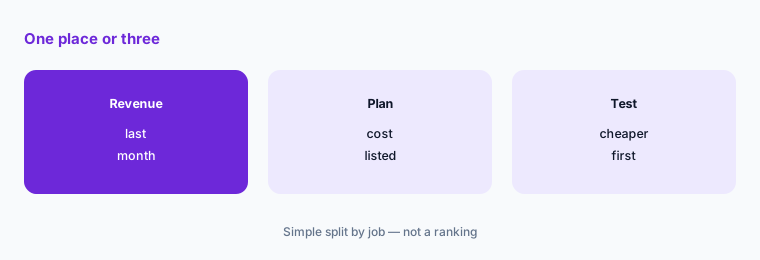
Compare to revenue:
Write last month’s revenue next to each plan’s monthly cost. If the platform costs more than 15% of revenue, test a cheaper option first.
6. One owner for the move
What it is: Kajabi, Teachable, Skool, Podia, and Systeme.io all keep billing while you migrate, and student logins, payment links, and email automations have to move with you (Kajabi pricing; Teachable pricing; Skool pricing; Podia pricing; Systeme.io pricing).
A named owner and a cutover date matter more than which platform you pick. Two platforms billing for three months wipes out the first year of savings.
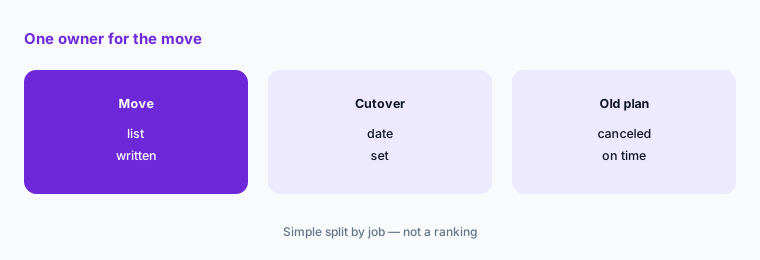
Set the cutover date:
Write the owner, the cutover date, every payment link and automation that has to move, and the date the old plan is canceled.
Pricing context (November 2026)
Kajabi (pricing page, read 5 Nov 2026): Basic $179 a month ($143 billed annually); Growth $249 ($199); Pro $499 ($399). No revenue share; Kajabi Payments card fees from 2.9% + $0.30 (US). 30-day money-back guarantee.
Teachable (pricing page, read 5 Nov 2026): Starter $39 a month ($29 annually, 7.5% transaction fee); Builder $89 ($69, 0%); Growth $189 ($139, 0%). 7-day free trial and 30-day guarantee.
Skool (pricing page, read 5 Nov 2026): Hobby $9 a month (10% transaction fee); Pro $99 a month (2.9%).
Podia (pricing page, read 5 Nov 2026): Mover $42 a month billed yearly ($504 a year, 5% fees); Shaker $84 ($1,008, no fees); Earthquaker $150 ($1,800, no fees). 14-day free trial.
Systeme.io (pricing page, read 5 Nov 2026): Free; Startup $17; Webinar $47; Unlimited $97 a month. No affiliate link used on this page.
Uncertainty: Podia’s page showed yearly-billed prices by default; check monthly prices at signup. Thinkific did not load for us on 5 November 2026, so it is left out rather than guessed. Transaction fees sit on top of card processing fees on most platforms. Check each live pricing page on the day you buy.
When it’s useful (honest take)
Stay on Kajabi when you use most of its bundle, revenue covers the bill comfortably, and nobody has time to run a migration. Move when you use two or three jobs and a cheaper tool covers them after fees.
None of these help if nobody owns the move or if two platforms keep billing for months. Set a cancel date before you start.
Still choosing between Kajabi and a cheaper course platform? The $19 AI toolkit audit gives you a written plan for which tools to keep using and which to drop across your whole AI stack, including this pair.
Prefer to do it yourself? Spreadsheet — $9
Related options (educational)
| Need | Better home | Why |
|---|---|---|
| Systeme.io against Kajabi | Systeme.io vs Kajabi | See that page |
| Systeme.io alone | Systeme.io review | See that review; no affiliate link |
| Funnels and checkout | ClickFunnels review | See that review for current plans |
| CRM-style sub-accounts | GoHighLevel review | See that review for current plans |
FAQ
What are the best Kajabi alternatives in 2026?
It depends on the job. Teachable Starter ($39), Skool Hobby ($9), Podia Mover ($42 billed yearly), and Systeme.io (Free, Startup $17) are common options as of 5 November 2026. Match the tool to courses, community, or all-in-one use. This page is not a ranking.
Is there a free Kajabi alternative?
Systeme.io has a Free plan with contact, funnel, and course limits. Teachable and Podia offer free trials rather than free plans, as listed on 5 November 2026.
Is Skool cheaper than Kajabi?
Skool Hobby is $9 a month but charges a 10% transaction fee; Pro is $99 at 2.9%. Kajabi Basic is $179 a month with no revenue share. At higher sales, fees can close the gap.
Does Kajabi take a cut of sales?
Kajabi’s pricing page says no revenue sharing. Card processing fees on Kajabi Payments start at 2.9% + $0.30 for US entities.
Who should own a platform migration?
One named person with a cutover date, a list of payment links and automations to rebuild, and a date the old plan is canceled.
Optional next step (if seats overlap)
If you use two or three Kajabi jobs, price one alternative on your real sales and list size, then set a cutover owner and cancel date before you move anything. Map the overlap with the $19 AI toolkit audit or the $9 AI toolkit spreadsheet. Email Audit $19 or Toolkit spreadsheet $9.
Checkout is live via Stripe. After you pay, we email delivery (spreadsheet) or intake next steps (audit).