What’s new · PagerDuty · Sep 2026 (checked Oct 2026)
What’s new in PagerDuty (Sep 2026): changes incident ops should notice
Dated notes for incident ops. Not a second PagerDuty AI review. Source is PagerDuty’s platform release notes, read 3 Oct 2026. Bullets without their own date heading are called out instead of assigned a September day.
What this page covers
The release notes page is long and mixes months. These five are the September items with a date heading we could point at. A community “Product Drops | September 2026” post exists (2 Sep 2026) but this list prefers the docs page. We do not invent Advance or AIOps prices.
Major features (with how someone uses them)
Examples at a glance: each feature has a concrete ops example plus a short Try this.
1. Five dated changes (primary)
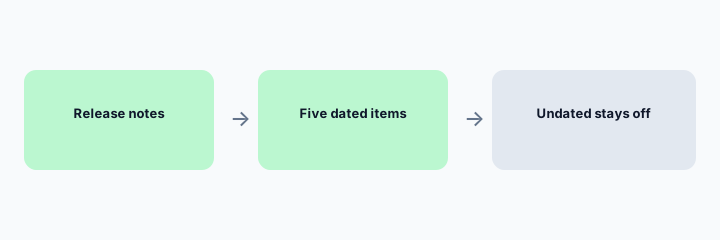
What it is: All five cite docs.pagerduty.com/get-started/release-notes as read on 3 Oct 2026. The page’s “Added September 23, 2026” block is the source for the first four. The fifth has its own “Deprecated September 10, 2026” heading.
Primary workflow from the Saturday brief:
From PagerDuty public Sep 2026 notes, list 5 ops-relevant changes — cite sources.
2. 1 and 2. SRE Agent Skills, and custom Slack incident cards
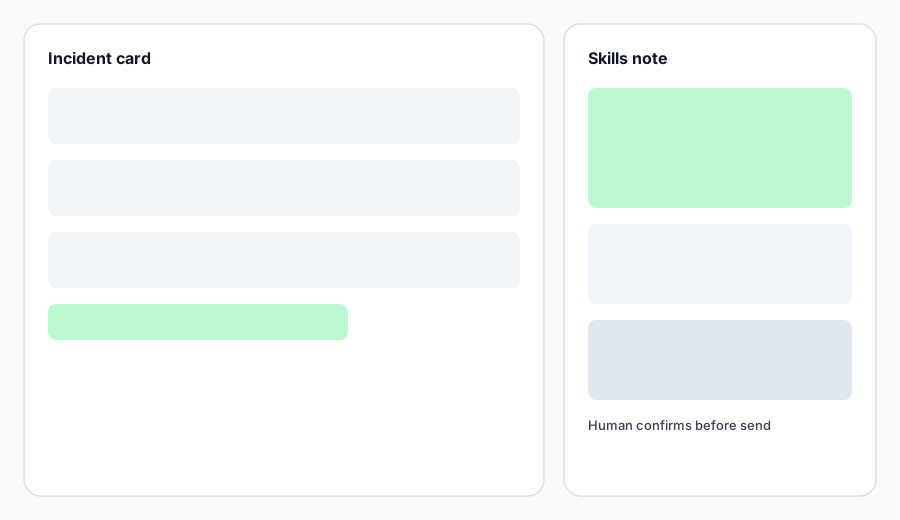
What it is: Under Added September 23, 2026, the notes say SRE Agent Skills are generally available for PagerDuty Advance customers. Skills are instructions, scripts, and resources configured with the PagerDuty Claude plugin or the SRE Agent configuration page, so the agent can suggest troubleshooting steps before a human looks. The same block says Custom Incident Cards are generally available for PagerDuty Slack customers: different fields for a dedicated channel and an announcement channel, configured under Integrations, Slack Configuration. A card template is not permission to auto-resolve an incident.
Skill check:
If you have Advance, open the SRE Agent configuration and write whether Skills are available. If you do not have Advance, write “not on this plan” instead of “PagerDuty lacks it.”
3. 3 and 4. One docs site, and scoped OAuth for public apps
What it is: The same September 23 block says PagerDuty Docs is generally available: support, developer, integrations, and operations docs in one site, with machine-readable pages so assistants can cite them. Legacy developer docs redirect starting 30 September 2026. Scoped OAuth for public apps is generally available for all plans in that block: apps request specific resources, and admins review and revoke them under Integrations, OAuth Apps, without rotating an API key for the revoke.
Admin check:
List installed public OAuth apps and whether each scope is still wanted. Unknown apps get a name and an owner or they get revoked.
4. 5. Postmortems end 31 October 2026, and bullets we will not pretend are dated
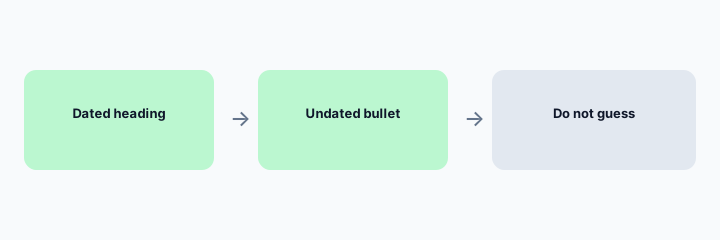
What it is: Under Deprecated September 10, 2026, the notes say PagerDuty Postmortems reach end of life on 31 October 2026 for all customers, and tell teams to move to Post-Incident Reviews in the web UI, which the same notes describe as generally available. AI-generated PIR drafts are described elsewhere on the page as an Advance feature; do not assume every plan gets the AI draft. Also under a September heading: on 4 September 2026 the local MCP server was deprecated in favor of the remote server at https://mcp.pagerduty.com/mcp. We are not assigning a September day to the “GitHub Code” SRE Agent tool. It appears on the same page without its own date heading in the copy we read. A third-party index is not our source.
Deadline check:
Write the date your account will stop using classic Postmortems, who owns the export, and whether AI PIR drafts are on Advance for you. If you cannot see the toggle, mark Unknown.
Pricing context (October 2026)
The release notes we read name Advance, AIOps, and plan families. They do not publish a September price change, and we do not invent one. Skills and AI-generated PIR drafts are described as Advance. Scoped OAuth is described as all plans. Custom incident cards are described for Slack customers. Confirm in your account. See the PagerDuty AI review.
Uncertainty: The release-notes page repeats older GA lines under later headings. We only treated items with a September date heading as September. Your contract can lag the docs.
When it is useful (honest take)
Useful before an on-call review that needs a sourced September list. Less useful as a buying guide or as a claim that every bullet on that long page shipped in September.
Paying for PagerDuty and a few other AI tools? The $9 AI toolkit spreadsheet lists every AI subscription you have, what each one costs, and how fast it pays for itself, so you can see which ones are worth the money.
Want someone to do it for you? AI toolkit audit — $19
Related options (educational)
| Need | Better home | Why |
|---|---|---|
| How the AI assists work | PagerDuty AI review | Triage drafts; human confirms page and suppress |
| September notes | This page | Only dated headings |
| Observability questions | Datadog Bits | Not a pager |
| Compare the two | Datadog vs PagerDuty | Which job lives where |
FAQ
What should incident ops notice from September 2026?
From PagerDuty’s release notes: SRE Agent Skills GA for Advance (23 Sep block), custom Slack incident cards GA (same block), the unified docs site with redirects from 30 Sep, scoped OAuth GA for all plans, and Postmortems end of life on 31 Oct 2026 (heading dated 10 Sep). Local MCP was deprecated 4 Sep.
Did we verify every AI bullet on the page?
No. The GitHub Code SRE Agent tool is on the page without its own date heading in the copy we read, so this page does not give it a September day.
Where is the product review?
The PagerDuty AI review. This page is the dated notes.
Do AI post-incident drafts come with every plan?
The notes tie AI-generated PIR drafts to PagerDuty Advance. Confirm the toggle. We do not assume it.
Optional next step (if seats overlap)
If several AI seats would cover the same analytics, support, or incident jobs, optional help mapping overlap: $19 AI toolkit audit or $9 AI toolkit spreadsheet. Email Audit $19 or Toolkit spreadsheet $9.
Checkout is live via Stripe. After you pay, we email delivery (spreadsheet) or intake next steps (audit).