Tool · Ops & automation · Sentry · Oct 2026
Sentry AI review (Oct 2026): Seer assists for error triage and fix proposals
Sentry when errors already land there. Seer is the name on Sentry’s public changelog. Use it to group an issue and propose a fix. A human reads the diff before merge. Dated September notes are on What’s new in Sentry. Broader telemetry questions belong on Datadog Bits if that is where the graphs are.
What this Sentry page covers
This page is for ops and engineering leads whose errors already live in Sentry. The job is triage notes and a proposed fix, not an unreviewed merge. Sentry’s changelog, which we opened on 3 Oct 2026, uses the name Seer. The 29 Sep 2026 note says Seer Agent is in beta and free for all users. That sentence is Sentry’s, not a price we calculated. Other plan prices are not on that note, so we do not invent them.
We cover a triage note a human files, a pull request that stays a proposal, and when Datadog or a review bot is the better home.
Major features (with how someone uses them)
Examples at a glance: each feature has a concrete ops example plus a short Try this.
1. Triage note a human files (primary)
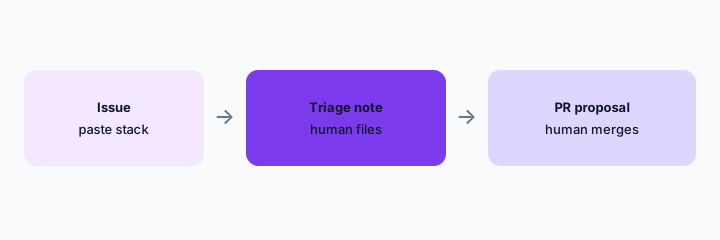
What it is: From a sanitized stack and the last five similar issue titles, draft a triage note: likely area, what is known, what is Unknown. Do not invent user counts. The 29 Sep 2026 changelog says Seer Agent can assign, resolve, and archive issues, and that it asks before a write it does not have scope for. Treat that as Sentry’s description. Your workspace still needs a human to confirm the click.
Primary workflow:
From a sanitized Sentry issue: draft a triage note and list Unknowns. Do not invent user counts or a root cause.
2. A fix proposal, not a merge
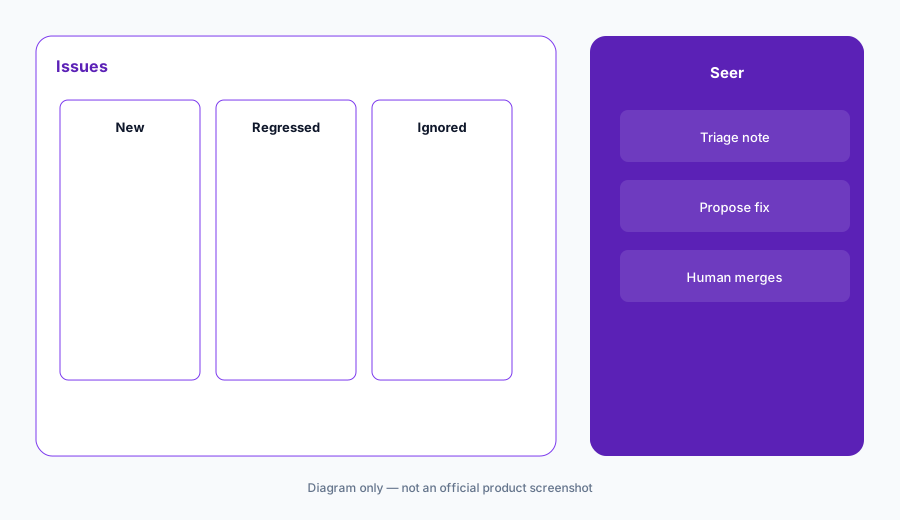
What it is: Sentry’s 21 Sep 2026 changelog says Seer can iterate on pull requests it opened, including CI fixes, and that changes are still proposals: read the diff before you merge. It also says PR iteration works with GitHub only. We did not re-test that in a repository. CodeRabbit is a different product that comments on pull requests. Do not run both and merge whichever speaks first.
Merge check:
Open the diff. Write what you would still test by hand. If you cannot explain the change, do not merge it.
3. External telemetry is a connector, not a guess
What it is: The 29 Sep 2026 note says Seer Agent can read Datadog and Google Cloud Platform through Seer Connectors, using API keys rather than OAuth, with a key that already has access to the environments you need. If you have not connected those, the assistant does not know that telemetry. Do not paste production secrets into a chat to compensate.
Connector check:
Write whether Datadog or Google Cloud is connected for Seer. If you do not know, mark Unknown. Do not create a new key until an owner approves the scope.
4. Versus Datadog Bits and CodeRabbit
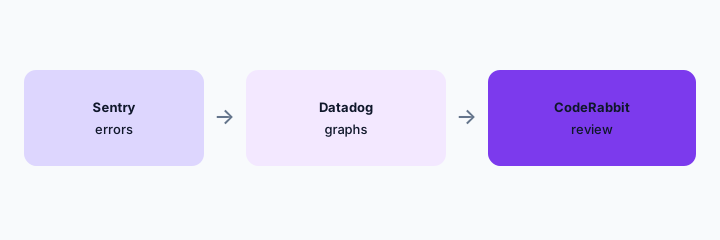
What it is: Stay in Sentry for errors you already capture there. Use Datadog Bits when the question is a dashboard or a trace that does not start from a Sentry issue. Use CodeRabbit when the job is review comments on ordinary pull requests, not an error-fix proposal. The compare is Sentry vs Datadog.
Home for the job:
List six recurring debug jobs. Assign each to Sentry, Datadog, or a review bot — one sentence why.
Pricing context (October 2026)
The only price sentence we are willing to repeat is the one on Sentry’s 29 Sep 2026 changelog: Seer Agent is in beta and free for all users. We did not find a full plan price list on the changelog pages we opened. Sentry’s pricing page and your invoice are the source for seats and event quotas.
Do not budget a Seer line item from this review.
Uncertainty: Beta access, GitHub app permissions, and connector keys are account-specific. The changelog is not your contract. Re-check before you tell finance it is free on your org.
When it’s useful (honest take)
Useful when Sentry is already where exceptions land, a human files the triage note, and nobody merges a generated diff unread. Less useful when you wanted a root cause without a stack, or when the question is a dashboard that lives in another tool. Less useful if you enable writes (resolve, archive, alert creation) with no one watching the scope prompt the 29 Sep note describes.
Paying for Sentry AI and a few other AI tools? The $9 AI toolkit spreadsheet lists every AI subscription you have, what each one costs, and how fast it pays for itself, so you can see which ones are worth the money.
Want someone to do it for you? AI toolkit audit — $19
Related options (educational)
| Need | Better home | Why |
|---|---|---|
| Exceptions already in Sentry | Sentry / Seer (this page) | Triage note and a proposal a human merges |
| September dates and quotes | What’s new in Sentry | Only what we could cite |
| Dashboards and wider traces | Datadog Bits | If Datadog holds the graphs |
| Review comments on ordinary PRs | CodeRabbit | Not an error-fix flow |
FAQ
What is Seer?
The name Sentry uses on the public changelog pages we opened on 3 Oct 2026 for its issue assistant. Confirm it on your workspace.
Is Seer free?
The 29 Sep 2026 changelog says Seer Agent is in beta and free for all users. We do not repeat other prices because those pages did not list them.
Should it merge pull requests?
No. Sentry’s 21 Sep note says the changes are proposals and to read the diff before you merge.
Sentry or Datadog?
Sentry when the job starts from an error. Datadog when it starts from a graph. See the compare.
Optional next step (if seats overlap)
If Sentry, Datadog, and a review bot all comment on the same incident, map the overlap with the $19 AI toolkit audit or the $9 AI toolkit spreadsheet. Email Audit $19 or Toolkit spreadsheet $9.
Checkout is live via Stripe. After you pay, we email delivery (spreadsheet) or intake next steps (audit).